An official website of the United States government




Signs of change in the Kenyan Deaf community
What are the first words that come to mind when you hear the term “Deaf”? Are they words like quiet, disabled, and scary? Or words like culture, history, and love?
A proud history
The Deaf community has a proud and beautiful culture with roots of language and success going back as far as ancient Greece. Plato commented on how the use of hands can be a great tool to express ideas and form relationships. In the early 1800s the French formalized a manual alphabet and compiled a sign language dictionary. In 1864, the Deaf community celebrated the opening of the first higher education school for the Deaf, Gallaudet University. Gallaudet is located in America's capital, and I do not think it is a coincidence it is in the heart of our nation.
Moving forward through history, there are successful Deaf figures like William “Dummy” Hoy, a baseball player who may have first used hand signals to enhance the game. We have the Gallaudet University football team to thank for the traditional sports huddle. Chuck Baird was a Deaf artist who helped found the De’VIA art movement, showing the beauty and versatility of signed languages in art. Another notable figure is Marlee Matlin, an actress and advocate for the Deaf community. The Deaf community is anything but quiet and disabled.
Signing becomes a national language
In the year 2010, Kenya made a great stride of inclusivity by recognizing Kenyan Sign Language (KSL) as its third national language in the constitution. This declaration impacted Deaf schools nationwide and opened up opportunities for deaf and hard of hearing (DHH) learners.
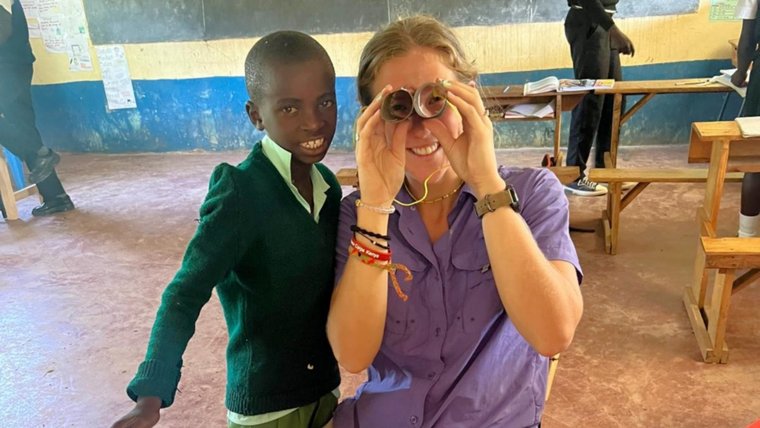
Over the past two years as a Peace Corps Volunteer in Kenya, I have had the joy of witnessing the excitement and elation of Deaf students when they get to gather and share stories with other Deaf schools. These cherished opportunities happen once or twice a term, usually at sports competitions and music festivals. It is a day when Deaf students get to form bonds and build a community. They always come back with so many stories about their new friends, new signs they learned, and a new appreciation for how big their community is.
Encouraging kids who live in isolated villages to expand their world view is an important role I play as an Education for the Deaf Volunteer. We often talk about famous Deaf people and impactful things the Deaf community has contributed to society, in addition to sign language. Like any child, they need role models and encouragement to achieve their dreams.
Sharing the love
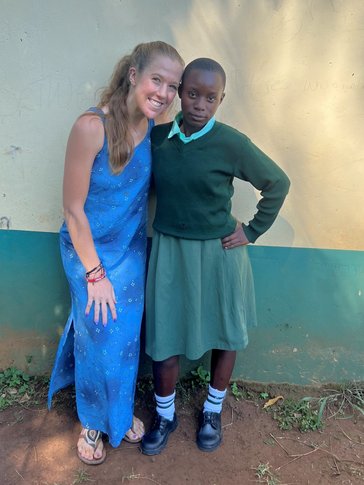
One of my most precious moments during service occurred as I was teaching grade 5 English. As we were talking about careers I asked her what she wanted to be in the future, and she signed to me that she wanted to be a teacher. I was so happy she wanted to be a teacher like me so I pushed a little further and asked why. Her response, “Because you always love and take care of children,” brought me to tears.
I have been so privileged to have spent two years inside the Kenyan Deaf community, and to know that love is going to be my legacy when I am gone. This knowledge makes all the challenges I’ve faced as a Volunteer so worth it.
Hand in hand with loving and encouraging this often-dismissed community, Deaf people need access to their language. My challenge to you is this: learn some basic signs and go meet some of your local Deaf community members. Be an ally to a historically marginalized group and help our world become a more inclusive and friendly place to be Deaf.