An official website of the United States government

Official websites use .gov
A
.gov website belongs to an official government
organization in the United States.

Secure .gov websites use HTTPS
A
lock (
) or https:// means you’ve safely connected to
the .gov website. Share sensitive information only on official,
secure websites.

Search
Connect with the Peace Corps
If you're ready for something bigger, we have a place where you belong.
Apply to the Peace Corps
The application process begins by selecting a service model and finding an open position.
Let us help you find the right position.
If you are flexible in where you serve for the two-year Peace Corps Volunteer program, our experts can match you with a position and country based on your experience and preferences.
Serve where you’re needed mostElementary School Science Teacher
 Environment
Job highlights
- Gain international experience applying the 5E inquiry-based learning model to teach environmental topics.
- Make a meaningful impact by providing outdoor learning opportunities for the youth to build leadership skills.
- Experience a unique Caribbean country and South American culture while building enduring relationships.
Get answers live — every weekday at .
Apply by
November 15, 2026Know by
January 1, 2027Depart on
May 30, 2027Duration
2 years, plus 3 months trainingAbout the project
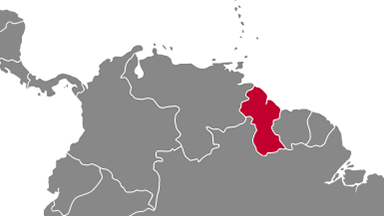
Do you wish to cultivate environmentally conscious leaders? The youth in Guyana are looking to learn about nature-based solutions.
Educators in Guyana partner with communities to identify environmental challenges and implement sustainable initiatives, such as waste management, eco-tourism, natural resource management, or environmental awareness and resilience projects. Many Guyanese teachers are young and lack training in modern, inquiry‑based science methods, leading to reliance on traditional teacher-centered methods and limited coverage of key concepts. The Ministry promotes the 5E Model, grounded in constructivism, to help learners build understanding through hands‑on experiences and improve critical thinking and problem‑solving.
As an Elementary School Science Teacher, you will collaborate with teachers for grades 3–6 to plan and teach engaging science lessons. Together, you will improve teaching practices and enhance the students’ learning and critical thinking, strengthening the community’s ability to sustainably manage natural resources and adapt to extreme weather. Using innovative, learner-centered approaches, you will bring science to life by connecting lessons to students’ everyday environments.
Learn more about what Volunteers do in country by visiting our Guyana project page.
Required skills
Qualified candidates will have one or more of the following criteria:
Associate degree in any field and at least two years of full-time, post-high school work experience (from any combination of roles).
OR
Bachelor's degree in any field.
OR
High school diploma or GED and four years of full-time, post-high school work experience (from any combination of roles).
Language: There are no pre-requisite language requirements for this position.
Required behavioral competencies
These competencies are essential for all service assignments and are assessed in the application and interview process:
Motivation for and commitment to service
Adaptability and open-mindedness
Problem solving and resourcefulness
Behavioral maturity and professionalism

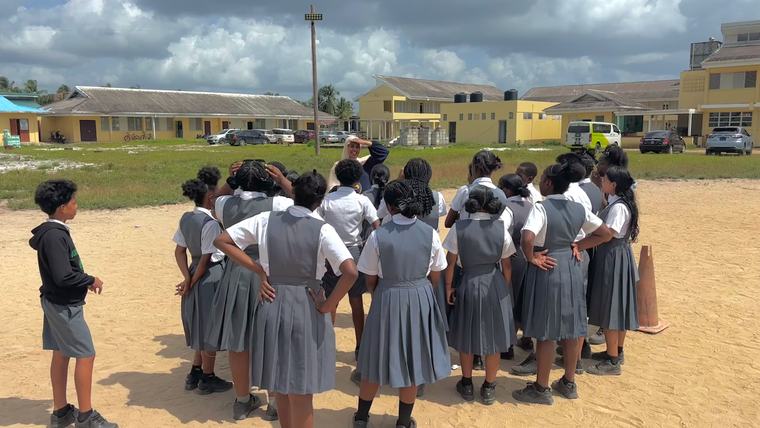
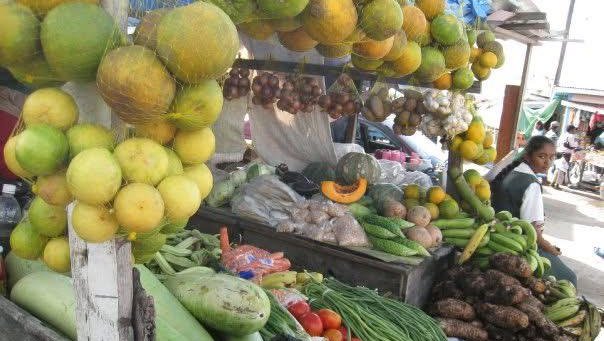
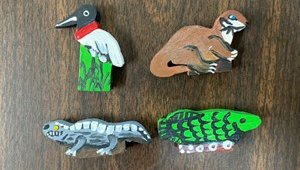
Photos from Guyana



How you and the community will make an impact together:
Facilitate community assessments to identify community priorities.
Develop lesson plans and supportive educational materials.
Teach engaging environmental science lessons.
Facilitate outdoor education and activities for youth clubs and camps that build awareness of the country’s biodiversity while fostering leadership skills.
Develop and strengthen existing training modules on nature-based solutions to environmental issues.
Support team projects and activities to address community-identified priorities.
You may also work on additional projects that meet the community’s interests and priorities, such as strengthening organizational development through the adoption of improved practices, enhanced tools, or strategic resources.
Volunteers serve in regional communities ranging from remote towns to semi‑urban villages. Volunteers will live in a private room within their host family’s house. Daily life may include modest living conditions with limited electricity, internet, and running water. While most sites are rural, Volunteers can visit larger markets monthly to restock supplies.
Learn more about the living conditions, including detailed information on culture, communications, housing, and health/crime statistics on our Guyana country page. You can also delve into stories about local communities by reading our blog or Volunteer stories.
Meet a Volunteer in Guyana
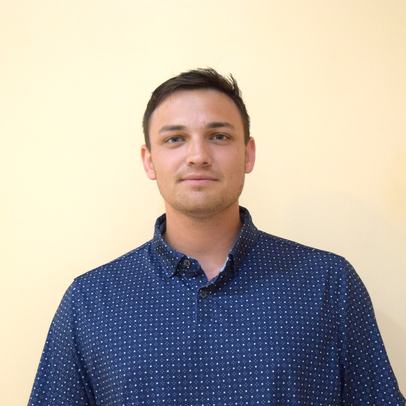
Chance H.
Environmental Education Promoter
"Living far from basic modern amenities, many hours from the capital, and deep in the jungle teaches you a whole other level of patience."
See full Volunteer profile
As an Elementary School Science Teacher, you will be trained on Guyana’s education system, inquiry-based learning, differentiated learning, and lesson planning. Peace Corps/Guyana will teach you basic Creolese to help you comfortably integrate and connect with your new community.
After 10 weeks of training, you will move to a hinterland, riverine, or coastal community where you will collaborate with elementary school staff and nearby organizations. You will work with the community to assess needs and develop solutions based on your collective findings to build the capacity of Guyanese to be better environmental of your locality’s natural resources.
Only heterosexual couples can be accepted for this program. Each person must apply separately and must qualify for a position in either the same or a different sector than their partner. Couples will live together during training but may separate occasionally for field-based activities. Couples who are selected for the same sector will live together but work with different local partners which may be in the same community or in neighboring communities (not more than 30 minutes apart).
To learn more about serving as a couple in Guyana, visit the country page.
Application process
From application to departure takes around nine months. Learn about the application process for Volunteer opportunities.
Medical/legal clearance
You will need to be cleared medically and legally in order to serve in Guyana. Review information on medical clearance and legal clearance to learn about the process.