 An official website of the United States government


Featured Volunteer Profile
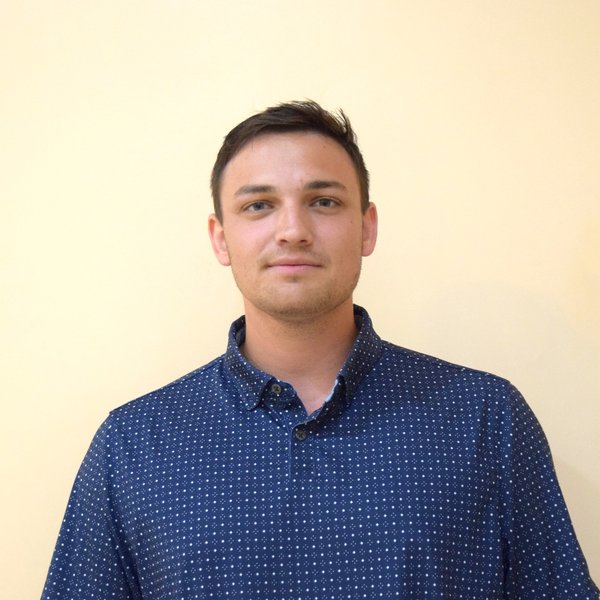
Chance H.
“Living far from basic modern amenities, many hours from the capital, and deep in the jungle teaches you a whole other level of patience.”
1. What got you interested in the Peace Corps?
During college, I did a lot of work with nonprofits like Habitat for Humanity and Colleges Against Cancer and wanted to continue doing something that made a difference in some small way. The Peace Corps offers a once in a lifetime opportunity to not only explore other cultures, but to truly immerse yourself in them. I loved the idea of getting out of my comfort zone, learning a new skill, and putting myself in a position to grow and test myself as a person. Ultimately, I felt that this was an incredible opportunity to make a difference in some way.
2. What projects are you working on?
I teach science to grades 3 through 6 following the local Ministry of Education’s science curriculum and incorporating environmental topics using a hands-on approach. Literacy is a major issue for Guyana, especially in the hinterland. One of my biggest challenges is coming up with games, songs, dances and other interactive activities that teach the topics in ways that keep every pupil engaged and learning.
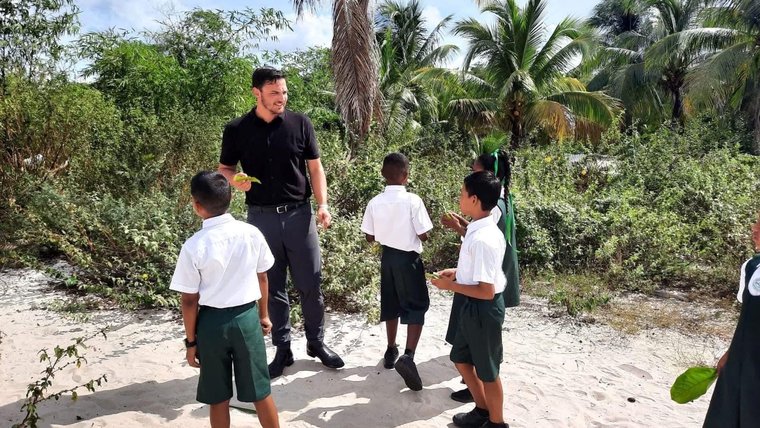
For a long time, my community has managed waste by burning trash heaps, but litter that has nearly taken over all corners of the community. Outside of school I’m working with my community, the Toshao (indigenous village leader), and the village council to install trash bins in the most active areas in the village. Since installing bins won’t fix the issue, we are working on efforts to support a sustainable and reliable method for the regular removal and safe disposal of trash. A new community waste removal site has already been identified, and we are working to get support from local shop owners and community members to pay a small fee to fund the disposal of waste.
Additionally, with my background in soccer (football) I started coaching the local football teams two weeks after arriving at site. It has become an everyday secondary project where I coach the primary school’s team of boys and girls under 12 and all the secondary school’s teams of boys and girls. From the beginning, I could see these children were talented! So far, we’ve won the girls' under 11 Pee Wee National Football Tournament, 3rd in the Republic Bank National under 18 tournament, 4th in the Milo Cup for under 18 boys, and most recently the under 15 girls beat every team in our subregion to qualify for the Blue Water Cup in September 2025 and went on to get 4th in the country! I’ve recently begun incorporating environmental awareness and science topics in each of our football practices to push the children to continue to learn and become more environmentally conscious outside of the school.
3. What strategies have you used to integrate into your community?
I was very lucky with my site placement! The first day I arrived, my community hosted a welcome ceremony with local foods, drinks, music, and dances. After that, I took daily walks around the community, meeting people, and visiting the few shops in town. Working at school I’ve grown deep friendships with a lot of my fellow teachers and expanded my network through their families and friends. However, the best integration came from coaching and playing football and volleyball, as it has me out in the center of our community, interacting with kids, parents, and the adults that use the field for shops, exercise, or just to “lime” (Guyanese for “hang out and talk with friends”).
4. What is a highlight of your time in service so far?
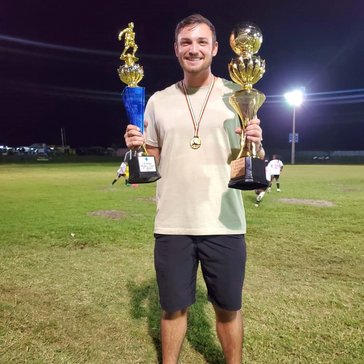
I could mention multiple highlights, but the best was my experience traveling with the under 11 girls’ football team. For most of them, it was their first time traveling outside the region, let alone to the capital. It was incredible seeing the wonder in their eyes as we got on the ferry and watched huge trucks load up behind us, funny to see them experience an escalator for the first time, and even better was watching how brave they were competing in a national tournament so far from home, family, and friends. Playing their hearts out over the course of a month, these girls exceeded all expectations and ultimately won the tournament, defeating 15 other teams and bringing home the first ever national tournament trophy to our primary school!
5. What have you enjoyed most about the community where you are serving?
It’s hard to limit what I enjoy most to one thing, but if I had to, I would say the people. Everyone here has been so welcoming, helpful, kind, and open. Aunties and uncles bring me food, fruits, and local drinks. Kids are always outside playing and so excited to have me around. My colleagues have been so supportive and are all incredible and dedicated teachers. It is such an honor to have become friends and family with everyone in my community.
6. What are some of the most important things you’ve learned from your community?
I’ve learned so much—from teaching methods, to the local Amerindian language, to the ever-popular sport here, cricket. However, if there’s one thing Guyana, my community, and the children have truly taught me, it’s that patience is an incredibly powerful virtue. Living far from basic modern amenities, many hours from the capital, and deep in the jungle teaches you a whole other level of patience. Travel to and from my village consists of long, over-stuffed buses, long waits for rides, and rough boat rides through rivers and the Atlantic Ocean, all the while dealing with heat, humidity, and rain. I truly admire the patience I see in so many of my young pupils, teachers, and friends who never complain on long walks under the sun, incredibly hot and uncomfortable bus rides, or getting stuck in a boat with no breeze in the midday sun.
7. How do you spend time when not working on a project?
When I’m at school I’m likely to be at the ballfield playing football, volleyball, or cricket. Although if I’m not teaching, coaching, or playing, you are sure to find me swinging in my hammock on the veranda overlooking the jungle.
8. What are you looking forward to in your remaining time as a Volunteer?
I’m so excited for a lot of things in the next year. Firstly, I truly love teaching and working with the pupils and my fellow teachers, so I’m very excited to continue working in the school. Secondly, since I work so closely with the football teams, I’m very excited for the coming football tournaments! Lastly, this summer some fellow Volunteers and I have planned a large summer camp that will gather the surrounding villages for a few days of games, activities, and speakers to empower the youth through teamwork, critical thinking, and literacy skills.
9. What will you do differently when you return to the U.S.?
After I conclude my service, I hope to find a job (back home or overseas) where I can help to make a difference in some small way. After this Peace Corps experience, I honestly can’t imagine spending the next 40 years stuck behind a desk working a job to just get by. Here, I feel an incredible sense of purpose every day and the challenges you experience keep you on your toes and adapting. So, I’m praying that when I go back, the career path I have in mind will be as fulfilling as I hope!
Learn more about serving as a Peace Corps Volunteer in Guyana.



