An official website of the United States government

Official websites use .gov
A
.gov website belongs to an official government
organization in the United States.

Secure .gov websites use HTTPS
A
lock (
) or https:// means you’ve safely connected to
the .gov website. Share sensitive information only on official,
secure websites.

Search
Connect with the Peace Corps
If you're ready for something bigger, we have a place where you belong.
Apply to the Peace Corps
The application process begins by selecting a service model and finding an open position.
Let us help you find the right position.
If you are flexible in where you serve for the two-year Peace Corps Volunteer program, our experts can match you with a position and country based on your experience and preferences.
Serve where you’re needed mostDeaf Education Teacher
 Education
Job highlights
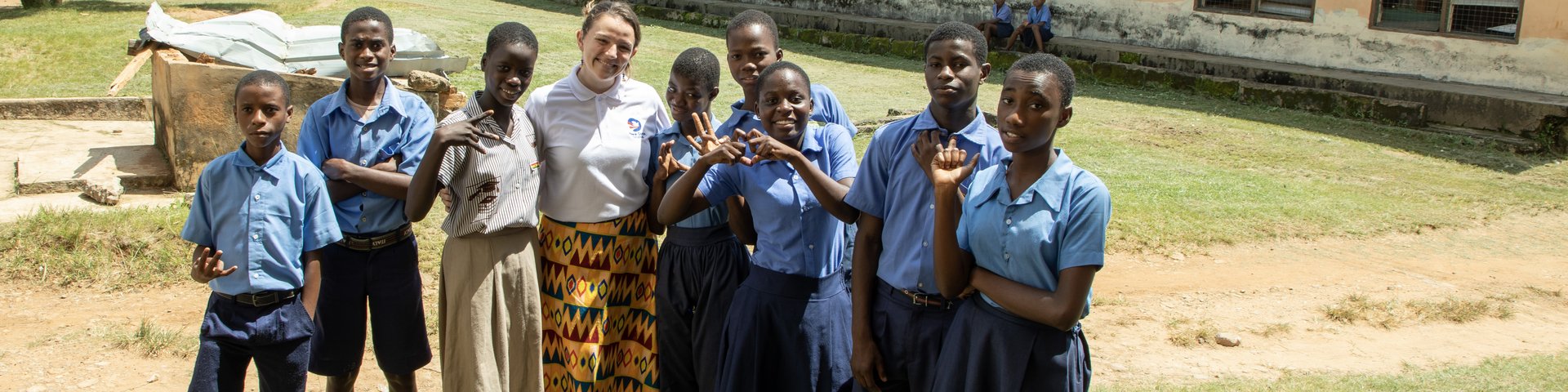
- Learn and practice Ghanaian Sign Language with students and community members.
- Build vocational and academic skills through inclusive classroom and after‑school activities.
- Experience Ghana’s welcoming culture and the country’s rich traditions.
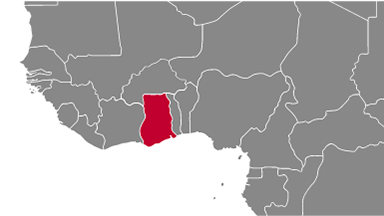
Ghana • Africa
In partnership with: Primary and secondary schools for the Deaf
Applications are now closed. View current openings.
Apply by
June 15, 2026Know by
August 1, 2026Depart on
January 17, 2027Duration
2 years, plus 3 months trainingAbout the project
Calling educators with a passion for student inclusivity! Ghana’s schools for the Deaf seek your support to strengthen student learning.
Ghana’s Ministry of Education is focusing on promoting inclusive education where all learners regardless of their circumstances have the opportunity to achieve. The major challenge to achieving this is lack of trained special education teachers. Very few teachers sign up to teach in schools for the Deaf; and many of the teachers who do work at the schools for the Deaf are not proficient in sign language, making it difficult for the children to comprehend the complex concept taught in science and math.
As a Deaf Education Teacher, you will collaborate with school staff to develop teachers’ vocational and technical skills. Together, you also will boost student achievement in science, technology, engineering, and math (STEM) and literacy.
Learn more about what Volunteers do in country by visiting our Ghana project page.
Required skills
Qualified candidates will have one or more of the following criteria:
Bachelor's degree in special education.
OR
Bachelor's degree in any discipline with state certification in special education (general or with an emphasis in working with people with visual or hearing disabilities).
OR
Bachelor's degree in education with experience working with people with disabilities, including physical, cognitive, emotional, and psychological disabilities.
OR
Bachelor's degree in any discipline with 1 year full-time experience working in classrooms or residential homes with people with disabilities, including physical, cognitive, emotional, and psychological disabilities.
Language: There are no pre-requisite language requirements for this position.
Required behavioral competencies
These competencies are essential for all service assignments and are assessed in the application and interview process:
Motivation for and commitment to service
Adaptability and open-mindedness
Problem solving and resourcefulness
Behavioral maturity and professionalism

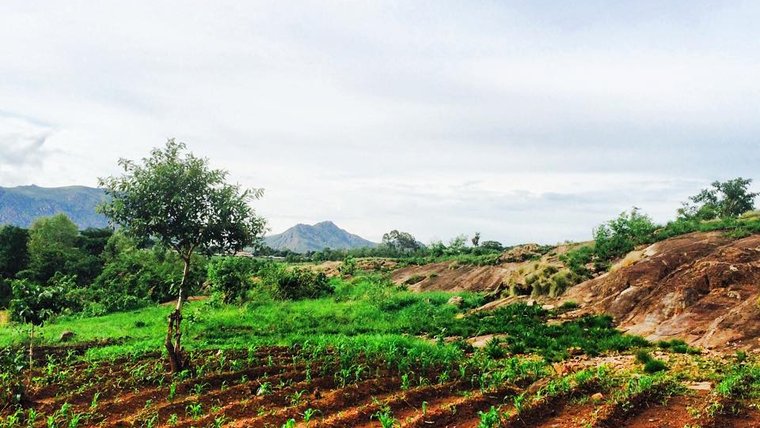
Photos from Ghana



How you and the community will make an impact together:
Plan lessons aligned with student-centered pedagogy and GSL instruction.
Teach assigned subjects, including literacy, math, and vocational skills.
Support remedial groups alongside Ghanaian teachers.
Grade homework and examinations.
Design sustainable learning aids using locally available materials.
Organize after-school clubs, games, sports, and tutoring.
Engage community and parent teacher associations to raise awareness of Deaf education.
You may also work on additional projects that meet the community’s interests and priorities, such as school gardens and creative arts.
Deaf Education Volunteers are placed in urban or peri‑urban communities in the following regions: Eastern, Ashanti, Central and Bono. Volunteers may live on school campuses alongside students and staff. Amenities vary by site. Expect public transport on rough roads and professional dress norms; flexibility is key.
Learn more about the living conditions, including detailed information on culture, communications, housing, and health/crime statistics on our Ghana country page. You can also delve into stories about local communities by reading our blog or Volunteer stories.
Meet a Volunteer in Ghana
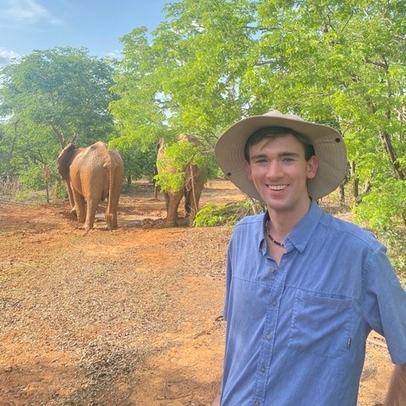
Trey F.
Math and Science Teacher
"There are many challenges that come with joining the Peace Corps, but it is a great way to grow and serve others while representing your country. I have had many adventures and have become a much more confident teacher and leader through my experience."
See full Volunteer profile
As a Deaf Education Teacher, you will be trained to support student-centered instruction and inclusive practices for learners with diverse needs. Peace Corps/Ghana will teach you Ghanaian Sign Language (GSL) to help you connect with and support the students.
After 11 weeks of training, you will move to an urban or peri-urban community where you will collaborate with school staff to assess needs and design solutions that strengthen student achievement and the capacities of local teachers.
Only heterosexual couples can be accepted for this program. Each person must apply separately and must qualify for a position in either the same or a different sector than their partner. Cross-sector couples will live with different host families who may reside in different communities during training. Cross-sector couples may see each other for joint-sector training days or on the weekends but neither are guaranteed. Couples who are selected for the same sector will live together but work with different local partners which may be in the same community or in neighboring communities (not more than 30 minutes apart). Cohabitating couples are highly encouraged to present themselves as married throughout service due to cultural expectations.
To learn more about serving as a couple in Ghana, visit the country page.
Application process
From application to departure takes around nine months. Learn about the application process for Volunteer opportunities.
Medical/legal clearance
You will need to be cleared medically and legally in order to serve in Ghana. Review information on medical clearance and legal clearance to learn about the process.