An official website of the United States government


Tips for serving in Ghana from 9 Peace Corps Volunteers
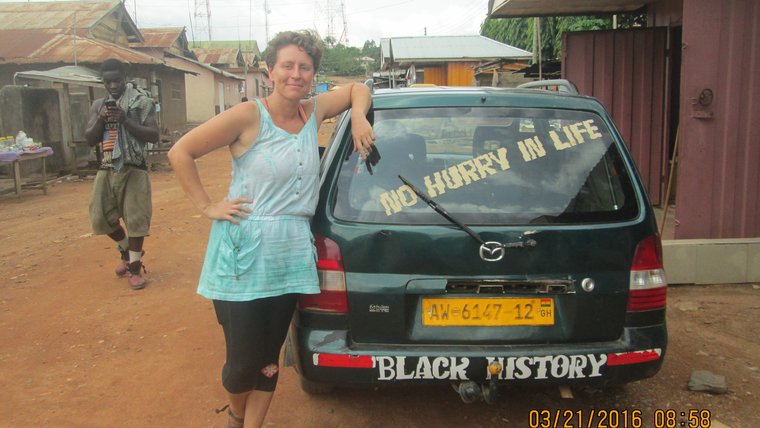
Serving in Ghana as a Peace Corps Volunteer is a rewarding journey filled with rich cultural exchange, meaningful relationships, and daily learning.
Nine Volunteers offer practical guidance for others interested in serving in the first country to welcome Peace Corps Volunteers.
Greetings are a must
Greeting someone in Ghana is a sign of respect, but it also indicates a deep understanding of the values ingrained in the culture. Whether meeting a neighbor, colleague, or stranger at the market, saying hello in the local language builds trust.
A sure way to impress the locals? Be sure to greet with a handshake followed by a snap of the fingers. If greeting an elder, follow your handshake with a bow.
“In Ghana, it is important to greet everyone you see throughout the day, no matter what. Not only are greetings a cultural mandate, but they are also an important step toward building a relationship with people,” said Wonde N.
“The best seat in a tro (van) was behind the driver, where you could get a breeze from his window. Once seated, you’d greet other passengers in a friendly way (If you don’t greet people, the driver may overlook your stop — I saw it happen),” shared Anastasia B.
Learning the lingo
Many Volunteers in Ghana learn a local language, such as Twi, Ewe, Dagbani, and Fante, to effectively collaborate with community members. By learning a new language, Volunteers return home with enhanced communication skills and a valued ability to connect with Ghanaian diaspora.
“While in my village, I lived with a host family that did not speak any English. This was quite rare for many Ghana Volunteers — either you lived with a host family or other community members in a compound and at least a few would speak English, you would live alone but in a community with few English skills or you would live in a town where most people spoke English. As a result, I became quite fluent in the local language — Dagbani — over my service,” said Bethany D.
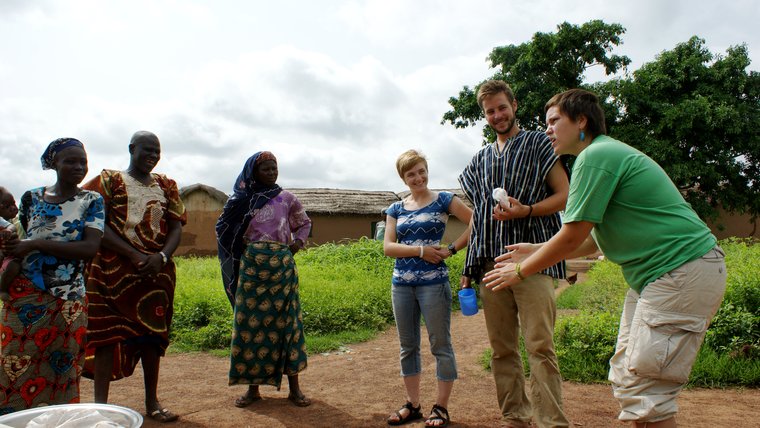
Sustainable projects to meet a local need
Peace Corps Volunteers—whether serving in Education, Agriculture, or Health programmatic sectors—work alongside communities to develop sustainable solutions rooted in local priorities. Projects focus on overcoming limited resources, educational gaps, and quality-of-life challenges. You may not think observing daily life is that important, but that’s how creative ideas generate!
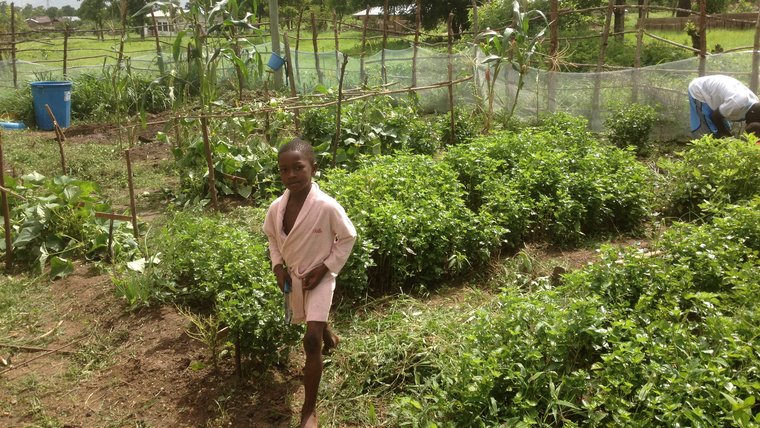
“I experienced the ‘hunger months,’ a time of year where the rains stop and food isn’t as readily available; families live on food stored from the previous harvest. The three of us decided to try a dry season garden during the hunger months. We built a garden that was eventually able to feed their family and two other families living close by,” shared Bryan P.
“I inadvertently consumed water from the river. Unaware of the source, I became very ill. From then on, making sure my community got access to clean water became my number one priority. I came across a U.S. African Development Foundation-funded project through New Energy, a Ghanaian organization, in a neighboring community. A solar-powered filtration unit was constructed to provide clean, filtered water,” said Keshia E.
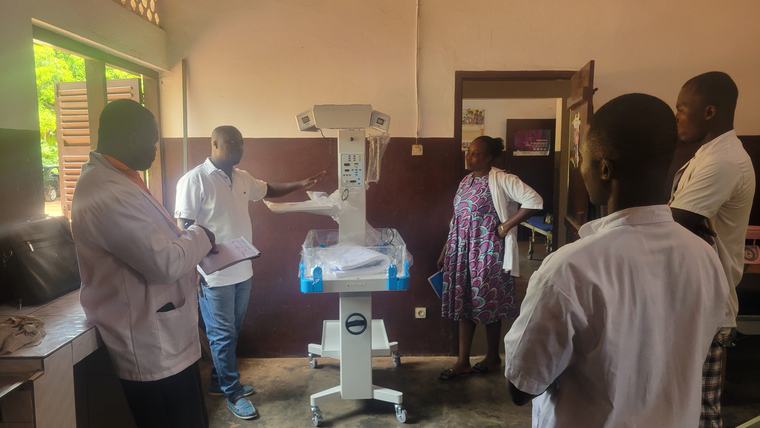
“I’m co-facilitating the construction of individual household latrines with my partner, counterpart, community leaders, and beneficiaries. The project is funded by a Peace Corps grant and community contributions, with support from local partners. Following a community assessment, we identified a problem with open defecation due to a shortage of household latrines,” explained Helen M.
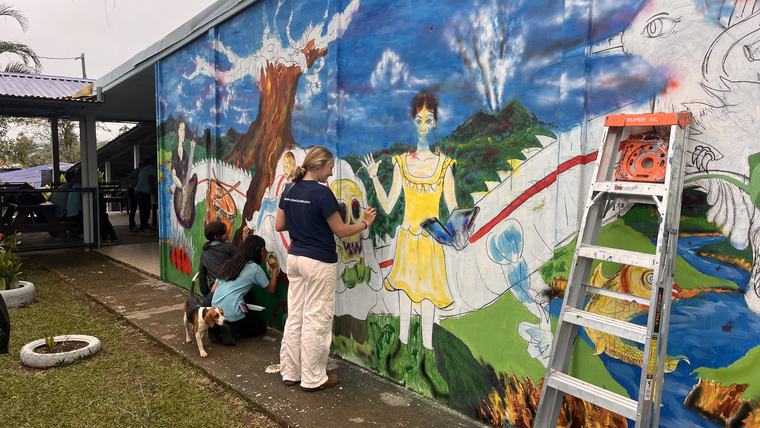
“At the end of my second year, I completed a big grant project to rebuild and repaint the entire wall around campus with many murals of Ghanaian Sign Language signs in three months,” shared Alana S.
Learn more about Volunteer projects in Ghana.
A deeper understanding of culture
Through constant interaction and shared experiences, Volunteers learn local traditions, social expectations, taboos, and unspoken norms that guide relationships and decision making. Be patient and respectfully curious. Over time, you will gain an understanding of the subtle nuances that shape daily life in country.
“The culture in the north of Ghana was entirely different from that in the south. Also, in Ghana it wasn’t appropriate to ask all sorts of questions right off the bat,” shared Pooja-Accamma S.
“I just had my birthday and got pounded [with water] for about 10 minutes and then we had a dance party,” Sarah M. said.
Learn more about living conditions in Ghana.