 An official website of the United States government


Featured Volunteer Profile
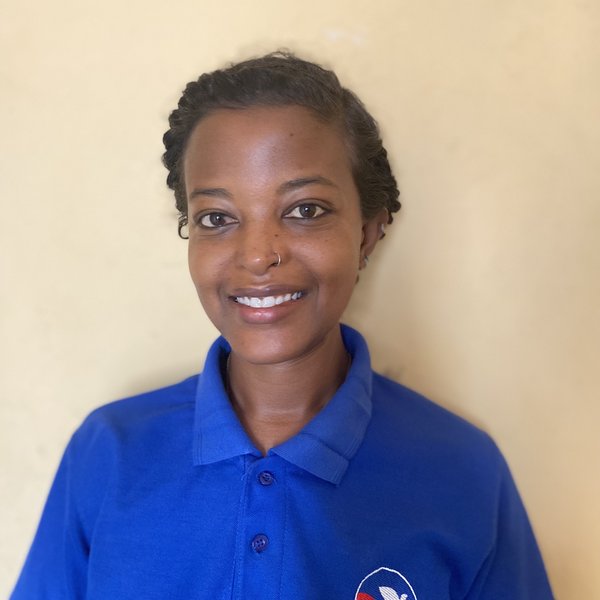
Helen M.
“An essential aspect of integrating into the community has been learning basic greetings in the local language, Ewe. When locals hear you speak their language, it sparks excitement, and sometimes they’re eager to teach you more words.”
1. What got you interested in the Peace Corps?
My initial introduction to the Peace Corps came during my senior year of college through a friend who was also pursuing a degree in community health education. She shared insights about Peace Corps programs in the health sector. After doing additional research, I learned about the organization's direct involvement with community members to improve their lives. This excited me and inspired me to apply, as I was eager to put my degree to good use in the field.
2. What projects are you working on?
There are a few projects I’m working on, but right now, I’m co-facilitating the construction of individual household latrines with my partner, counterpart, community leaders, and beneficiaries. The project is funded by a Peace Corps grant and community contributions, with support from local partners. Following a community assessment, we identified a problem with open defecation due to a shortage of household latrines. The goal of this project is to help community members address this issue and improve their health by ending open defecation.
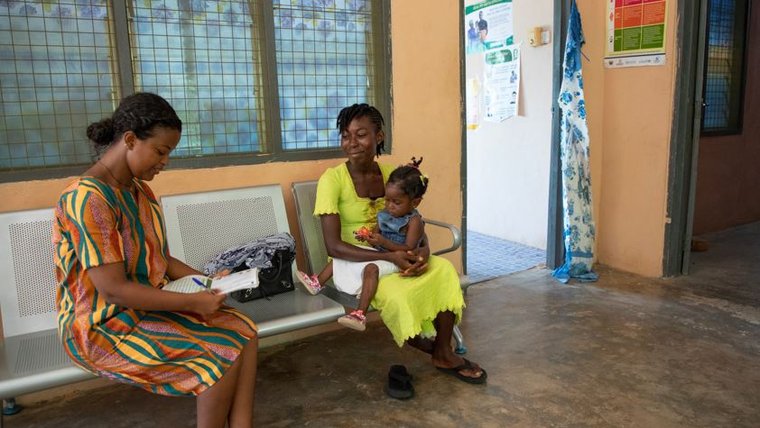
Additionally, I’m co-facilitating household visits with community partners to encourage households to incorporate a balanced diet, with a focus on improving the health of children under five and pregnant women. During these visits, we engage individuals using nutrition picture books or games as guiding tools.
3. What strategies have you used to integrate into your community?
An essential aspect of integrating into the community has been learning basic greetings in the local language, Ewe. When locals hear you speak their language, it sparks excitement, and sometimes they’re eager to teach you more words. Another key to integration has been embracing the opportunity to learn from them, whether by participating in cultural dances, cooking local foods, attending funerals, or engaging in intercultural exchanges
4. What is a highlight of your time in service so far?
A highlight of my service has been interacting with the little kids in my community. They love to share games they've learned, and during my free time, I join them for jump rope or other games.
Another great aspect is serving alongside my husband. He's working as an Agriculture Volunteer, and on weekends, I get to check out the projects he's involved in with the farmers.
5. What have you enjoyed most about the community where you are serving?
What I love most about the community is the kindness of its people. Most people are willing to help you if you ask for support.
Another thing that brings me joy is how lush and beautiful it becomes during the rainy season.
6. What are some of the most important things you’ve learned from your community?
One valuable lesson I’ve learned from my community is the significance of greeting everyone, especially the elderly when you see them. It is a sign of respect and kindness. Another lesson I’ve gained during my time here is the importance of exercising patience with others. There are instances when deadlines for projects or meetings are set, yet no one shows up
7. How do you spend time when you are not working on a project?
In my leisure time, I enjoy moments with my husband, often hiking to the waterfall in our community or playing card games and movies. I also find joy in art, meditation, and staying connected with family and friends. Since we're near other Peace Corps Volunteers, we occasionally meet up at our district capital to catch up.
8. What are you looking forward to in your remaining time as a Volunteer?
I am looking forward to witnessing the successful completion of the latrine project and observing the positive impact it will have on the 16 households (with about 6 people in each household). I am also excited to start an after-school art program, working one-on-one with neighborhood children, teaching them English vocabulary and allowing them to draw freely.
9. Once you finish your service, what will you do differently when you return to the U.S.?
Once I’m back in the U.S., I would like to get a temporary job so I can focus on starting my holistic health practice. The focus of my practice will be to help clients bring balance to their everyday lives through Reiki and targeted sound vibration therapy.



