An official website of the United States government

Official websites use .gov
A
.gov website belongs to an official government
organization in the United States.

Secure .gov websites use HTTPS
A
lock (
) or https:// means you’ve safely connected to
the .gov website. Share sensitive information only on official,
secure websites.

Search
Connect with the Peace Corps
If you're ready for something bigger, we have a place where you belong.
Apply to the Peace Corps
The application process begins by selecting a service model and finding an open position.


Let us help you find the right position.
If you are flexible in where you serve for the two-year Peace Corps Volunteer program, our experts can match you with a position and country based on your experience and preferences.
Serve where you’re needed mostTeachers College Science Education Trainer
 Education
Job highlights
- Gain experience managing an educational laboratory, calibrating its equipment, and complying with safety standards and hazardous material protocols.
- Inspire lifelong learning and contribute to a country’s development through the power of science and experiential learning.
- Experience a unique Caribbean country and culture in South America while building enduring relationships in the community.
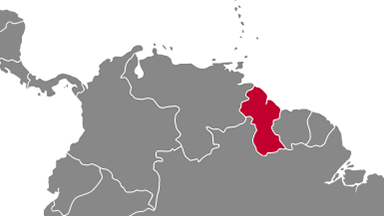
Guyana • South America
In partnership with: National Centre of Educational Resource Development (NCERD)
Get answers live — every weekday at .
Apply by
November 15, 2026Know by
January 1, 2027Depart on
May 30, 2027Duration
10 monthsAbout the project
Guyana is looking for passionate educators and science professionals to make science education come alive through experimentation and hands-on discovery.
The Ministry of Education’s teacher training center, National Centre for Educational Resource Development (NCERD), has prioritized improving science, math, engineering, and mathematics (STEM) education by strengthening the teachers’ capacity in experiential and laboratory-based teaching. A major challenge to expanding STEM education in Guyana is the shortage of trained personnel to supervise and deliver STEM programs. Currently, STEM efforts are driven mainly by a small non-governmental organization with limited staff and resources, meaning only a few schools can fully participate. Although the Ministry of Education has attempted nationwide STEM initiatives in the past, these were not sustained.
As a Teachers College Science Education Trainer, you will work closely with the NCERD staff to effectively deliver practical science and laboratory-based instruction while fostering a safe learning environment that encourages inquiry, creativity, and collaboration. Together, you will help bridge the gap between theory and practice, making science meaningful, accessible, and exciting for learners of all backgrounds. Beyond the classroom, you will play an important role in developing scientific curiosity, environmental awareness, and critical-thinking skills among the youth through science programs and experiential learning.
Learn more about what Volunteers do in country by visiting our Guyana project page.
Required skills
Qualified candidates will have the following criteria:
Bachelor's degree in science, technology, engineering, or mathematics (STEM), or in a related field (e.g., education) with a teaching certification.
AND
Two or more years of teaching experience in one of the following areas: math, chemistry, physics, computer science, biology, earth sciences, or art.
Language: There are no pre-requisite language requirements for this position.
Required behavioral competencies
These competencies are essential for all service assignments and are assessed in the application and interview process:
Motivation for and commitment to service
Adaptability and open-mindedness
Problem solving and resourcefulness
Behavioral maturity and professionalism

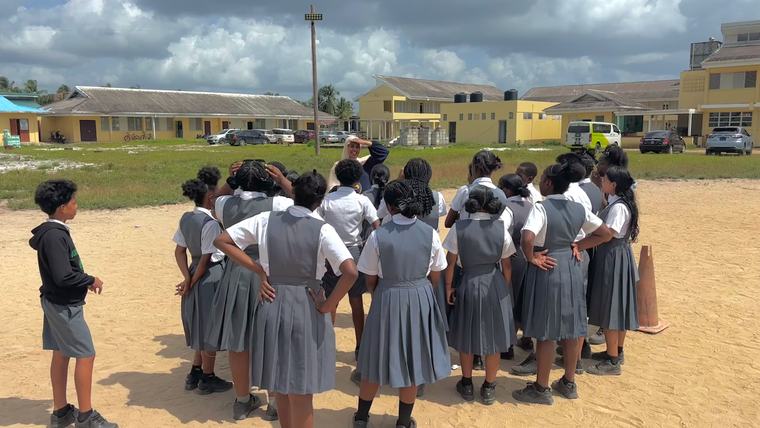
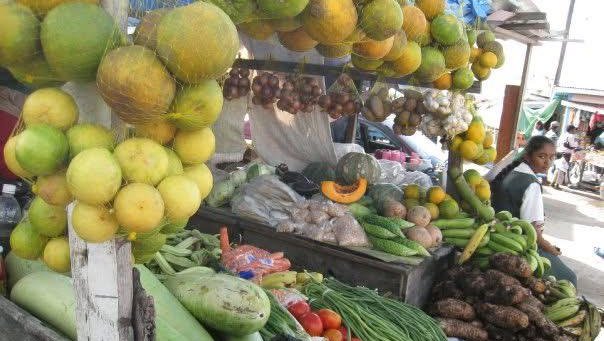
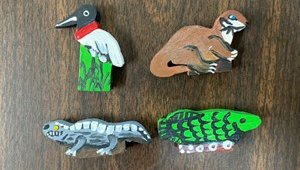
Photos from Guyana



How you and the community will make an impact together:
Support the preparation, management, and maintenance of laboratory environments for effective instruction and experimentation.
Develop and implement new hands-on experiments that align with the curriculum.
Manage laboratory inventory, stock control, equipment maintenance, calibration, and minor repairs.
Maintain laboratory safety and compliance by ensuring proper handling, storage, and disposal of hazardous materials according to established regulations.
Provide safety training and support risk assessments for students, staff, and laboratory assistants, including emergency response procedures and safe laboratory practices.
Guide students and teachers in scientific techniques, experimental procedures, troubleshooting, and the effective use of laboratory equipment.
Promote critical thinking, problem-solving, and the application of theoretical science to real-world laboratory experiences.
Strengthen laboratory systems through school visits, safety awareness, and regional laboratory resources.
You may also work on additional projects that meet the community’s interests and priorities, such as strengthening organizational development through the adoption of improved practices, enhanced tools, or strategic resources.
Peace Corps Response Volunteers (PCRVs) serve in regional communities ranging from remote towns to semi‑urban villages. PCRVs will be accommodated in host families as a priority, with limited independent housing. Daily life may include modest living conditions with limited electricity, internet, and running water. While most sites are rural, Volunteers can visit larger markets monthly to restock supplies.
Learn more about the living conditions, including detailed information on culture, communications, housing, and health/crime statistics on our Guyana country page. You can also delve into stories about local communities by reading our blog or Volunteer stories.
Meet a Volunteer in Guyana

Chance H.
Environmental Education Promoter
"Living far from basic modern amenities, many hours from the capital, and deep in the jungle teaches you a whole other level of patience."
See full Volunteer profile
After a two-week orientation on topics such as health and safety, you will move to a rural or semiurban community where you will collaborate with the NCERD staff to assess the educational needs and develop a work plan in line with their established goals.
Only heterosexual couples can be accepted for this program. Each person must apply separately and must qualify for a position in either the same or a different sector than their partner. Couples will live together during training but may separate occasionally for field-based activities. Couples who are selected for the same sector will live together but work with different local partners which may be in the same community or in neighboring communities (not more than 30 minutes apart).
To learn more about serving as a couple in Guyana, visit the country page.
Application process
From application to departure takes around nine months. Learn about the application process for Volunteer opportunities.
Medical/legal clearance
You will need to be cleared medically and legally in order to serve in Guyana. Review information on medical clearance and legal clearance to learn about the process.