An official website of the United States government

Official websites use .gov
A
.gov website belongs to an official government
organization in the United States.

Secure .gov websites use HTTPS
A
lock (
) or https:// means you’ve safely connected to
the .gov website. Share sensitive information only on official,
secure websites.

Search
Connect with the Peace Corps
If you're ready for something bigger, we have a place where you belong.
Apply to the Peace Corps
The application process begins by selecting a service model and finding an open position.

Let us help you find the right position.
If you are flexible in where you serve for the two-year Peace Corps Volunteer program, our experts can match you with a position and country based on your experience and preferences.
Serve where you’re needed mostAgroforestry Program Specialist
 Agriculture
Job highlights
- Develop transferrable skills supporting an academic research organization in a new country.
- Make a positive impact by strengthening local agriculture and forestry expertise.
- Foster connections between academic research communities in Nepal and the U.S.
Get answers live — every weekday at .
Apply by
October 15, 2026Know by
December 1, 2026Depart on
May 15, 2027Duration
10 monthsAbout the project
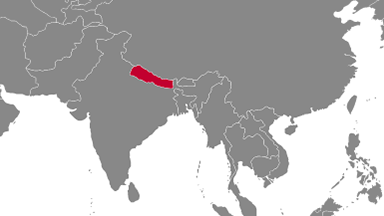
Looking to share your agriculture or forestry expertise with Nepal’s next generation of innovators?
Tribhuwan University, Nepal’s primary university, is looking for professionals to support skill-building efforts among students and faculty at the university’s agriculture and forestry institutes. Campus deans and chief officials identified a critical need to strengthen knowledge related to academic research, including but not limited to proposal and report writing, sampling techniques, data collection practices, and statistical tools for data analysis. The aim is to produce more skilled graduates for rural extension services; improve the university’s capacity to teach modern agriculture and forestry practices and technologies; enhance instructors’ skills in practical, hands-on teaching and research-based, field-focused methods; and to increase student access to academic and professional opportunities.
As an Agroforestry Program Specialist, you will collaborate with staff to support the students design research projects, improve their English, and learn digital skills. Alongside the campus staff, you will identify and implement solutions to improve the nascent research facilities and laboratories.
Learn more about what Volunteers do in country by visiting our Nepal project page.
Required skills
Qualified candidates will have the following criteria:
A master’s degree in agriculture, agriculture economics, statistics, research techniques and information science, chemistry, microbiology, forestry, environmental sciences, natural resources management, or other laboratory sciences.
Language: There are no pre-requisite language requirements for this position.
Required behavioral competencies
These competencies are essential for all service assignments and are assessed in the application and interview process:
Motivation for and commitment to service
Adaptability and open-mindedness
Problem solving and resourcefulness
Behavioral maturity and professionalism

Photos from Nepal



How you and the community will make an impact together:
Assess ongoing research activities and identify the priorities for student-led research activities.
Support skill-building programs for students on technical writing, academic integrity, and research dissemination.
Design standard research protocols for prioritized research activities.
Facilitate trainings or workshops on research design and implementation.
Provide on-site mentoring and coaching to students, including constructive feedback on research progress and findings.
Provide feedback and editing support for student master’s and doctoral theses where appropriate.
Teach selected courses at the bachelor’s or master’s level within subject-matter expertise.
Provide guidance and support for research grant proposals submitted by the campus or dean’s office.
You may also work on additional projects that meet the campus’s interests and priorities, such as developing forestry museum exhibits or supporting a local public school.
The Volunteer will live in approved housing within the campus or near the assigned campus in the form of a rented apartment, guest house, or dormitory with access to basic amenities and grocery markets. While Volunteers can expect their own room or apartment, privacy is limited with communal-style living. Multiple Volunteers assigned to one campus may share multi-bedroom flats. Homes in Nepal are generally made of bricks, mud, or cement and have passed earthquake-safe inspections conducted by the Peace Corps staff. Public transportation and internet access are readily available.
Learn more about the living conditions, including detailed information on culture, communications, housing, and health/crime statistics on our Nepal country page. You can also delve into stories about local communities by reading our blog or Volunteer stories.
Meet a Volunteer in Nepal

Kindness H.
Food Security Volunteer
"When I first arrived, I couldn’t imagine what my life would be like in the next six months. I have met so many people since I've been here, and I can’t wait to get to know them even more."
See full Volunteer profile
After a 2-week orientation on topics such as health and safety, you will move to your assigned campus location along with a Peace Corps Language and Cultural Facilitator (LCF) who will be available to assist for up to 10 days as you meet university staff and acclimate to your new home.
Peace Corps/Nepal will equip you with Nepali language resources and you may work with a local tutor who can help you build basic language skills to connect with the community.
Only heterosexual couples can be accepted for this program. Each person must apply separately and qualify for a position in the same sector as their partner. Couples will live together during training but may separate occasionally for field-based activities. Couples who are selected for the same sector will live together but work with different local partners which may be in the same community or in neighboring communities (not more than 30 minutes apart). Cohabitating couples are highly encouraged to present themselves as married throughout service due to cultural expectations.
To learn more about serving as a couple in Nepal, visit the country page.
Application process
From application to departure takes around nine months. Learn about the application process for Volunteer opportunities.
Medical/legal clearance
You will need to be cleared medically and legally in order to serve in Nepal. Review information on medical clearance and legal clearance to learn about the process.