An official website of the United States government


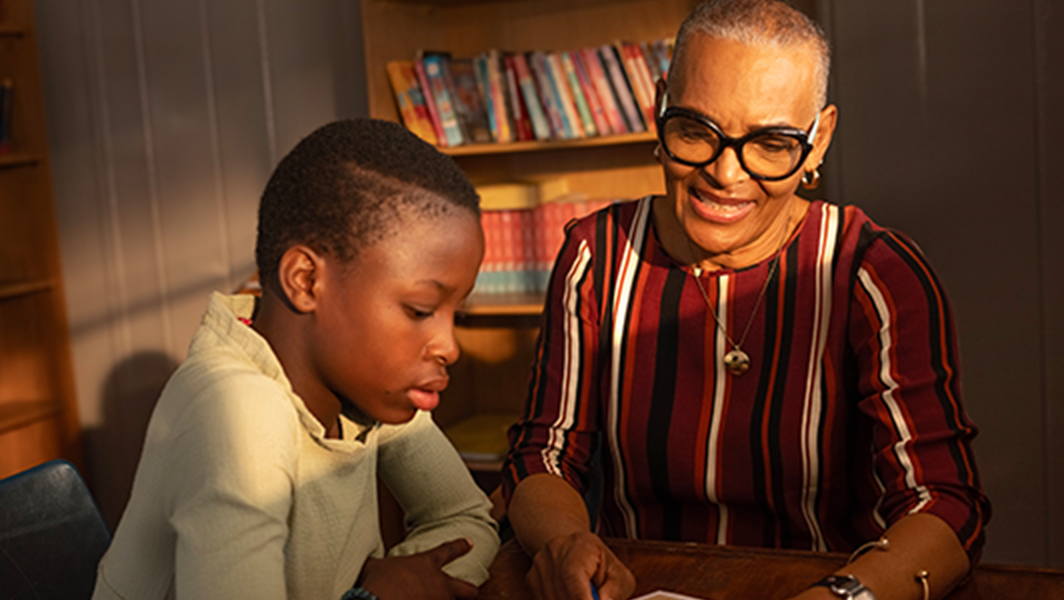
How Volunteers use language to connect with communities abroad
There’s a reason Peace Corps takes language training so seriously, and it’s not just to make sure Volunteers can communicate on the job in their new communities or get their needs across to their host families—although both of those things are important, too.
Language is more than a tool to make yourself understood; it’s a clear and direct way to gain a better understanding of a culture, bridge cultural differences, and add joy and levity to your Peace Corps Volunteer days. This Peace Corps Language Week, read on to discover the ways Volunteers around the world use languages as a critical tool for service, and how Volunteers help build bridges for others by teaching English to members of their communities.
Language is a bridge
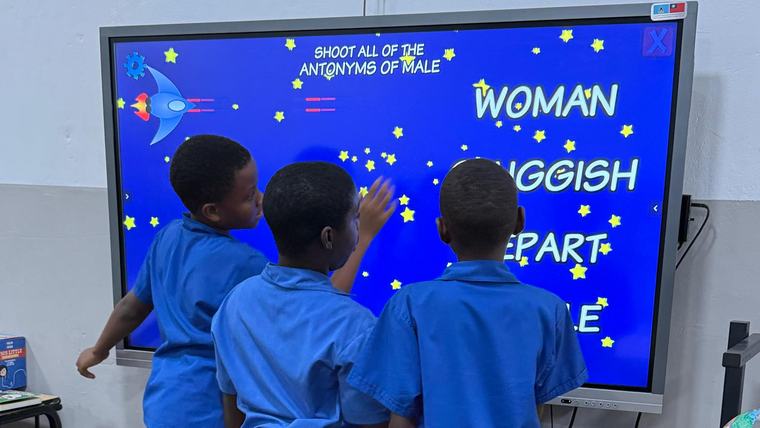
Peace Corps Volunteers, worldwide, collectively learn over 90 languages. When Volunteer Laura A. first began learning Armenian for her service in Armenia, she wondered if it was worthwhile, “because Armenian is not a language which would serve me in the future, or one that could even look impressive on a resume.” However, she dedicated herself to the study of the language because she began noticing that people took more interest in her when they saw she was trying hard to communicate with them in their language. As she writes in her blog, “…when Armenians started to notice how much importance and time I was giving to their language, we automatically started bridging a gap of difference, and they became interested in me as an individual and in where I was coming from.” Laura found that her willingness to learn the language allowed her to make much better progress addressing the second of the three goals of the Peace Corps— “to help promote a better understanding of Americans on the part of the peoples served.” Further, the Peace Corps’ largest sector is Education—with a particular emphasis on English language education, which promotes a better understanding of American values and opens doors of opportunity. As the language of global commerce, knowing English can be a pathway to higher education, business, and a deeper understanding of the values Americans hold dear.
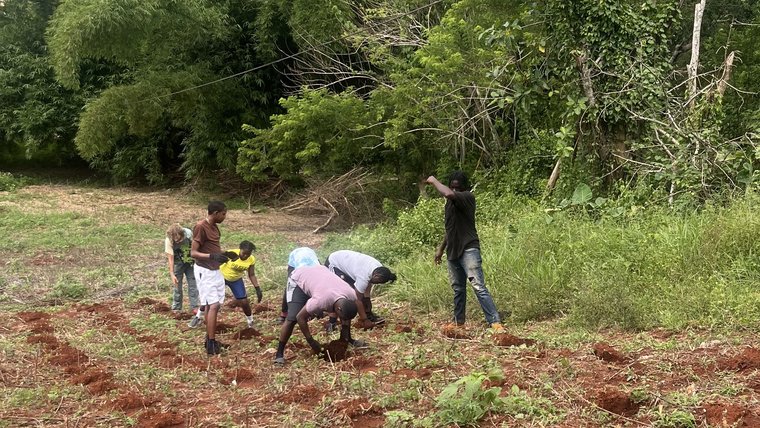
A new language can also be a way to address the third goal of Peace Corps—“to help promote a better understanding of other peoples on the part of Americans.” Volunteer Sophia Z., who is serving as an Agriculture Volunteer in Jamaica, learned sign language during service, and plans to continue using that language when she returns home—she’s hoping to use the new way of communicating to connect to the Deaf community when she’s back in New York City. What better way to share Peace Corps stories than using a new language that will really bring the experience home to a new audience? When Volunteers return home, they are equipped with valuable leadership, technical, management, and language skills that make them assets to the U.S. workforce as successful entrepreneurs, business owners, and community members.
Language is connection
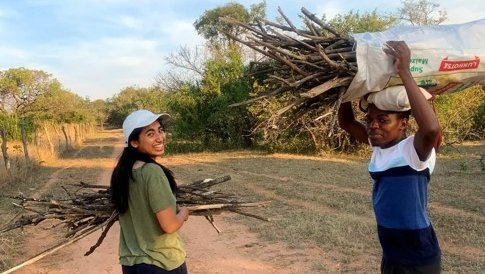
Volunteer Arosah A., a Youth in Development Volunteer in Eswatini, points out that, for her, language—fluent or not—is a major tool for connecting with her new community members. She says, “Learning the local language, Siswati, has been a vital part in my integration into the community as it shows my desire to learn their culture. Moreover, it is a great way to break the ice as an outsider and make myself more relatable. Sometimes, the local people and I will laugh at my broken Siswati, or they’ll be pleasantly surprised at my knowledge of expressions and slang.”
In the case of Briley Lewis, a Youth in Development Volunteer in Dominican Republic, learning both Dominican Spanish and some Haitian Creole helped him share a church service with a multilingual Haitian community. He says, “Although I lost myself frequently in the trilingual service—Spanish, Haitian Creole, and French were all spoken—I was able to recognize the pastor’s gesture for me to come introduce myself to the congregation. After giving my well-rehearsed Volunteer introduction in Spanish, I decided to give the same introduction in Haitian Creole. To hear the emphatic applause afterwards filled my heart with so much love and enthusiasm; I felt the warmth of a new culture I had not previously known.”
Language is fun
William B., an Agriculture Volunteer in Benin, uses language exchange as both an educational tool and a way to provide entertainment for himself and the children in his community. “A highlight has been the time I spend with the kids who live in my neighborhood. They’re so funny and they’re the highlight of my days. We do a language exchange; I teach them English or French and they teach me Idaacha while we play games together.”
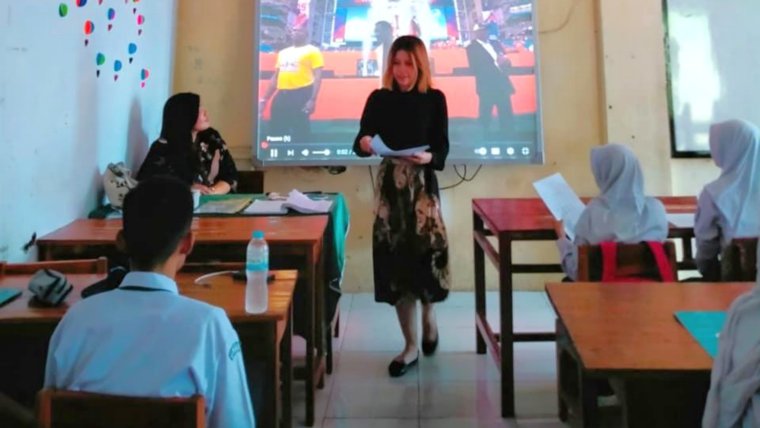
Education Volunteer Cassandra H. finds that humor is an important part of verbal interaction in Indonesia. When asked what strategies she uses to integrate, she points to “learning the ethnic Sundanese language spoken in my area.” She details how her “attempts at speaking Sundanese often amuse community members, and I add light, respectful humor in Bahasa Indonesia to connect with their fun-loving culture. I learned early on that people here enjoy joking and don’t take things too seriously, so I try to adapt and reflect that in my interactions.”