 An official website of the United States government




Featured Volunteer Profile
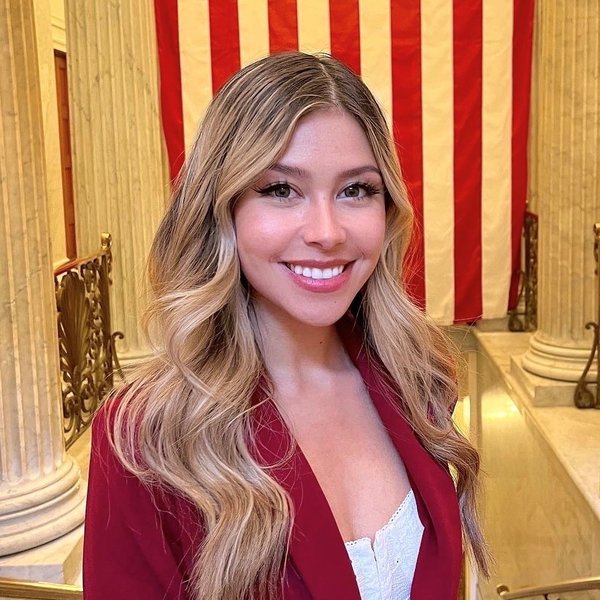
Cassandra H.
“In this culture, people genuinely show up for one another, and it’s a reminder that, beyond material things, what truly matters are the relationships we build.”
1. What got you interested in the Peace Corps?
During high school, I was actively involved in my community and completed many hours of volunteer work, which sparked my long-term interest in service. Since then, I dreamed of joining the Peace Corps as a way to combine my passion for helping communities with my deep interest in international work and foreign service. The Peace Corps provides a strong foundation to pursue both of these goals, and I deeply admire its mission of promoting mutual understanding, cultural exchange, and sustainable development.
My desire to serve was solidified during high school when I volunteered to teach English in a remote Indonesian village one summer. That experience helped me realize that I wanted to serve in Peace Corps’ Education sector and return to Indonesia. I’m grateful to now be living that dream, teaching English to middle school students and building meaningful relationships over these two years.
2. What projects are you working on?
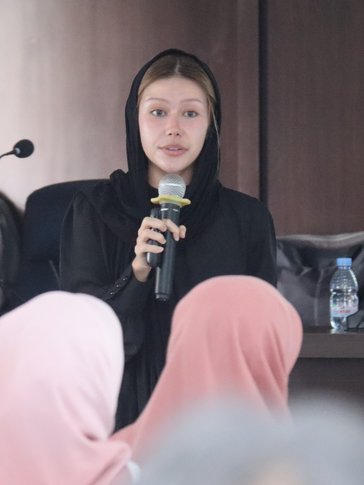
My main assignment is teaching English at a public middle school where I currently run two English clubs—one for students and one for teachers—but the most impactful project I've led is the implementation of “English Day” across all 112 middle schools in my regency. The school principal and I launched the idea of dedicating every Wednesday to English communication through clubs, games, scavenger hunts, and talent shows in order to boost students' and teachers’ motivation and confidence in using English.
The initiative gained attention and inspired the local Department of Education to expand it regionally. Since March 2024, we’ve worked with the department on logistics for broader implementation. When the new Head of Regency took office in February 2025, he adopted English Day as one of his top five goals, officially launching it in March 2025. Since then, I joined a working group to visit schools, lead workshops, and support principals and teachers in sustaining the program. We've also partnered with universities to mobilize aspiring English educators, each committing to support specific schools through memoranda of understanding (MoU).
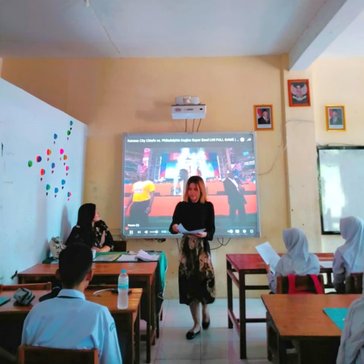
In addition, I co-led a two-day digital literacy workshop at my school to help teachers integrate technology into their classrooms. With limited tech resources, we started small—using phones for Kahoot, Canva, and digital surveys—while continuing efforts to secure more tools to better prepare students for a technology-driven future.
3. What strategies have you used to integrate into your community?
I try to attend as many community events as my schedule allows and actively participate by asking questions about local customs, food, and learning the ethnic Sundanese language spoken in my area. My attempts at speaking Sundanese often amuse community members, and I add light, respectful humor in Bahasa Indonesia to connect with their fun-loving culture. I learned early on that people here enjoy joking and don’t take things too seriously, so I try to adapt and reflect that in my interactions.
I also make a point to walk around my neighborhood, greet neighbors, and have small conversations with the local neighborhood leaders to build everyday connections. Food also plays a big role in community life here—even small gatherings involve snacks—so I try to engage through cuisine by cooking American dishes, trying local street food, or eating with neighbors.
As one of the only foreigners in my community, I recognized early on that I needed to take the initiative in building relationships. I make a conscious effort to approach people first, strike up conversations, and always greet others with a warm smile!
4. What is a highlight of your time in service so far?
Summiting Mount Ciremai, the highest mountain in West Java, while participating in an annual cleanup organized by the Mountain Clean-up Movement (Gerakan Sapu Gunung) has been one of the many highlights during my service thus far. I live in the foothills of this mountain and have always looked up at the summit from my backyard, wondering what it would feel like to reach the top of such a majestic mountain. I was fortunate to achieve that goal while helping the environment by picking up trash along the trail. The experience of reaching the summit alongside others who care deeply about nature was truly unforgettable. The climb itself felt symbolic of my Peace Corps journey—challenging yet deeply rewarding. And just like that hike, I believe the summit of my Peace Corps service is still ahead, waiting for me at the end of my service here.
5. What have you enjoyed most about the community where you are serving?
The people in my community have been the most memorable part of my experience. While I’ve made an effort to connect with my community, I was genuinely surprised by how approachable, exceptionally welcoming, and hospitable everyone has been from the very beginning. Community members regularly check in on me, asking if I’m healthy, happy, and still enjoying my time here. They make me feel truly included and cared for. I’ve been invited to countless events, introduced to a wide variety of traditional foods, and embraced as part of the community.
6. What are some of the most important things you’ve learned from your community?
What stands out most is their joy in even the simplest moments. That attitude has inspired me to slow down and appreciate the small things in life as well. One tradition that really touched me is how coworkers and community members come together to visit you not only during major events like weddings but also during times of illness, after the birth of a child, or following the loss of a loved one. These visits aren’t just gestures—they reflect a deep sense of community and shared responsibility. It makes me realize how important it is to have a village of support through life’s highs and lows. In this culture, people genuinely show up for one another, and it’s a reminder that, beyond material things, what truly matters are the relationships we build. Indonesia has a beautifully tight-knit and communal culture, and being part of it has taught me the value of showing up for others with the same warmth and care.
7. How do you spend time when you are not working on a project?
I enjoy spending my downtime practicing skateboarding at a small, improvised local skate park with other skateboarders, visiting new cafés in town with my counterpart and other community members, and feeding stray cats in the neighborhood.
I also really value spending time alone, whether it's practicing my violin and composing short songs, reading books, walking through the rice fields and sometimes chatting over coffee with farmers, or going on a peaceful bike ride.
8. What are you looking forward to in your remaining time as a Volunteer?
I look forward to helping my school secure more tools for more technology-driven classrooms, improving my Sundanese language skills, and visiting new regions in Indonesia such as Kalimantan or Nusa Tenggara Timur.
9. Once you finish service, what will you do differently when you return to the U.S.?
During my time in Indonesia, I’m often one of the only people in the room coming from a different cultural background, with a distinct set of values and worldviews. That experience has taught me how to navigate cultural differences with grace, understanding, thoughtfulness, and a bit of strategy. I’ve also learned to be resourceful and quick on my feet—taking initiative has become second nature.
Perhaps most importantly, living and working here has given me a much deeper understanding of Indonesia and its neighboring countries, far beyond what I could’ve learned from a distance. Along the way, I’ve developed a strong sense of empathy—for individuals and entire communities—that will continue to shape how I move through the world. I know I’ll carry these with me in both personal and professional spaces.
Learn more about serving as a Peace Corps Volunteer in Indonesia.



