 An official website of the United States government




Featured Volunteer Profile
William B.
“A highlight has been the time I spend with the kids who live in my neighborhood. We do a language exchange; I teach them English or French and they teach me Idaacha while we play games together.”

1. What got you interested in the Peace Corps?
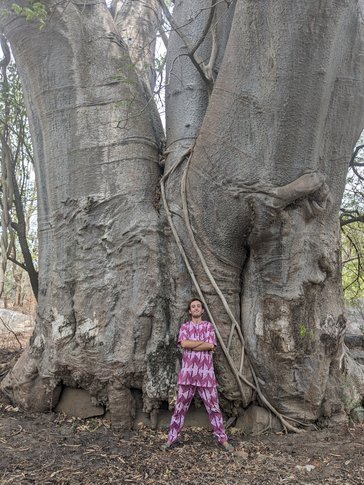
I’ve known about Peace Corps since middle school. By my college years I knew that I wanted to serve in the Peace Corps. It was an opportunity to challenge myself, travel, and use my good fortune as an American to help others. Originally I wanted to go to Madagascar to see the Baobab trees, as they are my favorite. I was very happy when I found an opening in Benin.
2. What projects are you working on?
Right now, I’m working on a garden with a few middle school students. They were given a section at my cooperative to practice gardening, and we’re growing carrots, lettuce and tomatoes. I’m also growing moringa trees so we can have a moringa tree planting day at my garden, and I can teach them about the benefits of moringa in their diet. We got a grant to repair the garden infrastructure and were able to install a simple irrigation system, fix the damaged fence, and install electricity to run the water pump. When I arrived, it was nonfunctional, so this has been a really impactful and exciting project. I also run a gardening club and an English club at the local school.
3. What strategies have you used to integrate into your community?
I visit the garden every day even if I don’t need to water or have a specific task. It’s important for me to show up and offer help to women in the cooperative. Generally just being present in the lives of the women in the cooperative and my neighbors is valuable.
Organizing an English club helped me build connections with the local school staff and students in my village and the neighboring village
4. What is a highlight of your time in service so far?
A highlight has been the time I spend with the kids who live in my neighborhood. They’re so funny and they’re the highlight of my days. We do a language exchange; I teach them English or French and they teach me Idaacha while we play games together.
5. What have you enjoyed most about the community where you are serving?
They’re very kind and respectful of my space and our cultural differences. They also look out for me, encouraging me to get out and do things when I am homesick and don’t want to leave my house, or they cook for me when I am ill.
6. What are some of the most important things you’ve learned from your community?
I’ve learned that relationships are far more important than material things or social status. Having friends and people that you can call family to help you when you’re having a hard time and share with the good times is the most important thing in life.
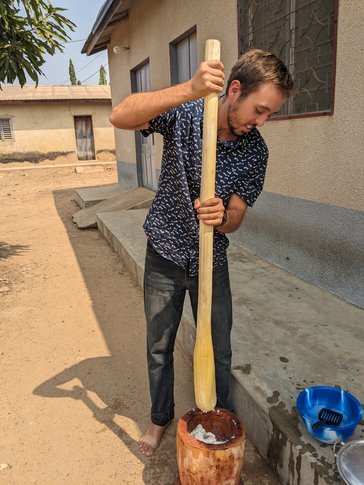
Also how to make igname pilee with sauce d’arichide (pounded yam with peanut sauce).
7. How do you spend time when you are not working on a project?
Hanging out with the kids on my front stoop. We either kick a ball or I share my art supplies, and we do little art days with crayons and paper; or dancing—we do a lot of dancing! They love to take and see videos of themselves dancing with my phone.
8. What are you looking forward to in your remaining time as a Volunteer?
I’m looking forward to setting up more art and creative projects with the school, like maybe art camp, or creating a world mural map.
9. Once you finish service, what will you do differently when you return to the U.S.?
I will build better relationships with my neighbors. I will volunteer in my community more. I will continue to enrich my life by learning about other cultures.
Want to learn more about serving as a Volunteer in Benin? Connect with a recruiter today.



