An official website of the United States government


How service shapes the lives and careers of Returned Peace Corps Volunteers
Stumbling over words in a new language. Sharing tea with a neighbor.
Playing games with young members of your host family. Discovering a delicious new fruit at the local market. Sharing an “aha” moment with a student. Over time, these moments of Peace Corps service leave an indelible mark.
But the impact of Peace Corps service is not confined to the months or years spent serving. Years or even decades later, the lives and careers of Returned Peace Corps Volunteers (RPCVs) remain profoundly shaped by their previous service overseas.
On Peace Corps’ 65th anniversary, we celebrate the ways in which the “toughest job you’ll ever love” imparts not only special memories and enduring friendships but provides the foundation for meaningful lives and careers that further Peace Corps values long after service has ended.
Kristy M., RPCV Paraguay (2019-2020)
Current position: Nurse coordinator for targeted community health outreach at New York-Presbyterian Hospital/Weill Cornell Medical Center
As a Community Health Volunteer with a background as a registered nurse, Kristy worked alongside healthcare workers in her community to support education around sexual health, mental health, and diseases.
Peace Corps shaped my entire professional path, and I do not believe I would have had the same drive for health advocacy and equity without my experience as a Volunteer. It highlighted the importance of building strong relationships and engaging with communities at a grassroots level, far beyond what I had been exposed to in school. This experience planted a seed for me to continue similar work in the future.
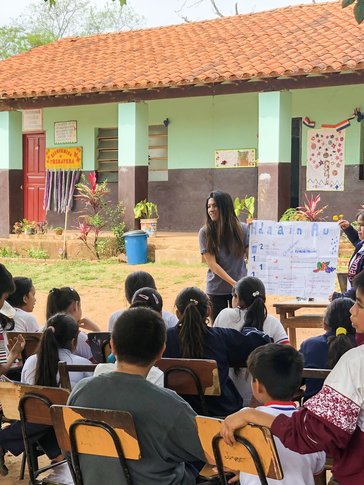
After returning to the United States, I earned a master’s in global conflict and human security with the assistance of a Peace Corps Coverdell Fellowship and a DACOR Bacon House Graduate Fellowship for the Study of International Affairs. This immediately opened the door to a new role beyond bedside nursing, allowing me to work with immigrants and marginalized communities in NYC through health screenings, advocacy, and education. Today, I help build a targeted health outreach team at one of the country’s largest hospital systems and serve on the associate board of a nonprofit that promotes health justice and medical-legal literacy for all New Yorkers.
I use nearly all the skills I developed during service in my current job on a daily basis. Most importantly, improving my Spanish-speaking ability has been pivotal in my career as a nurse serving a largely Spanish-speaking community. My strong foundation in intercultural competency, teaching, and capacity building has helped facilitate sensitive conversations and meaningful partnerships with community-based and faith-based organizations. These skills allow me to engage respectfully and effectively with diverse populations. Peace Corps also instilled resilience and perseverance, which are essential traits in outreach work. These qualities are especially important during challenging times, which are becoming more frequent in this field. Overall, my service prepared me to adapt, communicate, and lead with empathy.
Jack O., RPCV Cameroon (2015-2017)
Current position: Director, Humanitarian Programs, Americares
As a Community Health Volunteer Jack worked closely with local health centers to improve community members’ access to HIV/AIDS medications and support continuity of care for people living with HIV/AIDS.
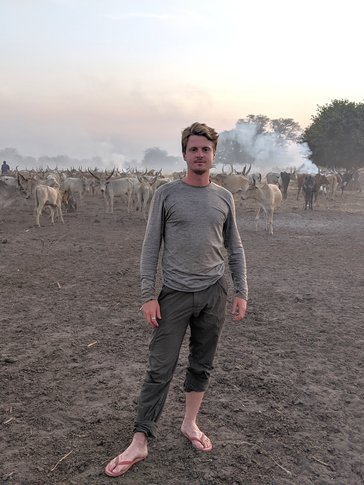
My Peace Corps service directly shaped my career in humanitarian aid and global health. While I had an interest in this field before serving, Peace Corps gave me the firsthand experience needed to fully understand and commit to this path. Living and working in a rural community exposed me to the realities of healthcare access, health inequities, and the importance of locally led solutions.
In my current role as director in the Humanitarian Programs Department at Americares, I manage projects in some of the world’s most complex environments, including Palestine, Syria, and Sudan. Every day, I rely on the skills I developed during my Peace Corps service. Peace Corps taught me patience, adaptability, and the importance of listening before acting. I learned how to work effectively across cultures and build trust with partners from diverse backgrounds. These skills are essential when managing programs that require strong collaboration with local organizations and communities. Peace Corps also strengthened my problem-solving abilities and taught me how to remain flexible in uncertain and challenging conditions.
The experience showed me that meaningful solutions come from partnership and humility, not from imposing external ideas. These lessons continue to shape how I lead programs and engage with partners around the world.
Larcus P., RPCV Guinea (2008-2009)
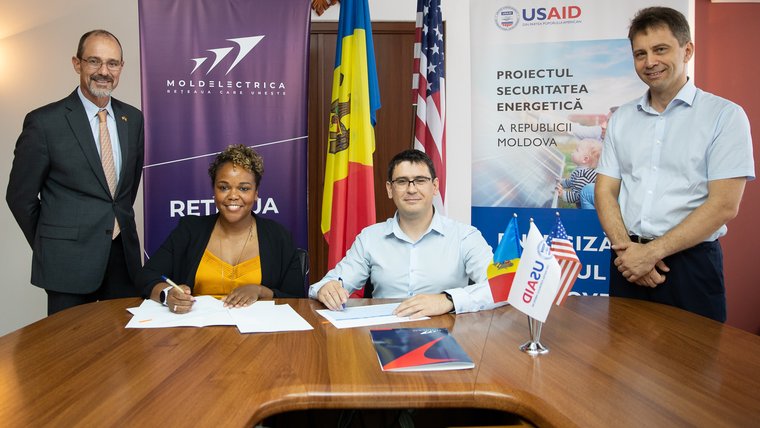
Current position: Senior project manager, Tetra Tech
Larcus served as a secondary school math teacher in southwest Guinea. In addition to teaching, she facilitated supply drives for her school and helped organize a girls’ conference focused on gender-based violence.
Peace Corps remains one of the most influential chapters of my life and career. The hands-on experience of teaching and participating in daily activities with my host family and village exposed me to both exceptional moments and the realities of living in areas where resources are significantly limited, infrastructure underdeveloped, and political uncertainty persists.
Witnessing these challenges firsthand inspired me to pursue a career dedicated to service and international development, with a particular focus on policy.
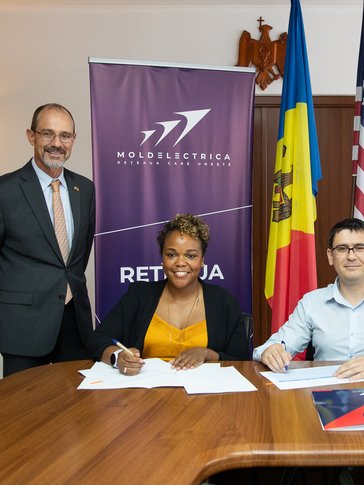
Motivated by my time in Guinea, I pursued a master’s degree in public administration, which equipped me with the skills to lead energy-related projects across sub-Saharan Africa, the Western Balkans, and Eastern Europe. My work has centered on enabling access to electricity, and developing reliable, affordable energy systems to drive sustainable development.
The ability to remain flexible and open-minded was shaped by my time in Guinea, where I initially arrived with a vision of what I wanted to accomplish. However, the realities of the environment quickly revealed the importance of humility and listening deeply to those around me. The Peace Corps profoundly transformed my approach to international and service work, teaching me that meaningful solutions to systemic problems require genuine understanding and collaboration, rather than imposing preconceived beliefs. This lesson has shaped my leadership style as I strive to foster inclusive teams, encourage open communication, and remain open in the face of uncertainty. The Western way is not always the right way, and my Peace Corps experience taught me to value local perspectives and adapt strategies to fit the context.
This mindset continues to guide my work, whether managing projects across cultures or designing programs. The ability to release judgment, listen, and co-create solutions is a common thread throughout my professional journey.
Read more about the ways Peace Corps service has influenced the lives and careers of Volunteers.