 An official website of the United States government




Returned Volunteer Profile
Kristy M.
“The Peace Corps shaped my entire professional path, and I do not believe I would have had the same drive for health advocacy and equity without my experience as a Volunteer.”
1. What were your primary responsibilities during service?
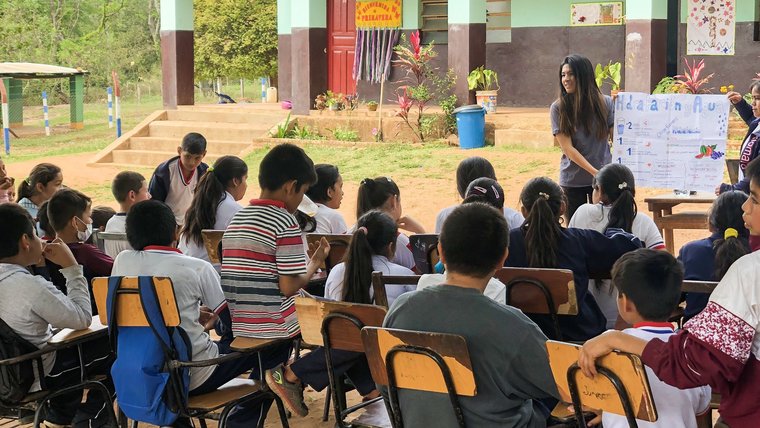
As a Community Health Volunteer with a background as a registered nurse, my goal was to use my professional knowledge to help guide lesson planning with the local doctor, nurses, and health team in my community. I split my time between working at the community health post and teaching health lessons in local schools. Most of my lessons focused on sexual health, mental health, and noncommunicable diseases. I especially enjoyed teaching topics that were often avoided or considered uncomfortable. I worked to be an accessible and trusted outlet for children, teens, and community members who wanted to ask difficult or sensitive questions. My role emphasized education, prevention, and building trust within the community.
2. What projects did you collaborate on with your community?
The majority of my projects were health-related and focused on community education and empowerment. I created many campaigns in collaboration with the community health workers at my local health post, and I owe much of my success to their partnership and dedication. Together, we developed interactive and engaging presentations on topics such as breast cancer awareness, diabetes and hypertension management, self-identity, STI prevention, and safe sex.
I also spent a significant amount of time helping renovate the former health post into a community health and education center, which will eventually host health clubs and community meetings. One of my most successful initiatives was organizing Zumba and exercise clubs several times a week to promote healthy lifestyles. The goal was to empower community members to co-teach once they felt comfortable, allowing them to practice with family and friends.
In addition, I hosted a small English class with neighbors and completed a world map project with my site mate and elementary school students.
3. How did Peace Corps service influence your professional path?
Peace Corps shaped my entire professional path, and I do not believe I would have had the same drive for health advocacy and equity without my experience as a Volunteer. It highlighted the importance of building strong relationships and engaging with communities at a grassroots level, far beyond what I had been exposed to in school. This experience planted a seed for me to continue similar work in the future.
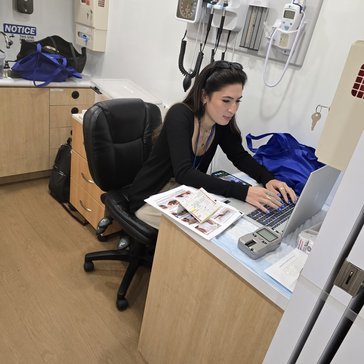
After returning to the United States, I earned a master’s in global conflict and human security with the assistance of a Peace Corps Coverdell Fellowship and a DACOR Bacon House Graduate Fellowship for the Study of International Affairs. This immediately opened the door to a new role beyond bedside nursing, allowing me to work with immigrants and marginalized communities in NYC through health screenings, advocacy, and education. Today, I help build a targeted health outreach team at one of the country’s largest hospital systems and serve on the Associate Board of a nonprofit that promotes health justice and medical-legal literacy for all New Yorkers, regardless of income or immigration status.
4. How do you use skills honed during service in your current job?
I use nearly all the skills I developed during service in my current job on a daily basis. Most importantly, improving my Spanish-speaking ability has been pivotal in my career as a nurse serving a largely Spanish-speaking community. My strong foundation in intercultural competency, teaching, and capacity building has helped facilitate sensitive conversations and meaningful partnerships with community-based and faith-based organizations. These skills allow me to engage respectfully and effectively with diverse populations. Peace Corps also instilled resilience and perseverance, which are essential traits in outreach work. These qualities are especially important during challenging times, which are becoming more frequent in this field. Overall, my service prepared me to adapt, communicate, and lead with empathy.
5. How have you shared the value of Peace Corps service and communities abroad with people in the U.S.?
I was grateful to be invited to present at a local elementary school through Peace Corps’ Global Connections program shortly after returning to the United States. I taught a lesson about Paraguay and my experience as a Peace Corps Volunteer to a class of about 20 highly engaged students who asked thoughtful questions. Many were especially interested in learning about Paraguay, a country that is often overlooked. In addition, I presented at a career day at my former middle school, where I shared my journey as a nurse in the Peace Corps. I believe it is meaningful for students to see how one career path can blend into another, less traditional path. These experiences allowed me to promote global awareness and inspire curiosity about service and cultural exchange.
6. What Peace Corps benefits have been useful to you?
The Peace Corps Coverdell Fellowship, along with the DACOR Bacon House Graduate Fellowship for the Study of International Affairs, allowed me to earn my master’s degree at no cost. This opportunity truly changed the trajectory of my career. The department leaders in my program were incredibly supportive and enthusiastic about having a Coverdell student. I was also able to connect and collaborate with many other Coverdell Fellows through class discussions and presentations. These relationships strengthened my academic experience and expanded my professional network. The financial and mentorship support I received continues to benefit me today.
7. How have you remained involved with the Peace Corps community following service?
My Peace Corps cohort recently celebrated our 5-year reunion in Seattle this past September. It was wonderful to reconnect and see where life had taken everyone. I remain in regular contact with fellow Volunteers, friends from my host community, and former host family members. My partner is a host-country national, which has given me additional reasons to stay connected to Paraguay and return frequently since my service. Some of my closest friends still live there as well.
I was also honored to be selected for the National Peace Corps Association’s 40 Under 40 list for 2025. The connections I built through this recognition have been incredibly meaningful. The Peace Corps community has consistently supported me, and I am deeply grateful for that.
8. What do you miss most about your host country?
There are many things I miss about Paraguay, including the friendliness of its people and its rich traditional culture. Much of this culture remains beautifully preserved compared to many surrounding countries. I also miss the sunsets, hospitality, street food, and sense of community. Most of all, I miss the sense of freedom I felt while living there. My Peace Corps experience was deeply transformative and helped shape who I am today. I am incredibly grateful for that time and for where it has led me personally and professionally.
9. What’s your favorite phrase in the local language of your host country?
"Nde Tavy!" It’s a Guaraní phrase that translates to “You’re crazy!” and is used in many different contexts, but I like this phrase in particular because I named my cat (who came home with me from Paraguay) TayTay, short for Tavy! Fun fact: Paraguay is one of the few countries where an Indigenous language has the same official status as a colonial one. Most people grow up bilingual, using both Spanish and Guaraní in everyday life.
10. What would you say to someone thinking about joining the Peace Corps?
Take time to reflect on why you want to join. Too many people go into Peace Corps with a specific goal in mind for how it will influence their career path after service, and I don’t think that should guide your decision to join or not to join. It is one of the few times in life when you truly get to live authentically and use every skill you have to be successful.
It’s important to avoid thinking that you are going to change the world. Your community members and counterparts are already capable of change. Sometimes you are the missing catalyst, and sometimes you are not, but the biggest impact often happens in small conversations or in moments when you least expect it.
Try to reframe your mindset around why you want to go and what kind of change you hope to make. Everyone’s experience is different—country to country, site to site, and year to year. No two people have the same journey, so do not compare yourself to others. You will bring different strengths, and your site will bring unique challenges. What you put into the experience is what you will get out of it, so allow yourself to live in the moment. Peace Corps really redefines what success looks like, and most things only get accomplished through perseverance and relationship-building. We are working and living through very different lenses than we were even a few years ago, and this type of service requires thoughtful, sensitive, and culturally competent people.
Lastly, you will meet some of the best people of your life, who may become your closest friends, and the experience may change you the way it changed me, both personally and professionally.
Learn more about serving as a Peace Corps Volunteer in Paraguay.



