 An official website of the United States government


Returned Volunteer Profile
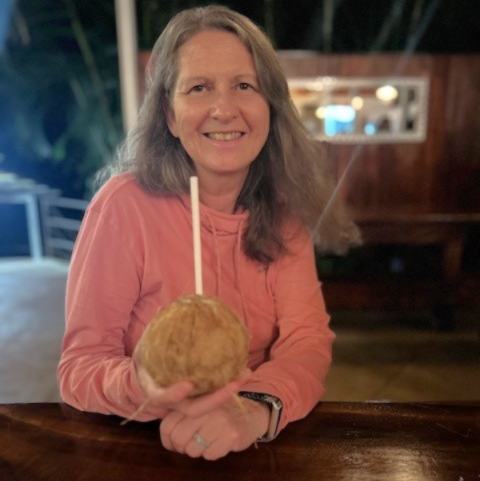
Laura L.
“Not only did I (re)learn self-reliance, but because of my service, I realized that personal and professional goals can—and should—overlap! It ignited a desire to serve and/or work in other countries, and to travel to all seven continents.”
1. What were your main responsibilities as a Volunteer?
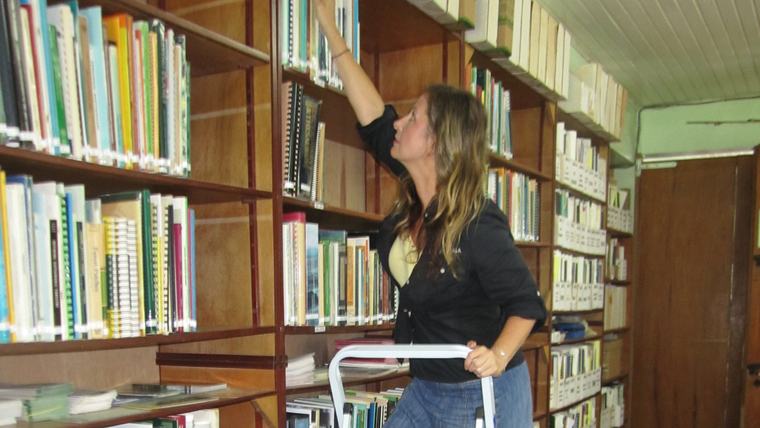
I was an English teacher for first to fourth grade students, with a secondary project as community librarian. The school I worked at was located right on the beach and had a total of 36 students in grades one to six. With class sizes ranging between two to five students, I really got to know each student. It was a dream assignment.
2. What was a highlight of your time in service?
There are so many, but one highlight was my unexpected friendship with Paramount High Chief Reklai Raphael Bao Ngirmang. While I was there, he was probably the second most powerful man in Palau, and I was lucky enough to live in his village. At 75 years old, he shared the most fascinating stories of his life, many including the time he served in the U.S. Marine Corps. We collaborated on several writing projects (professional letter and speech writing). This was not the usual type of writing I did, so it was quite a challenge.
He asked me to “ghostwrite” two speeches for him, which of course he tweaked and made his own. The first was for a U.S. Embassy event, and the second was for a Palauan Independence Day celebration.
Another time, a foreign government agency erected a plaque in a memorial garden in Palau, which, when translated, was mildly offensive. The Reklai received several complaints from tourists and a formal one from an ambassador concerning this plaque’s wording. The Reklai wrote a letter about this matter, which I edited, and we were able to get the plaque replaced with new, non-offensive verbiage.
The chief next requested me to help him write a letter to his "good friend John." After a bit more digging, I learned that “John” was (then) presidential candidate Senator John McCain! According to the chief, the two were once-upon-a-time fishing buddies.
3. What did you enjoy most about the community you served?
I loved (and truthfully also hated at times) that everyone knew me, where I was, and what I was doing, at all times. As a single, middle-aged woman, it gave me a sense of security. I took evening walks and felt safe, knowing the entire village knew my whereabouts. It really was “fishbowl” living.
4. What are some unique aspects of the culture that you cherish?
The First Childbirth Ceremony, or "Omengat," is a beautiful, unique community celebration of a new mother and her first child. The mother is essentially sequestered by female family members for several days prior to giving birth and treated with fragrant native herbs and oils. She and the baby are then presented to the community in a public ceremony, where she is called forward through chanting or crooning. The new mother is radiant, adorned with fresh flowers, clothing made from palm fibers, and a handmade turtle-shell belt around her bare waist. There is much dancing, music, and, of course, food. It is a very special way to honor a new mother.
5. How did Peace Corps service influence your personal and/or professional path?
I joined the Peace Corps a few years out of a 20+ year abusive relationship, and it completely redefined my life. Not only did I (re)learn self-reliance, but because of my service, I realized that personal and professional goals can—and should—overlap! It ignited a desire to serve and/or work in other countries, and to travel to all seven continents. I went on to work in Japan for a summer; joined the Peace Corps again (2012), this time as a Response Volunteer serving in the Iwokrama Rainforest in Guyana; and had a five-month deployment to Antarctica.
During my career I’ve chosen nonprofit or public-service roles (public schools, public library, and most recently in a children’s advocacy center). I am excited about returning to Antarctica this fall to work for five months. All my world exploration and career choices I attribute to the confidence I developed during my Peace Corps service.
6. How have you shared the value of Peace Corps service and communities abroad with people in the U.S.?
Since returning from Palau in 2009, I have been lucky enough to participate in many events: elementary school World Tour Days and/or presentations; Girl Scouts Thinking Day; a college recruitment fair; a college class presentation; public library talks; website contests, a presentation for the Colorado Returned Peace Corps Volunteer (RPCV) group; and informal chats among friends, family, and strangers (if they let me!) every chance I get. I am proud to have influenced at least one young person to join the Peace Corps and delighted in following his journey.
7. How have you remained involved with the Peace Corps community following service?
I am active in our local Southern Colorado RPCV group and am a member of both the Colorado Peace Corps group and the National Peace Corps Association. I have attended a few webinars for RPCVs. I volunteered during the 2017 Peace Corps Connect Conference in Denver. Through Facebook, I have watched my students in Palau grow up and have their own children and even connected with two students recently while they were stationed in Colorado Springs. For years, I donated school supplies to the school. I am in touch with many of the Volunteers from the Micronesia group (not just the Palau faction), and still connect with them monthly, if not weekly. We have attended one another’s weddings, met each other’s children, and vacationed together. I truly love my Peace Corps community.
8. What do you miss most about your host country?
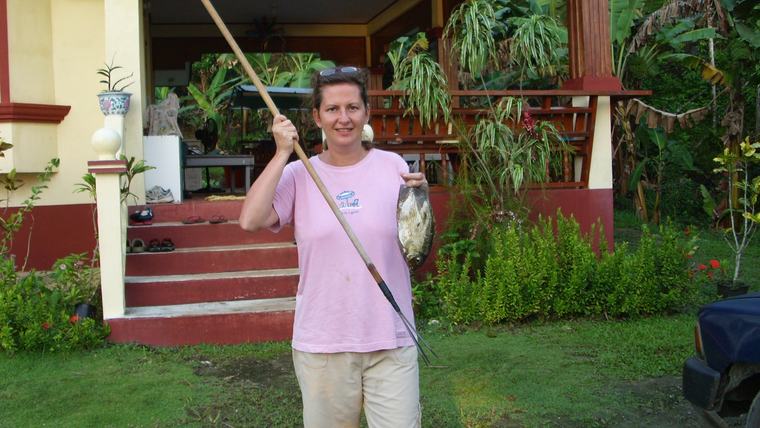
Palau is so unbelievably beautiful, with crystal clear waters teeming with colorful reef fish and stretches of pristine beaches lined with swaying palms. Of course, I miss swimming and snorkeling in the ocean, but what I miss most is watching the gorgeous, happy, barefoot children lucky enough to be growing up there, splashing and playing in the water, chasing one another through the sand, or fishing using a simple “pole” comprised of fishing line and a discarded water bottle.
9. What’s your favorite phrase in the local language of your host country?
In Palau, instead of saying, “How are you?” people greet one another with either “Where are you going?” or “Where were you?” My favorite exchanges occurred on my evening walks, or “strolls,” as the Palauans called them, and went something like this:
Palauan: “Alli! Ke mo er ker?” (Hey! Where are you going?)
Laura: “Ungil kebesengei! Ak mo er a ‘exercise.’” (Good evening! I’m just exercising.)
It was very common to throw an English word in the middle of a Palauan phrase when there was no Palauan word for it. It made it easier to understand the gist of the conversation!
10. What would you say to someone thinking about becoming a Volunteer?
I don’t think you would regret the decision. You will make lifelong friendships, expand your universe, and become infinitely more interesting. Do it! “Choi choi!” (Yes!)
Learn more about serving as a Peace Corps Volunteer in Palau.



