 An official website of the United States government




Featured Volunteer Profile
Timothy F.
“Being a Peace Corps Volunteer comes with many challenges. Suddenly, you have to integrate into a new community, learn a new language, and collaborate with others in your new community. These challenges, turned into opportunities, can reap great rewards.”
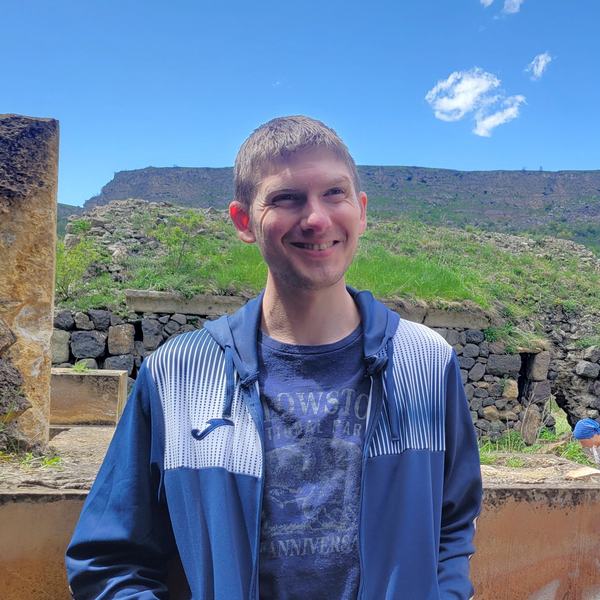
1. What inspired you to apply for this Peace Corps position?
I was a Peace Corps Volunteer in Mongolia from 2018 to 2020 and greatly enjoyed my service there. Due to COVID-19, however, we were forced to evacuate in March 2020. Being a Volunteer came with challenges and amazing connections, and I was ready to return. The position I applied for gave me a chance to use my training in teaching English as well as to be a part of a new community. I applied because I believed in going somewhere I was wanted, not to take over or completely change things, but to integrate into a community and participate in a long-lasting cultural exchange.
2. What is your main job?
I teach English at a high school in a small town. My students are all in 10th through 12th grade, with varying class sizes. As we are coming to the end of the school year, I find myself more focused on strengthening my students’ English skills, as well as those who wish to learn in the community. Sometimes this is as simple as having a basic conversation in English. However, I have noticed that even that simple act brings joy.
3. What strategies have you used to integrate into your community?
I love being around people but am very shy at the same time. I will rarely go up to a stranger and just strike up a conversation. But this has not hindered my integration in the slightest! Just by being present in my town, going outside regularly, and going to local shops frequently, I became recognized and enfolded into the community. People started saying “hello” to me and striking up conversations. I was asked to help with various tasks, showing they trusted me. People would join me on park benches to chat. It happened so gradually that one day I woke up and suddenly realized that this was now my community, too.
4. What’s a typical day like for you?
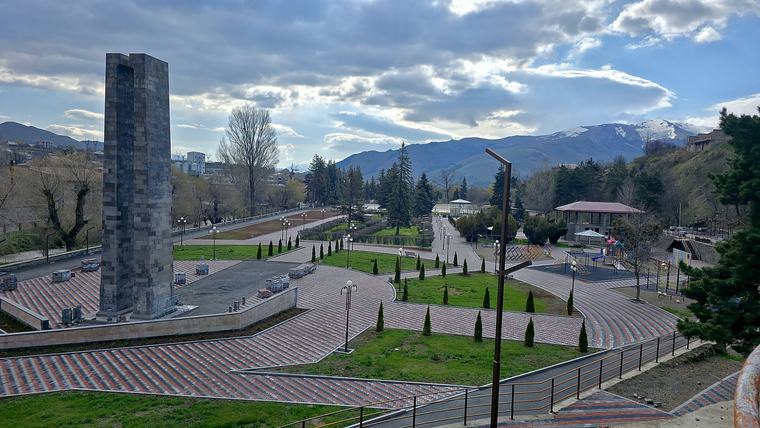
I tend to wake up early in order to read, make coffee, and eat breakfast. Then I walk to school, about 5 minutes from my apartment. When not in class, I stay in the teachers’ lounge to chat with the other teachers. My counterpart and I will also briefly discuss the day’s lessons. After school, I’ll be somewhere in town. Sometimes I’ll find a place to sit and study Armenian. Sometimes I’ll run into someone who wants to practice their English.
5. What is a highlight of your time in service so far?
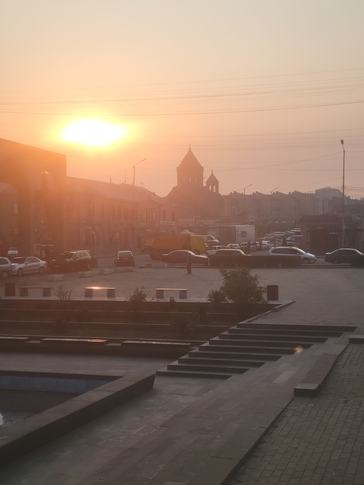
One simple moment stands out for me. It was a warm evening, so I decided to sit and listen to music on a bench in town. Some guys came and sat down on the same bench. I thought nothing of it until one of them turned to me and asked if I wanted some sunflower seeds. We all got to talking, and they were impressed that I knew some Armenian and were excited to speak English with me. They wanted to practice more but didn’t have much time due to their work. We set an hour to hang out in the park and just have some conversations in English to specifically improve their skills.
Another moment was when an Armenian told me, “You’re not a foreigner. You’re a local. This is your home.”
6. What have you enjoyed most about the community where you are serving?
I really appreciate how friendly everyone is. People are always willing to help and trust me to help them in turn with whatever may be needed. For example, there’s a park in my town that I visit often. One time on my way there, an elderly man asked me to bring some boxes from his car into his family’s home. Another time I was sitting on a bench when a group of guys came over, and we just chatted. They practiced their English, and I practiced my Armenian. Making connections has felt easy because of how friendly people are here.
7. What are you looking forward to in your remaining time as a Volunteer?
At site I’m eagerly awaiting what’s known as “Last Bell,” a celebration of the end of the school year. It’s especially exciting for the 12th graders who will be graduating from high school. It will be nice to send off the 12th graders I’ve been working with over the past two years. After that, I’m excited to be extending my service for a third year in Armenia’s capital, where I’ll be a Volunteer at one of the universities.
8. Tell us your favorite phrase in the local language.
Armenian has many sayings and phrases I could include here (such as an affectionate one about eating another person’s liver!). However, I think one that I really like is “Մի հատ տեղ“ (Mi hat tegh). It essentially means “one more time” and is used quite often in a local fitness class I attend. It’s not considered to be profound in and of itself. Nevertheless, to me it represents being nearly at the goal (“This next pushup is the last one!”), having an opportunity to try again (“The volleyball is near you; hit it once more to pass it along!”), and simply seeing familiar faces more than once in the same day (“Oh, hello again!”). It’s surprisingly versatile.
9. What would you say to someone thinking about joining the Peace Corps?
Being a Peace Corps Volunteer comes with many challenges. Suddenly, you have to integrate into a new community, learn a new language, and collaborate with others in your new community. These challenges, turned into opportunities, can reap great rewards. You become family, an integral part of the community while you live and work there. You absorb the culture and build friendships and bonds through a shared language. You share skills you’ve learned and learn new skills through the people you work alongside. You also are not going through it alone; you always have a network of other Volunteers.
Learn more about serving as a Peace Corps Volunteer in Armenia.



