 An official website of the United States government


Featured Volunteer Profile
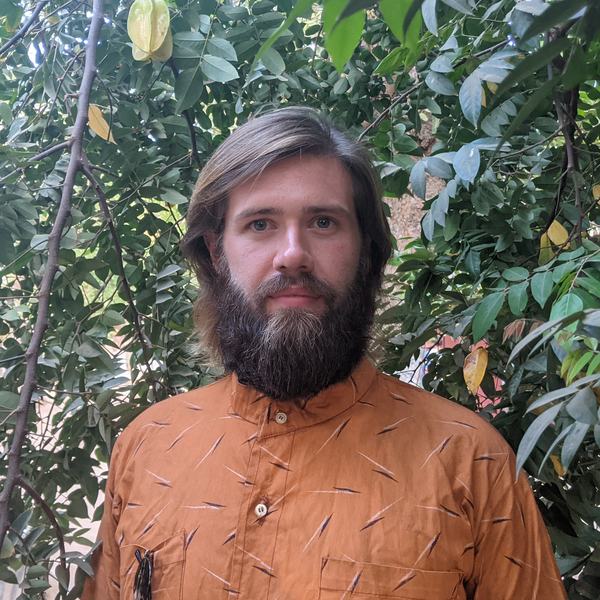
Spencer W.
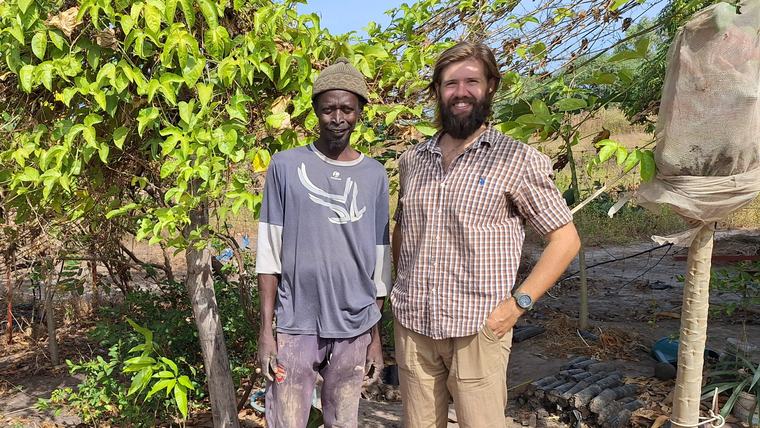
“My strongest relationship within my community is with my host dad. As chief of the village, he is involved in most of my work projects, and as an elder is greatly involved in my learning regarding the history and perspectives of the community.”
1. What inspired you to apply for this Peace Corps position?
I always had a calling to service growing up. My family has a history of service and my work to become an Eagle Scout instilled the habit of service. I had an awareness of the Peace Corps as I finished school, particularly my intention to serve in Sub-Saharan Africa, which I’d also studied in literature and wanted to experience firsthand. I wanted to challenge myself to both live in the community as well as apply what I learned in school in hands-on experience. I pursued the Environment sector because of my previous experience with environmental work.
2. What projects are you working on?
My primary work revolves around assisting groups with their various interests, including beekeeping, oyster aquaculture, agroforestry, and mangrove reforestation. I have organized several activities with groups wanting to work in coordination with local government agencies. My focus shifts according to the season. Beekeeping happens in the dry season, oyster aquaculture in the winter, and tree planting in the rainy season. My main focus is on mangrove reforestation as it is an interest for me and for the community.
3. What strategies have you used to integrate into your community?
I’ve involved myself in the community largely through making myself visible and doing my work. I greet neighbors, involve myself in local work projects, and include community members in my projects. When I am not actively working on a project, I assist with fieldwork alongside the community, demonstrating that I will do the work everyone else does.
I also participate in cultural activities such as weddings and baptisms, as well as fasting for Ramadan, so my community sees me participating in the life of the community as a member despite coming from outside of it. In addition, I spend a lot of time inquiring about the culture of the people in my community and their history, which has gone a long way to help me both learn the language and gain respect of community members.
4. What’s a typical day like for you?
The sun wakes me in the morning through the slats in my window. After getting dressed I step out to greet my host dad and we eat breakfast together, including coffee and a baguette with a spread. From there I go to work, typically tending to my tree nursery and meeting with work partners to check in on projects. At mid-day I return to my host family compound to join my host mother and aunt, along with guests and neighbors, to eat lunch together and discuss a what’s happening in the community. Afterwards, during the hottest part of the day, I often write in my journal. Then I’ll roll out to work again on a project or help a neighbor with their fieldwork until sundown, when I return to my house and revisit my nursery. If it's the season I harvest a papaya to eat with supper alongside my host dad and we'll listen to news on the radio. After eating I’ll often practice my fiddle or harmonica or chat with a guest who might have joined us for late-night coffee. Before retiring to my room for the night I say goodnight and make sure the household dog is fed. Then I take a late shower and crawl under the mosquito net to rest.
5. What have you enjoyed most about the community where you are serving?
I live in a coastal ethnic minority community, which has been amazing. I grew up on the Atlantic coast and here I am again living in a coastal community, on the other side of the ocean. We share a sense of having a special ecosystem on the coast, adjacent to islands and rivers. It’s a connection I cherish. I can share a seafaring tale or history and they can meet it with one of their own, which provides further color to the tapestry of their people’s history. Enjoying and experiencing their culture with its remnants of pre-Abrahamic religion, has helped me understand this community’s history and its role in the continent and world. I also enjoy the pride people have in keeping parts of the culture alive, from elements of dress to sports ceremonies.
6. How do you spend time when not working on a project?
Beyond working alongside my neighbors in daily tasks, I have a few writing projects I’m working on—one in the local language, which gives me an opportunity to explore topics not typically covered in daily conversation. Beyond that, I play my fiddle, which also serves as a form of cultural exchange. I have also started working out and reading in downtime. When traveling I can make connections between topics I’m reading about and the places I am visiting.
7. Tell us about the strongest relationship you’ve developed while in country.
My strongest relationship within my community is with my host dad. As chief of the village, he is involved in most of my work projects, and as an elder is greatly involved in my cultural learning regarding the history and perspectives of the community. After supper we drink coffee together, go over daily events, and plan activities with the community.
More and more we discuss world news topics on the radio and talk to neighbors and friends who stop by. We also attend local wrestling matches when they’re hosted near us so we can have a bit of fun and participate in regional events.
8. What are you looking forward to in your remaining time as a Volunteer?
I am looking forward to taking advantage of the things I’ve learned over the first year of service to continue meaningful work. I am not only aiming at larger projects, but also anticipate being able to work with nearby communities. Many of these communities have had limited engagement with Americans or Volunteers so there is an opportunity to extend the reach of the Peace Corps program. I want to leverage my experience with mangrove reforestation projects to assist those in interested communities when the season comes around. As much as it is our goal to share culture and knowledge within our host communities, I also find it very rewarding to contribute to the institutional knowledge and capability of Peace Corps so that other Volunteers are better prepared, especially with the language.
9. Tell us your favorite phrase in the local language.
The Wolof phrase “A teex a minu kaam foofi taxee ref fanoox” translates roughly to “A log left in the water, no matter how long, will not become a crocodile.” I enjoy the image because it conjures the sense of place in my community; I know the little rivers between the mangroves and have seen many a fallen branch which could be mistaken for one of my favorite animals. On a more metaphoric level, it means that things are the way they are, and it is often best to simply understand why. It speaks a little to my situation as an American in a new circumstance and has underscored my understanding of how the culture I am from has informed my habits and perspectives. It can also be interpreted as a statement about change. Something left idle will not change; it has to be worked on, moved, or motivated—but even then we should accept that some efforts can eventually be for nought.
10. What would you say to someone thinking about joining the Peace Corps?
Be prepared to accept the promise and potential of the experience. Be prepared to face challenges, find and develop strengths that you didn’t know you have, and to learn a lot—not just technical aspects of your work but a lot of new cultural perspectives. Be open to self-analysis; try to understand your limitations but also be open to growth. Lastly, be prepared to commit to worthy work that takes commitment to see through and adjust when circumstances aren’t perfect.
Learn more about serving as a Peace Corps Volunteer in Senegal.



