 An official website of the United States government


Featured Volunteer Profile
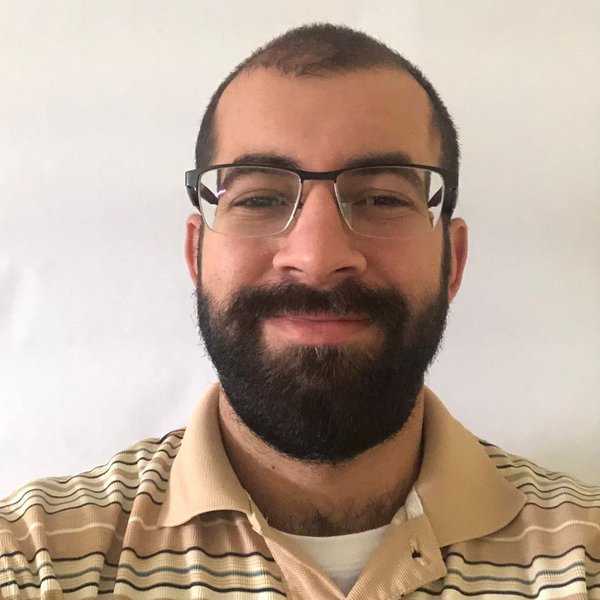
Idorico "Sebastian"
“... I’m learning how to be more patient. When say something unclear while teaching, I have to rephrase things until the students get it. My local teaching partner has been really good about helping me convey my thoughts to the students.”
1. What got you interested in the Peace Corps?
In 2017, I was looking for a job that would start after graduation. At one point I googled “jobs you can do with a B.S. in biology” and on the long list was the Peace Corps. I applied, got all my clearances, and landed in Moldova. Being away from home and in an unknown culture didn’t bother me. I had been a college resident assistant and summer camp counselor, and as a first-generation Portuguese American, I was used to feeling different from most of my family.
The real question is, why do I keep doing it? I’m on my third Peace Corps service because I like how flexible and dynamic the work is. One day things go according to plan, the next day things get shuffled around. Every day’s an adventure. I also like getting to know new people and watching them develop.
2. What projects are you working on?
I primarily work with the physical education teacher at my school, doing a variety of lessons about the benefits of good nutrition and physical activity.
I like to draw parallels between what we’re doing in gym class and the real world to help build life skills. I like to end one lesson with a quote by Pierre de Coubertin: “The most important thing in life is not the triumph but the struggle. The essential thing is not to have conquered but to have fought well.” I tell the kids to make an effort not just while playing a game, but in all parts of their life.
I have my Teaching English as a Foreign Language (TEFL) certificate and a Teaching English to Young Learners certificate, so I also enjoy classroom time. I teach about six hours of English classes alongside a teacher at the school. I feel that students appreciate my presence in these classes because we’re all struggling to learn new languages—Albanian and English. One kid with no English skills to start is slowly starting to get comfortable reading English in my presence, and that’s nice.
3. What strategies have you used to integrate into your community?
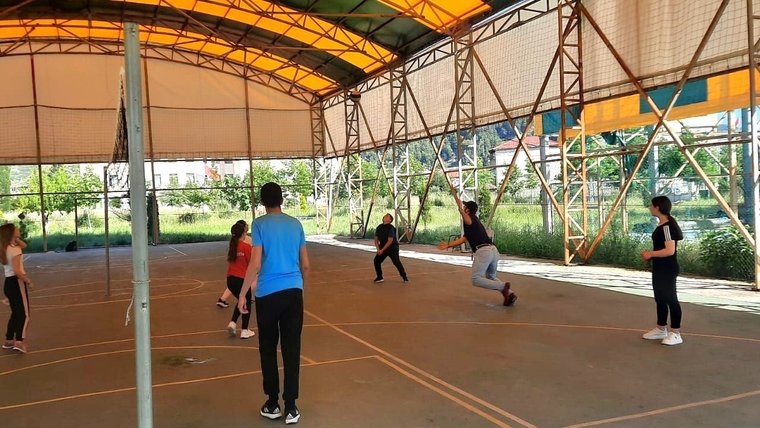
Initially I walked around the school and played a lot of volleyball with the kids. Every time the students picked teams, I tried to remember one person’s name, and it sort of became a game. By the end of my first semester, I knew the names of most upper-secondary students. Now I often call out, “Hey so and so!” and students are sometimes surprised that I know their names!
Once I have established a certain rapport with students, they go home and tell their parents about me. If the students love me, the parents tend to like me as well. It makes my job a lot easier!
4. What is a highlight of your time in service so far?
I teach my 7B class every day of the week; we crack a lot of jokes, play volleyball, and have some academic classes together, such as English or health education. On Mondays, Tuesdays, and Thursdays I teach about 6 hours of English. This classroom experience will ultimately help me get my master’s degree in teaching English to speakers of other languages (TESOL). On Wednesdays and Fridays, I teach a mix of health education and physical education with my primary counterpart.
Even if I’m having a bad morning, knowing I’m going to my 7B class boosts my mood. My connection with these students has helped me become more comfortable in my site. I also regularly see the 7B homeroom teacher in the teacher’s lounge and have a good relationship with her.
5. What have you enjoyed most about the community where you are serving?
I like how youthful my counterparts and host family are. I’m 28 and both of my counterparts are in their mid-30s. My counterpart at school, an English teacher, listens to Miley Cyrus, and my host dad likes “Another Brick in the Wall” by Pink Floyd. I enjoy talking about soccer with the physical education teacher.
My students really enjoy having me around; whenever I get to class, some of them will get up to shake my hand or dap me up, and others give me high fives. I try to be friendly and positive and have a pretty laid-back approach to how I teach, especially compared to some of the older teachers. I try to call on everyone, not just the same 4 or 5 people, and walk around the room to make sure they are on task when there’s a writing activity. I also use more groupwork and activities instead of a standard 45-minute lecture.
6. What are some of the most important things you’ve learned from your community?
Albanian is difficult, but I’m learning how to use humor in my interactions with students. This helps me figure out what works and what doesn’t. I don't tell grand stories or use clever word play, but I try to use humor in the way I communicate ideas to my students. I also use physical humor, like saluting the captain of the soccer team (because he’s the captain), which causes us both to crack a smile.
I’m learning how to be a better mentor, to students at my school and other Volunteers. Having served as an Education Volunteer before, I have a good feel for what works in the classroom. I’m also able to share lessons learned from my time in Moldova with other Volunteers in an effort to better support them.
Finally, I’m learning how to be more patient. When say something unclear while teaching, I have to rephrase things until the students get it. My local teaching partner has been really good about helping me convey my thoughts to the students.
7. How do you spend time when you are not working on a project?
I’ve gotten good at tinkering with recipes in order to find the perfect balance. Adding an extra egg to brownie batter, playing with different ratios of dark to milk chocolate for chocolate chunk cookies, or finding a good balance of orange zest to juice in orange cake. Cooking has been a fun and practical way to apply the chemistry I learned in college.
I work out three to four times a week in my apartment. Some of my students also work out, and we occasionally have push-up or pull-up competitions. I didn’t have much upper body strength before coming to Albania, but I can now do 35 pushups or 12 pull-ups without slowing down. It’s a huge accomplishment for me!
Finally, I started reading the Bible soon after arriving at my permanent site. I started during Lent, and have been reading about a half hour every other day. I’m about 90% done.
8. What are you looking forward to in your remaining time as a Volunteer?
In May there is an Olympic Games week at my school, and that’s going to be fun to watch. I’m also looking forward to hanging out with the new group of Volunteers after they complete preservice training.
I’m tired of being cold and ready for summer! I’m also looking forward to my next chapter. After spending most of my twenties abroad, I’m excited to put roots down somewhere.
9. Once you finish your service, what will you do differently when you return to the U.S.?
The first thing I’m going to do is turn on a ceiling fan; I miss the sound so much! The second thing I’m going to do is ride my bike with no destination in mind, without having to let anyone know where I’m going.
I plan on moving to the U.S. Virgin Islands to live with my brother. Then I want to apply to the master’s program in TESOL at University of Central Florida. I’m also flirting with the idea of applying for a placement officer or country desk officer position with the Peace Corps.



