 An official website of the United States government


Featured Volunteer Profile
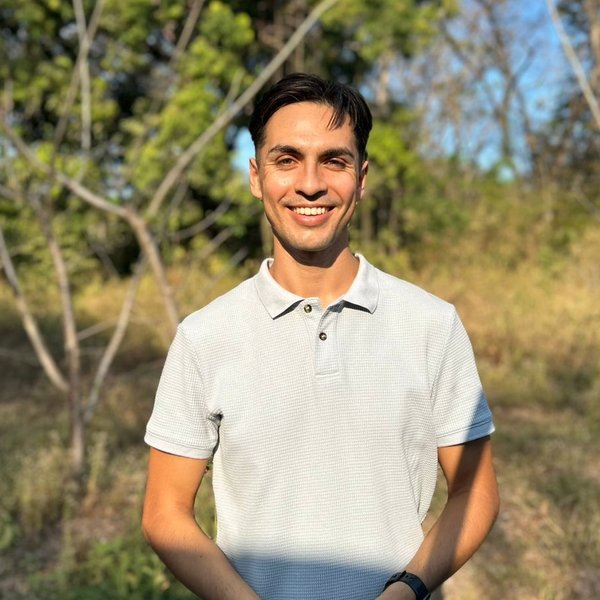
Julian P.
“I often want to do an activity or have a purpose, but sometimes sitting in the shade with my host family is the best thing I can be doing. Costa Ricans call it a 'pura vida' (pure life) lifestyle, which means enjoying life the way it is without stressing.”
1. What got you interested in the Peace Corps?
Throughout college I enjoyed volunteering, especially in roles where I could put my Spanish into practice. I worked in a public library and loved being so involved in the community. After graduating, I taught English in Spain for a school year as a way to improve my Spanish and break into education. Toward the end of working in Spain, my partner and I were looking for jobs where we could use our Spanish language skills and do meaningful work. Volunteering for the Peace Corps was the obvious choice for us, since we could serve as a couple, use our Spanish skills, integrate, and work directly with community members on projects that they wanted to develop.
2. What projects are you working on?
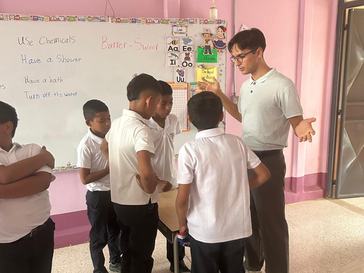
My main project is co-teaching English to kindergarten through 6th grade. At the start of the school year I introduced a 10-book reading challenge to encourage students to develop their literacy skills. Outside of school, I tutor several kids in the community who are either interested in learning English or just need help with their homework. Another local school hosts my English game club for students who are interested in playing games while putting their English into practice. Outside of working with kids, my partner and I run an adult English club at a local church.
3. What strategies have you used to integrate into your community?
To integrate into my community I ask a lot of questions and say yes to (just about) everything. I’ve learned about—and now participated in—foraging, clam collection, and football clubs. My host family and coworkers have also been a key resource in integrating. If I need a pair of pants hemmed or a spot to host an English club, they know just who to send me to. Thanks to them, I have a great rapport with a local seamstress and a spot to teach English every weekend.
4. What is a highlight of your time in service so far?
A former student of mine asked for private English lessons while my partner tutored her sister for an exam. Over several weeks during the school break I always looked forward to seeing how quickly my student grasped what I taught her. When the school year started I was sad that my former sixth graders had all left for high school, where my partner teaches, but reassured that they were in good hands at the local high school. Within the first few weeks my partner shared stories about how my former student remembered a lot of words she had learned during our lessons. It was an honor to be a part of her education, and it brings me so much joy to know that she is still excited about learning English!
5. What have you enjoyed most about the community where you are serving?
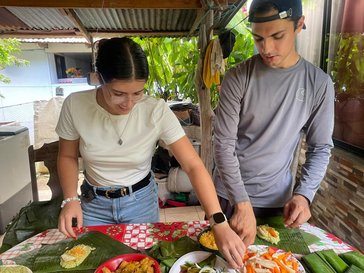
I live on an island, but I am definitely not isolated. People will stop me in the street to ask about how much I run in a week, invite me to coffee, ask for help with their children’s English homework, or even ask me to fix their TV. I receive freshly made ceviche or fruit, often as thank you gifts. Sometimes students swim in the creek that runs through my front yard or throw a frisbee with me and my fiancée. Some days I can’t believe how lucky I am to live in a community that has been so generous and trusting with me and my partner.
6. What are some of the most important things you’ve learned from your community?
Living in such a small community has taught me how quickly news can travel. Thankfully I’ve only experienced the positive impacts of this. I’ve also learned how to appreciate just being in the company of others. I often want to do an activity or have a purpose, but sometimes sitting in the shade with my host family is the best thing I can be doing. Costa Ricans call it a “pura vida” (pure life) lifestyle, which means enjoying life the way it is without stressing.
7. How do you spend time when not working on a project?
Outside of work I am training for a half-marathon to keep in shape. This has led a few people to join me on runs and people ask me about my runs. I also have an e-reader which I use to read books. We have a Peace Corps Costa Rica book club, where we vote on which books to read. Our cohort also stays connected through a monthly movie club, where some of us watch the same movie during the month, then discuss it via video call. My Peace Corps cohort is very tight knit and always finds creative ways to keep in touch and share stories or advice about our work on site.
8. What are you looking forward to in your remaining time as a Volunteer?
When I first moved to my site, the English teacher had already planned the English festival. All the decorations had been made, the dances had been choreographed, and the students had practiced for the spelling bee for months. I contributed as a last- minute judge for the spelling bee. This year I am excited to plan the English festival with my new counterpart. It will be so much more rewarding to help students practice for the spelling bee, help choose the theme, and create unique English activities for the kids to present during the festival.
9. What will you do differently when you return to the U.S.?
When I am back in the U.S. I want to live a more sustainable lifestyle. I didn’t realize how wasteful I was until I moved to a place where I could not live that way. Energy, water, food, and other resources aren’t necessarily scarce at my site, but people seem much more aware of their value here. I also want to forge stronger community connections once I’m back home. I want to live a life where I know my neighbors, where I am involved in community groups, and where I feel connected to the people living and working around me.



