 An official website of the United States government




Featured Volunteer Profile
Alexx G.
“I held leadership roles in the Peace Corps, which led me to frequently pursue leadership roles and ultimately to my current CEO position.”
1. What were your primary responsibilities during service?
I was assigned to work on ecotourism marketing for a hotel in a small village but when I arrived, the hotel hadn’t even built. My first year in that village was tough. I ended up teaching a lot of English and led a few English clubs for youth and one for the adults trying to sell artisanal goods to tourists. I also taught the Junior Achievement business curriculum in schools.
Later in my service, I was moved to a larger town and had many more projects there, including helping with mangrove reforestation and teaching women basic accounting, recordkeeping, and marketing. I also held leadership roles training new Volunteers as well as leading Volunteer support in my region.
2. What projects did you collaborate on with your community?
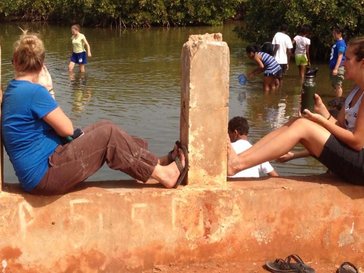
A lot of teaching/education-related projects. I was heavily involved in a regional girls’ empowerment camp, which was easily one of my favorite parts of my service. I also managed a girls’ scholarship program to keep girls in school beyond elementary school. I led English classes/camps for youth and some initiatives for adults. The focus on youth led to so much enrichment and fulfillment for me. I also really enjoyed collaborating on projects with other Volunteers and thinking of the best ways to orient/welcome incoming groups of Volunteers.
3. How did Peace Corps service influence your professional path?
My Peace Corps service was instrumental to the success I have had in my adult life. After service I went to graduate school and completed a degree in global community leadership and non-profit management. I then worked with the International Rescue Committee to support the refugee community in Utah for 5 years. I would not have gotten into that sector if it wasn’t for my Peace Corps service, especially the time I spent working with youth in Senegal. My refugee work led me to pursue a fully mission-driven career. I worked for the American Cancer Society and a children’s museum, and I currently serve as the CEO of a small environmentally focused nonprofit. I firmly believe that I wouldn’t be where I am today if it weren’t for the Peace Corps.
4. How do you use skills honed during service in your current job?
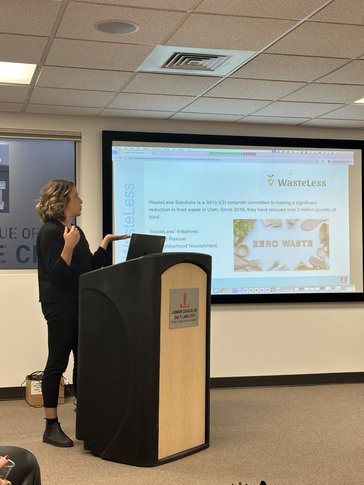
I used my French language skills often when I first returned from Senegal and was working with refugees from French-speaking countries. I also heavily used my intercultural skills with the refugee community and have continued to use those skills throughout many professional and volunteer roles. I held leadership roles in the Peace Corps, which led me to frequently pursue leadership roles and ultimately to my current CEO position at WasteLess Solutions. Further, data gathering, research, and project management were all skills I honed in the Peace Corps that I used heavily during graduate study and use almost daily in my work.
5. How have you shared the value of Peace Corps service and communities abroad with people in the U.S.?
I am an active participant in the Returned Peace Corps Volunteer group of Utah so I often talk with prospective Volunteers and have given many community presentations about the Peace Corps. I kept a blog during my service and kept active social media accounts detailing my experience. I have also been interviewed by several magazines, blogs, and podcasts where I have highlighted my service and the influence the Peace Corps had on my life.
6. What Peace Corps benefits have been useful to you?
Being able to say that I am a Returned Peace Corps Volunteer has benefited me in both professional and personal ways. I also took advantage of the therapy sessions provided upon re-entry.
7. How have you remained involved with the Peace Corps community following service?
I am part of the RPCV group of Utah and attend some of those events. I am still very close friends with many of the Volunteers I served with and see them during annual reunions. They remain some of the most amazing people I have ever met in my life. It has been so rewarding to see them get married, have children, and excel in their respective careers. I am involved with the National Peace Corps Association and was even featured as a Peace Corps 40 under 40 honoree. Finally, I still keep in touch with my host family through Facebook and an occasional email.
8. What do you miss most about your host country?
I miss the pace of life. Things moved slower—sometimes aggravatingly so—but most of the time, it was a welcome change compared to how life moves for many in the U.S. I remember so clearly sitting out one night under the stars with my host mother and not saying a word; we sat contentedly in each other’s company for hours. I remember meetings taking hours to start because everyone had show up, greet each other, drink tea, etc. Time with other Volunteers was never spent on our phones or disconnected—we were there for each other and truly embraced one another. There was always so much more of a focus on relationships as opposed to transactions. I took my time and was intentional with every task I had and that mindfulness is something I miss and haven’t been able to find back in the United States.
9. What’s your favorite phrase in the local language of your host country?
“Jamm soom” is by far the phrase in the Serer language that I used the most. It means “peace only” and is the most common response to a greeting; it’s also often a greeting on its own. “Jamm rekk” is the version in Wolof, a more common language in Senegal.
10. What would you say to someone thinking about joining the Peace Corps?
It was very hard at times and it is not for everyone. I personally wish that I had taken a few years after college, gotten some real-world work experience, and spent more time away from my home and family before embarking on Peace Corps service. Yes, the Peace Corps helped me get amazing jobs after service, but I was fresh out of college when I went and wish I had a little more life experience under my belt before heading to Senegal.
Many Volunteers love being the only Volunteer within hours and really immersing themselves in their communities. I personally did much better when I could spend time, here and there, with another English-speaking Volunteer.
Finally, I would encourage anyone who wants to join to be patient and to persevere. The application process has gotten significantly easier than it was when I joined but it is still a major undertaking and you should be fully prepared to wait and then advocate for what you want and need.
Learn more about serving as a Peace Corps Volunteer in Senegal.



