 An official website of the United States government


Featured Volunteer Profile
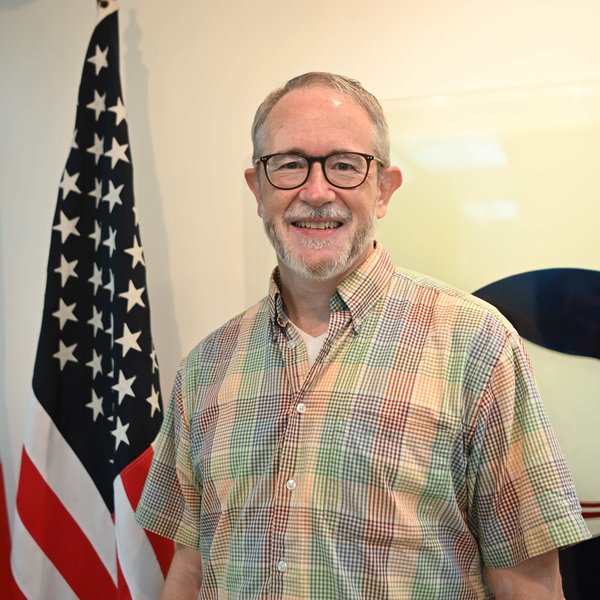
Johan D.
“Filipino culture is substantially different from U.S. culture, and in learning about and celebrating those differences, I have so much more understanding of the ways that families work in general, and I’m excited to bring that knowledge back to the U.S.”
1. What got you interested in the Peace Corps, specifically the Response program?
I have always been interested in international volunteering, and when I learned about Peace Corps Response, I was intrigued because it’s how I like to work: using my expertise to strengthen skills of the folks who are doing the work, rather than doing the work for them. I also feel the process is important, that Peace Corps Response has an existing relationship with the in-country partner organization and works with them to develop a full description of the Volunteer position.
I searched the Peace Corps website for Response positions that included my expertise and experience in pediatric physical therapy. I was happily surprised at how close a match the position in the Philippines was for the work I do and love in the U.S., so I applied, was selected, successfully completed the medical and legal clearances, and flew to the Philippines only 5 months after I began the process.
2. What was your role, and what project(s) did you work on?
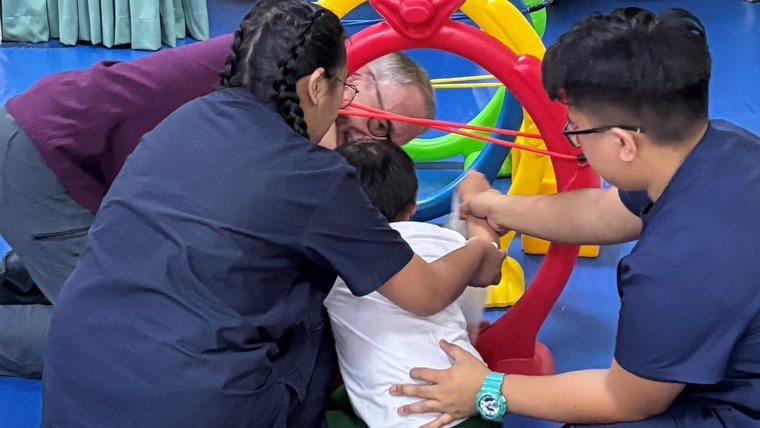
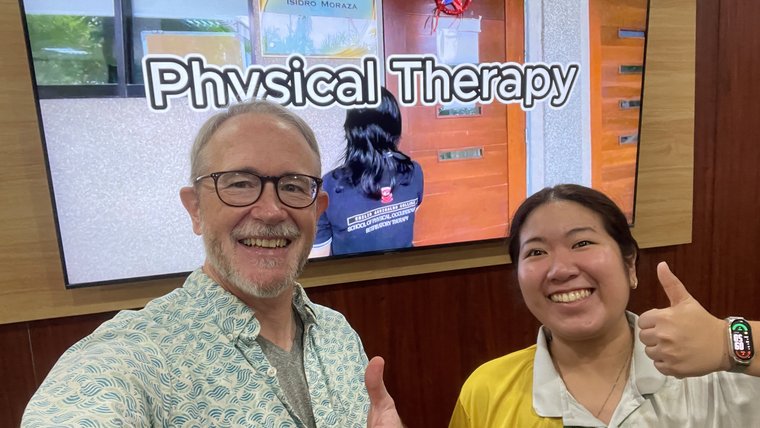
I was the physical therapy specialist at a school for children with disabilities in the suburbs of Manila. Together with my counterpart Keziah we taught, coached and mentored physical therapy interns who provided physical therapy sessions to students at the school. I added to Keziah’s experience, bringing expanded physical therapy (PT) knowledge, techniques, and perspective. Keziah and I worked with teachers, staff, interns, and parents to build relationships, knowledge, buy-in, and trust to increase communication and collaboration with the PT department and everyone at the school.
3. How did you leverage your previous professional experience and skills?
My previous experience providing pediatric physical therapy in schools, clinics, care centers, and in home care was of course directly applicable to the day-to-day work. Perhaps more important in the wider work on communication and collaboration was my past experience volunteering internationally, working on the Massachusetts state advisory council for early intervention, and teaching interprofessional collaboration. This wider work gave me the resolve to rely on building relationships before even attempting to work on communication and collaboration, as these can’t move forward without the foundation of relationships.
4. How did your collaborative work with your community create lasting impact?
The meetings that my PT counterpart and I had with teachers, staff, parents, caregivers and PT interns were very engaging and in addition to improving communication and collaboration at that time, many participants asked for future meetings on these subjects … before we even suggested it!
The videos that I made with my PT counterpart (“What is PT?” and “What is Sensory Integration?”) will be available to the school community for learning, support for PT interns’ treatment, and most of all to serve as a basis for future discussion sessions with the school community, to further communication and collaboration.
The knowledge provided to my PT counterpart and PT interns will continue to be a part of their practice throughout their careers. I’m especially proud of the growth the PT interns did in incorporating my specific focus on holistic PT: the patient as a person, as a member of a family, and as a member of a community. We also talked at length about attitudes towards disability, both in the Philippines and in the U.S., and our role as a PT in relation to those attitudes. As PTs we have a responsibility to promote attitudes of positivity and personhood towards people with disabilities.
5. How did the skills you developed during service enrich your professional development?
I think the biggest gain I’ve made in this area is the additional knowledge and perspective on how families work. Filipino culture is substantially different from U.S. culture, and in learning about and celebrating those differences, I have so much more understanding of the ways that families work in general, and I’m excited to bring that knowledge back to the U.S. to use with the families I work with there.
I will return to the U.S. to work again in early intervention, the nationwide system of therapies and support for children (ages 0-3 years old) with disabilities and their families. Many of those families are from the U.S., and many are immigrants, so having more perspectives on the many, many different ways that families work will be immensely useful with every family.
6. What strategies did you use to meet the challenges you encountered?
I have learned patience from working with children, and this is of course essential in any work with families and children. I had to be patient with myself above all, because I was often aware of my limited time as a Volunteer. But I had to rely on making relationships as the starting point, as so much of learning and collaborating is based on relationships and trust. Relationships take time, and I was learning about Filipino culture at the same, trying to respect the way the Filipinos build relationships.
I also tried to remember not to be afraid of awkward moments because they don’t have to be the end of an interaction; they can be the beginning of a more in-depth one, as long as we can be brave and move through that awkwardness. And there were a lot of awkward moments as I talked with Filipinos about language and culture and families and parenting! Most of the time we made it through to the other side and had more conversation.
7. What benefits did you gain from serving?
I think I will still be uncovering benefits from my service for a long time after I return to the U.S. Some are easy to point to, like knowledge of Filipino culture, and many new friends. Others are more subtle, like the expanded view of the world and my place in it, the fundamentally changed perspectives on what I have in the U.S., and insights into how families function and how disability impacts that.
8. What would you say to someone considering Peace Corps Response?
I would tell them to really think about doing it. If you have the flexibility and the urge to volunteer, Peace Corps Response makes strong use of existing skills and experience. It gives you the opportunity to engage in in-depth intercultural work that’s supported by the Volunteer work you’re doing. Response provides support and structure that makes it possible to focus on the work and the culture, rather than the details like finding housing.



