 An official website of the United States government




Featured Volunteer Profile
Ainsley S.
“Peace Corps service has given me a new and broader perspective on the world, and I think I will move through life with much greater intention and awareness. Living and working in Ecuador has shifted my perspective on time, relationships, and success.”
1. What got you interested in the Peace Corps?
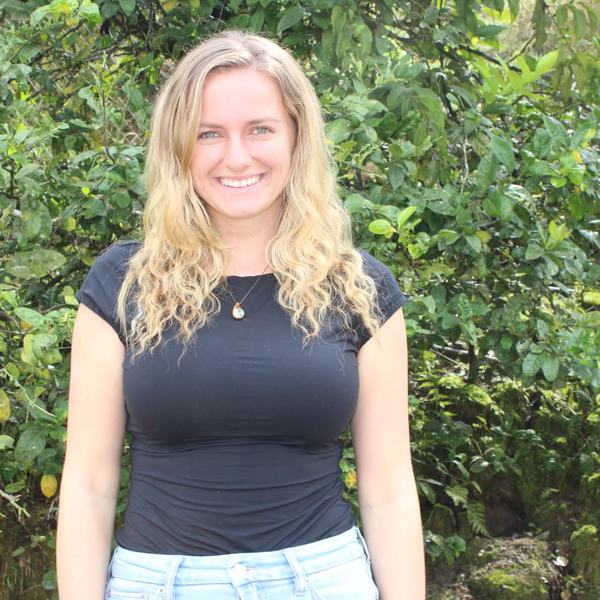
Throughout my life, I have been fascinated with other cultures. In college, a professor who taught global public health opened my eyes to what that fascination could look like in practice. She had spent years traveling the world, working in health centers across Africa and more specifically, Uganda. The perspective she offered inspired me to apply to the Peace Corps. This class gave me the confidence to pursue something different, completely new and a bit intimidating, but an experience that would teach me so much about the world and myself. I applied to serve where needed most and I was placed in Uganda, the same country where my professor worked for many years. As my service in Uganda neared its end, I kept returning to a long-term goal of mine: learning Spanish. The opportunity to continue my service in the health sector came up in Ecuador and I was beyond thrilled to continue my journey abroad, learning about another culture, and continuing my Peace Corps journey.
2. What projects are you working on?
In my current role in Ecuador, I work with local gerontology centers, schools, and other community and government organizations to educate community members on nutrition, health, and development. We have initiated a garden project for fathers at children’s centers in rural communities. We lead classes on the importance of fathers being actively present in their children’s lives. Finally, we are implementing Grassroot Soccer, a program that educates adolescents about health and wellness through sports, in a safe, open environment.
3. What strategies have you used to integrate into your community?
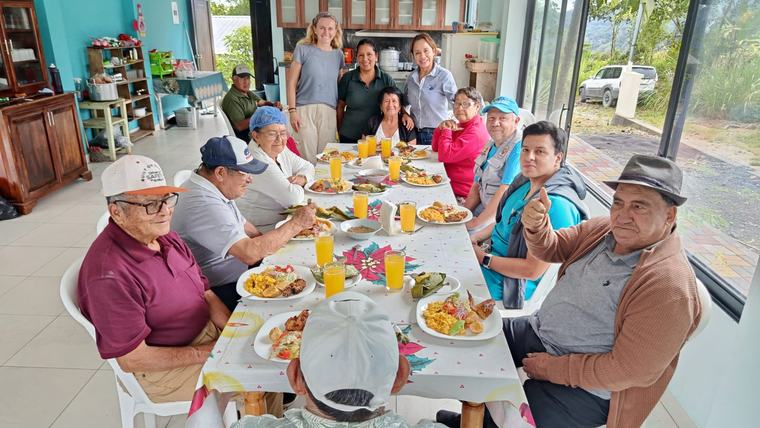
In my experience, the most important part of service is integration. Without integration, you aren't able to connect with the community and therefore cannot implement work that is useful and also wanted. When I first arrived in Ecuador, I was paralyzed by self-consciousness about my Spanish, mentally rehearsing sentences before I had the courage to say them aloud. I had to let go of the embarrassment, stay open-minded, and remind myself that every stumble was an opportunity to learn. Be prepared to make mistakes and find satisfaction in learning to become comfortable with being uncomfortable.
4. What is a highlight of your time in service so far?
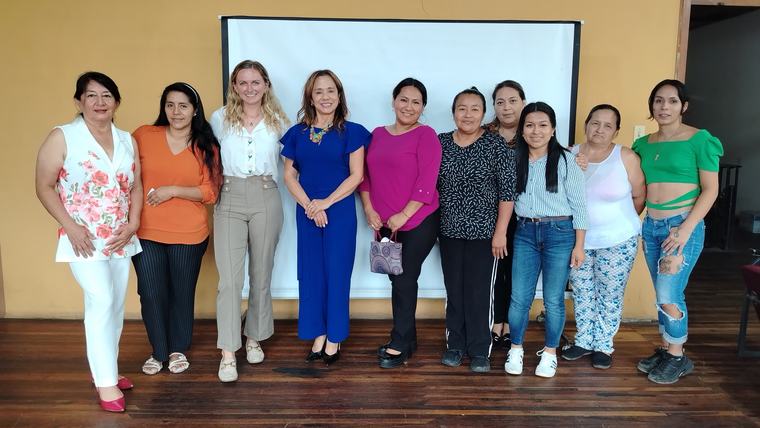
The highlight in my service so far was an event to promote International Women’s Day with a group of elderly adults. We had the opportunity to hear the stories of the women in the community who navigated hard times, escaped poverty, and overcame challenges to provide an example for younger generations. We shared stories, danced, sang songs. My host dad, who is the mayor of the town, attended the event and introduced me to everyone as his daughter. It is the day I felt that the integration portion of my service was starting to fall into place.
5. What have you enjoyed most about the community where you are serving?
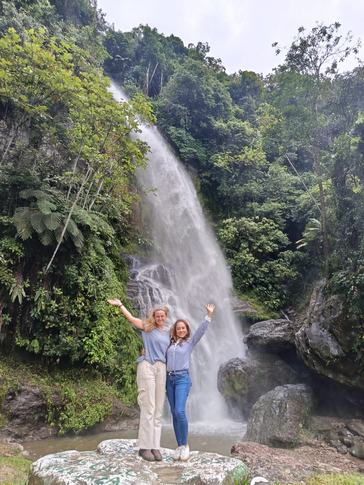
In my community, I love how many options I have to maintain my social life and stay active. When I applied to the Peace Corps, I was afraid that my social life would be nonexistent and completely different from my life back home. I joined a run club at my site, met people from a variety of backgrounds, and I have the opportunity to visit beautiful areas such as waterfalls, rivers, and mountains. The food is incredible, completely natural, and filled with flavor! Food is an essential way to learn more about the culture and the people who create it. One of the most enjoyable parts of my experience here has been trying a variety of foods, especially in the Amazon.
6. What are some of the most important things you’ve learned from your community?
The most important thing I have learned from my community is to listen, learn, and try everything. My host family has found great amusement in the fact that I have a hard time saying no to requests to try different foods and activities, and that occasionally I have no idea what the conversation is about. It is easy to get caught up in feeling like an outsider but embracing that difference has allowed me to feel more connected to the people around me. It is a once-in-a-lifetime opportunity to facilitate a cultural exchange, learn in a completely different environment, and be outside of your comfort zone. Embracing the opportunity fully has been the best way to feel genuinely connected to both the community and the work.
7. How do you spend time when not working on a project?
When I am not working on a project, I am hiking with my host mom, going for a run, reading, or swimming in the waterfalls at my site! Ecuador is a beautiful place with very sociable people, beautiful landscapes, and tons of activities. My host family has been my rock through this experience, and it's hard to feel bored when you are connected to such an integral part of your community. The most exciting part of my Peace Corps experience have been the surprises and learning experiences. In my time outside of working on a project, there is always a community event, a gathering, or a cafecito waiting to happen. Especially living with a host family, there is always something to do!
8. What are you looking forward to in your remaining time as a Volunteer?
I look forward to continuing my work with community members in Ecuador, especially supporting women’s groups and local health initiatives. I am excited to pursue a grant that could support a community project, such as improving nutrition through community gardens or strengthening local health education. I hope to see growth in these projects and work closely with community members to ensure they are sustainable. I also look forward to continuing to improve my Spanish so I can communicate more confidently and build stronger relationships. Most importantly, I want to make the most of my remaining time by learning from the community and integrating positively to create a large impact.
9. What will you do differently when you return to the U.S.?
Peace Corps service has given me a new and broader perspective on the world, and I think I will move through life with much greater intention and awareness. Living and working in Ecuador has shifted my perspective on time, relationships, and success. I’ve learned to value connection, patience, and presence over constant productivity. At times, Americans feel pressure to move fast and fix things immediately. For the rest of my life, I will look back on this experience and reflect on how much I learned from different ways of living. Professionally, I plan to be more purposeful in pursuing work in global health policy that is grounded in the realities I’ve seen, ensuring that decisions and programs reflect the voices and needs of the communities they are meant to serve. I know that the people I have met and the experiences I have had will connect me in future endeavors to guide how I advocate, lead, and engage with others back home.
Learn more about serving as a Peace Corps Volunteer in Ecuador.



