 An official website of the United States government


Featured Volunteer Profile
Sean F.
“Patience encompasses everything I have learned here. Patience for others, patience for my work, and patience with myself. Nine months in the country, and I am still learning how to be better at it!”
1. What got you interested in the Peace Corps?
My great-aunt and uncle were Peace Corps Volunteers in Turkey and Ecuador, respectively, in the 1970s. Growing up and hearing about their service from other family members, as well as my broad interests in the international world, brought me to the Peace Corps during college, when I met a recruiter at a career fair who had served in Cameroon. Our conversation and hearing about her experience convinced me to apply later that day when I got home from the career fair.
For a young college graduate who was already studying international relations, it was and is a golden opportunity to get hands-on experience by living in a different culture and place for an extended period of time. The idea of living, working, and connecting with people in a country across the world was a chance I could not pass up. I have not regretted a single second of it since I pressed that apply button in December 2023.
2. What projects are you working on?
I work with the town council, a small local authority in central Namibia. My main project is empowering the local community to make the economic changes they want to see in their lives through facilitating training, digital literacy help, and youth clubs. I do a little bit of everything.
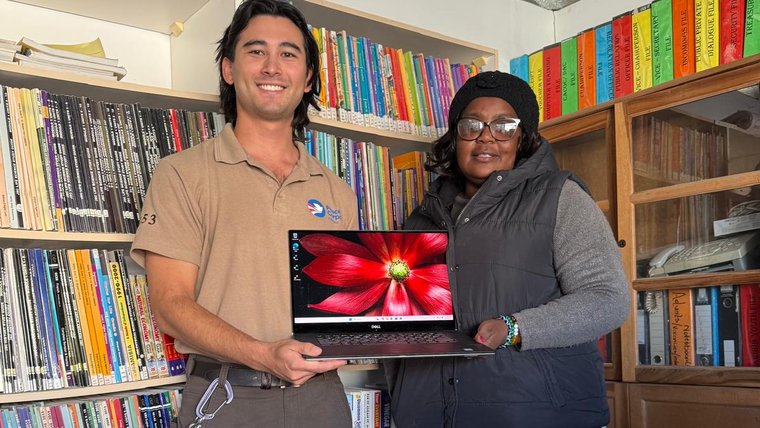
Currently, my main focus is replacing an aging computer lab in my town library so I can offer digital literacy courses. Alongside my counterpart, we have co-facilitated several trainings so far, such as a soap-making training, a first aid course, and small market enterprise training, with many more to come in 2025. In addition, I run a weekly help desk where I guide community members in crafting their CVs, support the creation of business plans, perform job interview prep, offer digital literacy assistance, and respond to other requests.
On the side, I am putting the finishing touches on a women’s community garden started by the Volunteer before me, working alongside the local authority to build two new children's parks, supporting a youth trash collection club, and assisting several business owners in town to build a community swimming pool, a truck port, and a recycling plant. I’m also hosting an annual trade fair among three towns in my region with two other Economic Empowerment Volunteers.
3. What strategies have you used to integrate into your community?
Some strategies I have used to integrate are to say “yes” to everything, being present at community events or at stores on the weekend, or simply socializing. The help desk has also been a huge contributing factor to my integration. Word spreads fast in my town, and now everyone knows that the foreigner at the town council office is the guy to talk to if you need business support. My time at the site rapidly has gone from open stares to greetings and waves whenever I am in town, whether that is jogging, buying groceries, going to the gym, or just walking somewhere.
4. What is a highlight of your time in service so far?
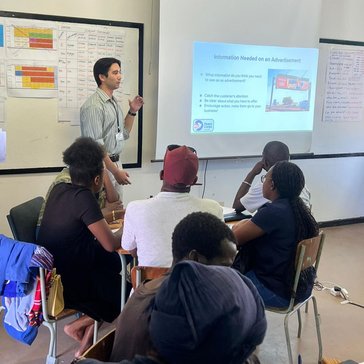
Seeing the success stories from my community is the highlight. It always feels good to know that I am contributing to making a positive impact in the everyday life of my community and that the community trusts me to assist them with what they seek to achieve.
I have worked alongside my community members to make CVs for their job applications, and months later they come back to tell me that the CV we made together got them their job. I have supported the creation of logos and advertisements for businesses that I see pasted in their shops or on their cars. People come to my office saying how their business is doing better, or that their school application was approved after we filled it out together, or that after working on a business plan they were able to get approved for business loans.
5. What have you enjoyed most about the community where you are serving?
I enjoy the welcoming nature of everyone in my community. I have been invited to barbecues weddings, social events, and everything in between. People have truly welcomed me with open arms. Furthermore, I enjoy the attitude of the community itself. There is a bit of an economic boom occurring due to nearby gold mines, and the community is not only growing rapidly but so are its businesses and services. People are driven to open new businesses, sell new things, and are eager to learn. It’s a great feeling to know that people are hungry to constantly get better and grow personally and professionally.
6. What are some of the most important things you’ve learned from your community?
The biggest thing I have learned so far is patience. Patience, patience, patience. In the United States, we are so used to timelines, deadlines, results, and quantifiable deliverables. It does not work this way in Namibia or in my community. Things take time. The protocol is important. That project that I thought I could whip through in six months? It will probably take my entire service if I ever see it completed.
Patience encompasses everything I have learned here. Patience for others, patience for my work, and patience with myself. Nine months in the country, and I am still learning how to be better at it!
7. How do you spend time when you are not working on a project?
When I am not working, you can usually find me at the gym, running, biking, or doing something physical. When it is not too hot, I also enjoy wandering around town and poking my head into businesses and bars and seeing what they sell. I have also been working on a drought-tolerant garden at my house, I have read 16 books on my Kindle, enjoy cooking meals, and even had a community member build me a “braai stand” (BBQ grill) because I love the meat so much here.
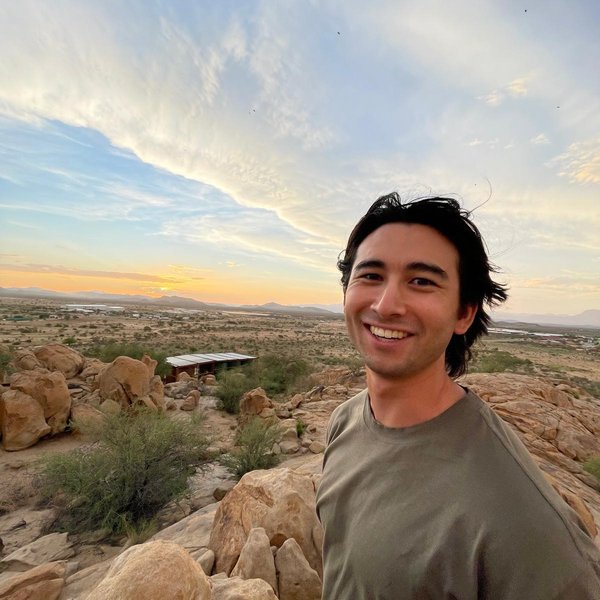
My community also has beautiful surrounding mountains, and I spend time taking long walks outside of town, with a current goal to reach a large mountain range that dominates the skyline of my community.
8. What are you looking forward to in your remaining time as a Volunteer?
I am really looking forward to the community garden being finished so I can contribute and get my hands dirty. We also have several large developments in town that I am strongly looking forward to seeing their completion, including a hospital, community center, and a small market enterprise incubation center.
9. Once you finish service, what will you do differently when you return to the U.S.?
That is a tough question. One thing I will do differently is never use a gas-powered grill again—charcoal all the way from now on. On a more serious note, a major thing that I already have begun to practice here is putting less importance on the material things in my life. I am realizing living here that I don’t need as many things in my life to make me happy, and that much of my possessions just add to clutter, and I can do more with less.
Interested in learning more about serving in Namibia? Connect with a recruiter today.



