 An official website of the United States government




Featured Volunteer Profile
Reagan A.
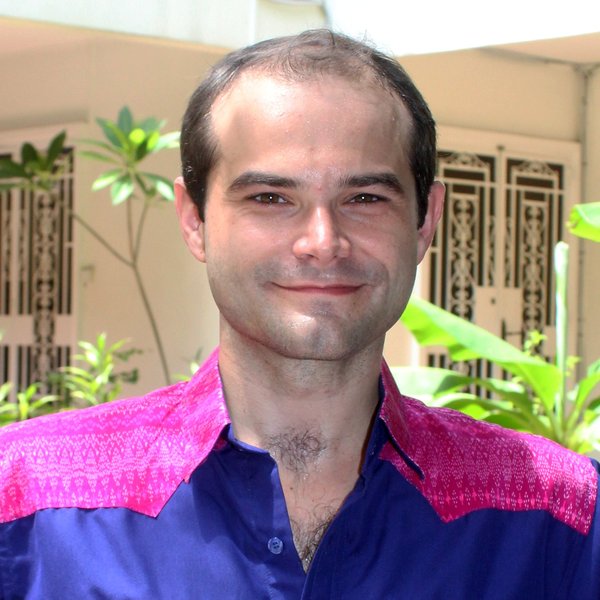
“I like asking a lot of questions, learning about what makes my community special, and adopting local customs. I try to get to know everyone’s names, details about their lives, and what their dreams are.”
1. What got you interested in the Peace Corps?
Prior to college, the most I knew about the Peace Corps came from the 2004 movie, “Christmas with the Kranks.” When I was studying international relations and development and talking with people working in that field, the Peace Corps came up a lot. What they knew, and what I know now, is that being successful in a career related to development means you need to understand the people you’re working with, and perhaps just as importantly, you need to be able to connect with them. There’s only one program in the world that lets you do that and it’s the Peace Corps.
2. What projects are you working on?
My counterpart and I recruited student volunteers and worked with them to identify problems at school that they wanted to fix, to analyze them, and then find potential solutions. This team of about 30 students is called the “Neak Phtaumkomnut /អ្នកផ្ដើមគំនិត” or the “initiators.” Members are from the entire spectrum of our student body—from the most outspoken students to those who had to step outside their comfort zone to share their thoughts.
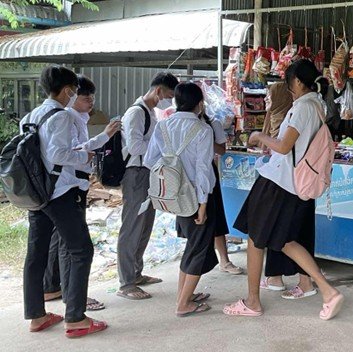
They surveyed the school and identified plastic waste as the problem they wanted to tackle. We led them through several small workshops, getting them to ask “how” and “why” about each problem to break them into manageable pieces. They then conducted interviews with the vendors in the school cantina to estimate the total waste produced daily and analyzed potential solutions, like switching to paper products or working with a recycling company. The Initiators decided to work with a recycling company and developed a plan to collect and organize the plastic. Now, they’re working on finding a means of transportation and will lead the school in a clean-up activity later in the semester.
Through this process, my students have told me the project has given them the “perseverance and courage to solve problems," that it showed them “how to find solutions or ideas to make projects successful,” and that they learned “we can use our ideas to improve our school.” Though my counterpart and I have helped facilitate the project, all the work, from finding the problems and solutions to analyzing the data and doing the implementation, came from the students themselves.
3. What strategies have you used to integrate into your community?
I like asking a lot of questions, learning about what makes my community special, and adopting local customs. I try to get to know everyone’s names, details about their lives, and what their dreams are. I’m also conducting long-form interviews around town.
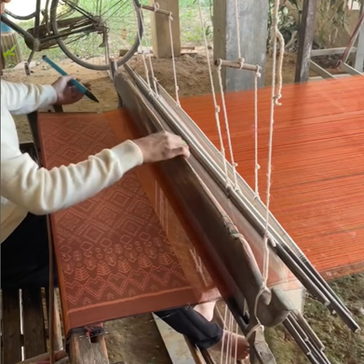
One of my first integration experiences at site came from talking with my counterparts about an article on Khmer silk weaving I read on Wikipedia. It turned out that my district is home to some of the last weavers in the country and my counterparts told me there’s a whole community nearby known for it. So I spent one morning biking over and going house to house, talking to weavers and watching a centuries-old tradition come to life. I bought a bolt of pink Khmer silk and had a local seamstress turn it into two cowboy-style shirts (in what must be the world’s first Texan-Khmer fashion fusion) that I wear on special occasions.
4. What is a highlight of your time in service so far?
There are so many highlights over two years it’s hard to keep track of all of them, but the single best is probably Khmer New Year. In the West we know it as the “Solar New Year” which is part of the cultural Indosphere. In Cambodia, the afternoons are city-wide water and powder fights with kids and adults of all ages packed into the street, dousing each other with water guns, hoses, and buckets of ice water. In the middle of this scrum, people will run up and rub baby-powder on your face—sometimes with “cooling menthol” which my sunglasses barely kept out of my eyes.
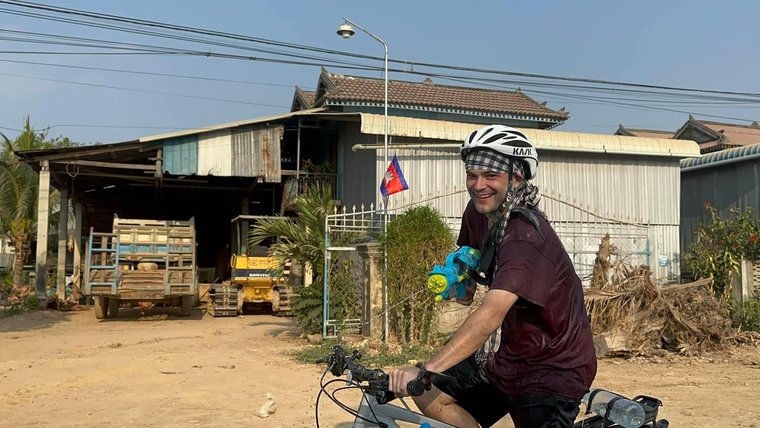
I rode up and down the street each day on my bike (with a helmet, of course), and a water gun I could shoot with one hand. Every few meters families will call you over to stand and shoot with them and give you some mangos while you refill your water gun. I spent a lot of time with my host family and cousins as well, riding in a trailer and making our own roadblock in front of the house with ice water from my host aunt and uncle’s industrial ice machine. I got to celebrate it with a lot of my high school students too and they constantly remark about it; this was another fantastic way to integrate into my community. In the evenings, I hung out with my host family and host cousins, getting to know them better and attending the celebrations at the local Buddhist temple, where we danced traditional and modern Khmer dances all night. I broke my phone twice, lost my sunglasses, swallowed a lot of baby-powder and unfiltered water—and I can’t wait to do it again!
5. What have you enjoyed most about the community where you are serving?
One of the most inspiring parts of being here has been watching the way my community strives for a better life. My host family, for example, works around the clock to grow, harvest, and sell hay so their two daughters can study architecture and accounting at college. Just about every shop in town has one or two businesses—like the hair salon and tea stand where both the hairdresser and customer made my drink mid-shampoo. There are single moms who started laundry businesses and coffee shops that were started because the owners’ daughter had contacts with an espresso machine supplier. For a lot of my community, a better life means working in a garment factory simply because they get a day off. For established families it means doing whatever it takes to send their kids to get degrees. What that means for me is that I get to see my reason for being here every day. I get to play a role, however small, in helping my students make their dreams a reality.
6. What are some of the most important things you’ve learned from your community?
The lessons I’ve learned from my community are really the fundamental lessons we learn as children: the importance of hard, zealful work, the need for caring adults in children’s lives, for gratitude in everything (no matter how small), the necessity of building and giving trust, and of setting high expectations for ourselves and others. These aren’t mystical folkways or novel concepts but rather the things you see play out every day in people’s lives around the world. It’s just that being new to the community lets you recognize the need for them more easily.
7. How do you spend time when you are not working on a project?
I love hanging out and rotating between a few different coffee shops in town. I’ve gotten to know the baristas and owners and it’s nice to have a place where I’m “បង/bong” (which is “sibling of similar age” and used with friends) instead of “teacher.” I also love afternoon bike rides deeper into the countryside and rice fields with my podcasts and audiobooks. Every village has its own character and things are constantly changing, so seeing what’s new gives you a better glimpse into everyone’s lives.
8. What are you looking forward to in your remaining time as a Volunteer?
Spending more time with my host family, my friends in town, and my students. My school has a new computer lab so I’m able to help with that and hopefully help my students in developing digital literacy. Now that we’re approaching the break, I hope to finish interviewing people in town and writing about it. I’d also like to go to a few more weddings, eat some more duck soup, and do a partial cross-country bike trip with some of my friends.
9. Once you finish your service, what will you do differently when you return to the U.S.?
It’s hard to really think of what’s changed about me—I think after living in America again I’ll have a better understanding of what’s different. But I do know for certain I’m going to work to build a stronger sense of communal responsibility like I’ve striven to do here. I want to do what I can to drive people in my orbit to either establish a form of community if they don’t have it or reach out and expand it if they do. And, of course, blockwide Khmer New Year water fights!
Learn more about serving as a Peace Corps Volunteer in Cambodia.



