 An official website of the United States government


Featured Volunteer Profile
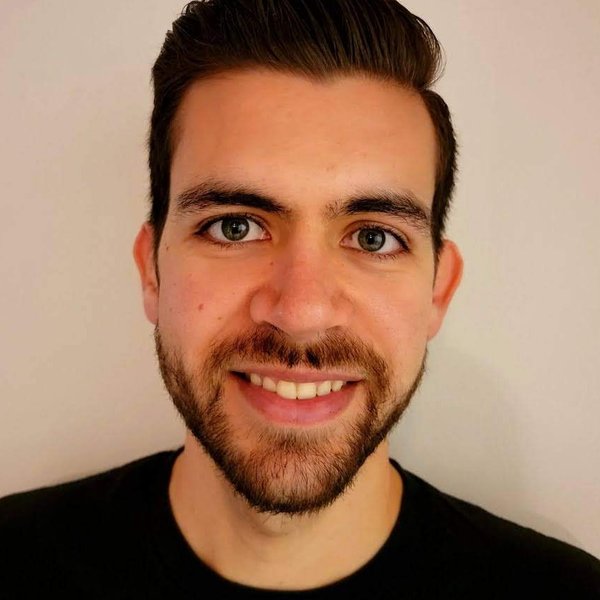
Curt C.
“Joining the Peace Corps is like a box of chocolates. You don't know exactly what you'll get until you bite. Go in with an open mind and see what happens.”
1. What were your primary responsibilities during service?
As a Community Economic Development Volunteer in Colombia, my primary responsibilities included teaching entrepreneurship and personal finance classes to high school students, facilitating community savings groups, and supporting local economic development projects, including a grant initiative to strengthen the town’s cattle economy. I also supported youth and girls’ empowerment programs in my site and led an after-school tech club that focused on digital literacy and community mapping.
Beyond my site, I served on Peace Corps Colombia’s Information and Communication Technology for Development committee, planning and giving presentations on the use of technology in Colombia at conferences. Additionally, I served as a director for a young men’s organization in Colombia called HERO (Hermanos en Respeto y Orgullo) and helped plan a camp for young men that would be later hosted by the organization.
2. What projects did you collaborate on with your community?
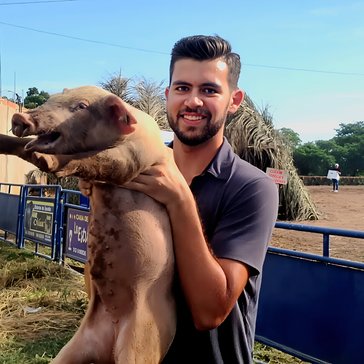
One of the main projects I worked on was a grant to get a pasteurizer for the livestock association. The economy in my town centered around cattle, yet each morning the milk collected by cattle farmers had to be transported across the river to a different town for processing. The goal of the grant was to enable the cattle farmers to process milk within the community and eventually produce their own dairy products, thereby retaining more value locally.
I worked for several months on this project, coordinating between the livestock association, the mayor's office, and the Peace Corps. An agreement was reached to buy the pasteurizer with each party contributing an equal third of the cost. Unfortunately, I was evacuated in the middle of the grant application process due to the COVID-19 pandemic, and the project was left unfinished, but it had great potential to stimulate the local economy in my site and I was glad to work on it.
3. How did Peace Corps service influence your professional path?
While serving as a Peace Corps Volunteer, I connected with a nonprofit called TCP Global that was funding a microloan program in my site. After I was evacuated, I volunteered to help the organization improve their data collection process. With my help, the system went from disorganized Excel files on the executive director’s computer to an implementation in the cloud with a centralized email interface.
Shortly thereafter, TCP Global became my freelance business's first client—a relationship I’ve maintained to this day as I continue designing and implementing new features for the system I originally helped establish. Designing, developing, and maintaining the organization's data collection and reporting system significantly advanced my skills as a developer, and this unexpected opportunity arose from my involvement with the Peace Corps.
4. How do you use skills honed during service in your current job?
Teaching entrepreneurship classes in a foreign language challenged me to become a better communicator. Simplifying concepts and explaining them in accessible terms is a communication skill that I honed in entrepreneurship classes during service and that has helped me as a software developer who constantly has to explain technical concepts to non-technical people.
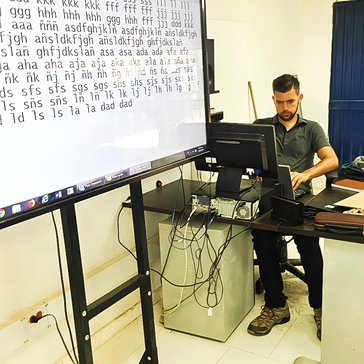
In my after-school tech club, I had to be adaptable and patient with my students. I initially planned to write code and build applications with them but quickly realized that many needed foundational skills, such as typing and basic computer literacy. Adjusting my expectations and meeting students where they were at taught me to design around real user needs rather than assumed needs. This experience, and others like it during my service, cultivated a sense of empathy for others in the technology space that now informs how I design and build software — always considering the end user’s perspective.
5. How have you shared the value of Peace Corps service and communities abroad with people in the U.S.?
I feel like a “reverse” ambassador for Colombia in the United States. Many people still associate Colombia primarily with drug trafficking, and I regularly hear jokes or outdated stereotypes. When I talk about Colombia at work or with family and friends, I share my personal experiences with them and make a point of emphasizing the positive things about the country. In the course of these conversations, I usually end up encouraging people to go to Colombia to see for themselves.
After traveling to Colombia with me several times, my mom and grandma now only have good things to say and a list of places they want to see during the next trip. Being able to shift perceptions - even one person at a time - feels like a meaningful continuation of my Peace Corps service.
6. What Peace Corps benefits have been useful to you?
I didn’t do a Coverdell Fellowship or use non-competitive eligibility to get a job, though I know many RCPVs that did take advantage of these benefits. For me, the most meaningful Peace Corps benefits came immediately after service, particularly as one of the Volunteers evacuated during the COVID-19 pandemic in March 2020. Peace Corps chartered a flight for all Volunteers in Colombia to return to the U.S., which was very reassuring as we watched all commercial flights get cancelled. And once I made it back to the U.S., I was given the full service award,* which was very helpful as I and many other Volunteers scrambled to figure things out during that abrupt transition.
*readjustment allowance
7. How have you remained involved with the Peace Corps community following service?
Right before the Peace Corps, someone told me that I’d make friends that last a lifetime. Six years after service, this seems to be true. I stay in contact with many Volunteers from my cohort and have gone on trips to see them in Colorado, Virginia, and Washington, D.C. My current roommate is a Returned Volunteer from my cohort, and I was even a groomsman at the wedding of two Volunteers I introduced to each other while we served together in Colombia. Friendship with other Volunteers seems to be an aspect of Peace Corps service that doesn’t ever go away.
8. What do you miss most about your host country?
I travel back to my host country frequently, so I don’t miss anything for too long. Still, even when I’m in Colombia, I spend most of my time in Bogotá, which is very different from the coast where I served. I find myself really missing the laid-back nature of the people on the coast where the phrase “cógela suave” (take it easy) is used often. I also miss the “calor humano” (human warmth). Colombians are friendly throughout the country, but the coast is especially warm. It’s the only place where they call complete strangers they meet on the street “mi rey” (my king) or “mi vida” (my life).
9. What’s your favorite word in the local language of your host country?
My favorite word is “ajá,” which you'll hear constantly on the coast. It has many meanings. It can be a greeting, a way of saying “yes,” a signal that you’re listening while someone is speaking, an exclamation when you’re frustrated, a way of hinting at something without fully explaining it. It's such a versatile and nuanced word, and I find myself saying it all the time when I speak Spanish, often unconsciously.
10. What would you say to someone thinking about joining the Peace Corps?
Joining the Peace Corps is like a box of chocolates. You don't know exactly what you'll get until you bite. Go in with an open mind and see what happens. It will be a mix of challenges and rewards, but the rewards will likely outweigh the difficulties. Regardless of exactly how it plays out, I guarantee you'll look back years later and think, “I can't believe I did that.”
Learn more about serving as a Peace Corps Volunteer in Colombia.



