 An official website of the United States government




Featured Volunteer Profile
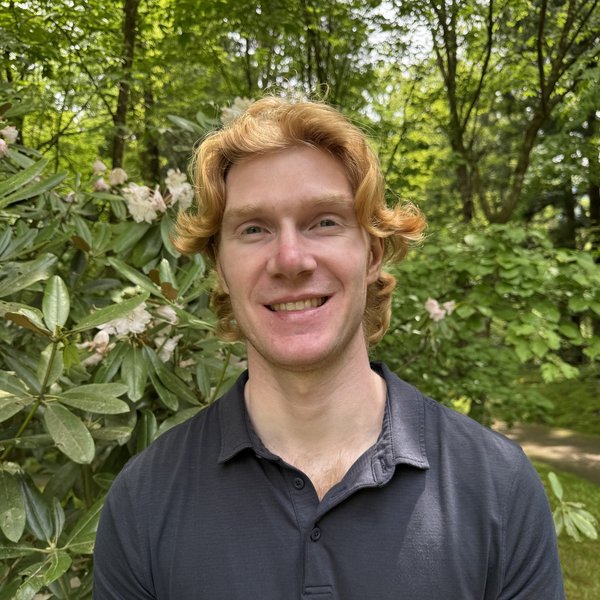
Stefan B.
“I feel incredibly lucky every time I head out on the water with one of our citizen science teams. Getting to experience the coral reefs here and play an active role in their protection has been extremely fulfilling.”
1. What got you interested in the Peace Corps?
My grandfather spent much of his life serving others, and I felt the Peace Corps would be a meaningful way to follow in his footsteps. I also wanted to challenge myself and could imagine no better way to do so. Getting to see a new part of the world, learning a new language, and experiencing a new culture on an intimate level made the choice to serve an easy one.
2. What projects are you working on?
On any given week, I can be working on a number of different projects, anything from carrying out habitat surveys to organizing youth camps and everything in between. The lion's share of my work, however, has been devoted to the establishment of citizen science teams in eight municipalities and the development of a marine protected area (MPA) in a coastal community in the north part of the Philippines.
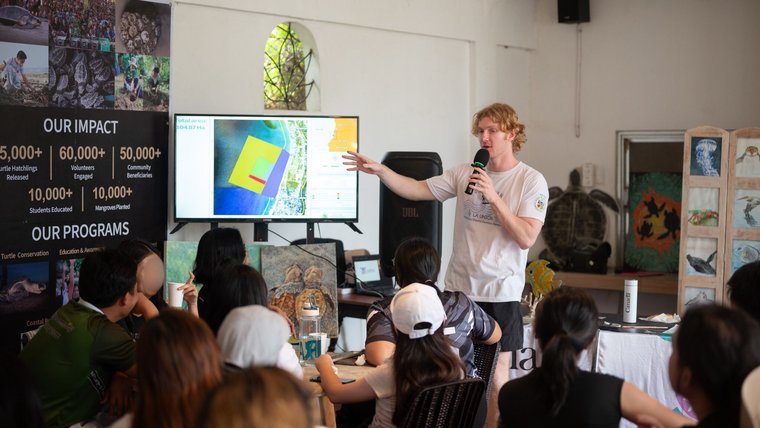
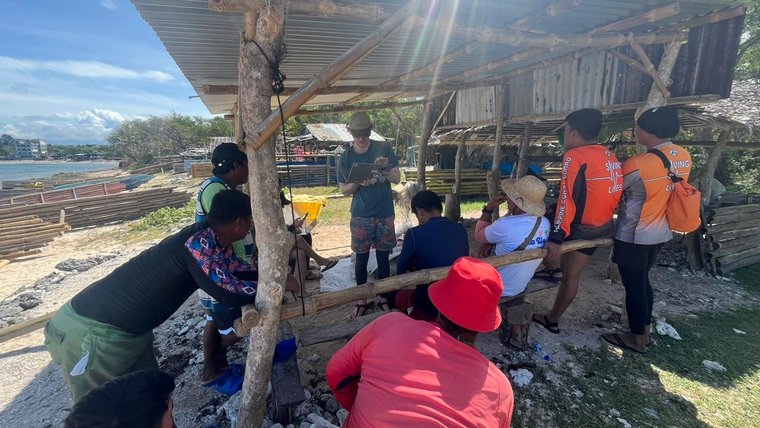
In collaboration with the local government units (LGUs) of eight municipalities, the provincial government and two other Volunteers, I helped develop two 3-day workshops. These workshops were aimed at developing citizen science teams to increase the efficiency of the current monitoring system for marine habitats within two marine protected area networks (MPANs). These projects sought to empower fisherfolk and LGU representatives to collect, interpret, and report data, in order to enhance their understanding of marine habitat health and foster community stewardship. It was our goal to train fisherfolk and other coastal stakeholders in the use of widely accepted habitat survey techniques, affording them the ability to substantiate anecdotal observations on the health of their marine ecosystems with scientifically significant data, thereby amplifying their voices and potential to influence management decisions. Since the start of this project, we have trained more than 60 participants in seagrass, mangrove, and coral reef habitat survey techniques. We have conducted a total of 14 surveys, and our teams have collected 1,800 coral data points and surveyed .06 acres of seagrass and 1 acre of mangroves.
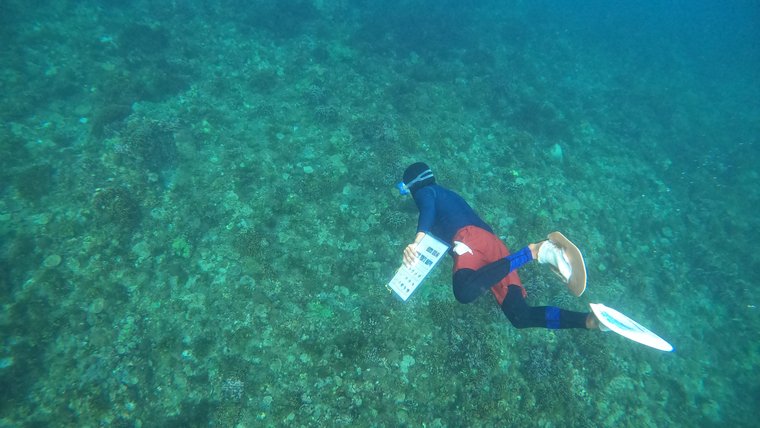
At the time of this writing, our teams have been operating for three months, and the progress we’ve made in such a short amount of time has been incredible. The collection of data on critical marine habitats is absolutely vital; it's impossible to develop effective management strategies if the status of the resource is unknown. Many of these habitats, especially the coral reefs, have never been surveyed before. Our citizen science teams are playing a pivotal role in helping to address this lack of data by filling in the gaps left by the current monitoring system.
Additionally, in the first few months of service, I helped write a municipal ordinance formally establishing my site's first MPA. I’m now in the process of developing the area’s management plan. Through a series of participatory workshops, I’ve begun gathering the necessary community input to develop an equitable management plan reflecting local priorities and the lived experiences of a diverse group of stakeholders.
3. What strategies have you used to integrate into your community?
When you first arrive, I think it's important to say “yes” to everything. First impressions matter and the connections you make upon arrival can help set you up for success.
At my site, this took the form of many awkward public speaking engagements highlighted by my faltering use of Ilocano (the local language at my site), participating in a choreographed dance number, attending church, and sampling many foods that I'd eat once, but never again. I also joined workout classes, surfed, fished, and took any opportunity I could to hike and visit the many waterfalls within a short drive of my site. These are things I enjoyed doing back home, so it made finding a community here relatively seamless.
4. What is a highlight of your time in service so far?
I feel incredibly lucky every time I head out on the water with one of our citizen science teams. Getting to experience the coral reefs here and play an active role in their protection has been extremely fulfilling. The enthusiasm of our teams and their willingness to contribute their time is inspiring and a source of continual motivation.
5. What have you enjoyed most about the community where you are serving?
I’m fortunate enough to live practically on the beach. I can surf, paddleboard, freedive, and watch perfect sunsets just a short walk from my doorstep. I meet new friends seemingly every time I’m out on the water and find spending time there is a very effective way to decompress after a busy week. Additionally, I’m able to collaborate with a number of local volunteers as well as nearby Peace Corps Volunteers, which has greatly expanded the scope of my work.
6. What are some of the most important things you’ve learned from your community?
In my work, particularly in drafting my site's MPA management plan, I have had to balance a range of stakeholders who oftentimes have competing visions for how our MPA should be managed. There’s a burgeoning tourism industry here, which has reduced the number of community members engaging in traditional livelihood practices. Finding a middle ground between fisherfolk, the tourism sector, and other stakeholders has provided insight into the challenge of managing a resource in a manner in which everyone feels accounted for. Widespread community support is an outcome not simply happened upon but achieved through objective decisions that require significant investments of both time and effort. I'm learning firsthand what it takes to achieve this.
7. How do you spend time when you are not working on a project?
When not working on a project, I like to spend my time hiking, visiting waterfalls, or enjoying the ocean. Many of our citizen science teams will invite us to come and explore different parts of their reefs with them. Doing so is a great way to have fun while fortifying relationships that have had positive impacts on projects.
8. What are you looking forward to in your remaining time as a Volunteer?
It’s incredible how fast time flies. That's one thing I kept hearing before embarking on this journey—two years is not a lot of time. Those words now ring especially true. It seems that the months pass by faster and faster as they tick toward close of service. So, as that date approaches, I’m taking every opportunity I have to simply live in the moment. I’m looking forward to soaking up every sunset, every chance to explore the region's reefs, and every day spent forging connections with friends that will last far beyond service.
9. Once you finish service, what will you do differently when you return to the U.S.?
Service requires embracing a certain degree of uncertainty and developing the ability to be comfortable with being uncomfortable. Like any skill, these will dull without use, so when I return to the U.S. I plan to more actively seek out engagements that push me outside my comfort zone. Within these sorts of experiences lie the greatest opportunities for personal growth. I think there is immense utility in truly challenging oneself, and I have found that during service what once felt overwhelming soon became routine.
On a different note, I’ve enjoyed studying and being immersed in a different language. I plan to continue learning new languages and have found that to be an engaging hobby.
Want to learn more about serving in the Philippines? Connect with a recruiter today.



