 An official website of the United States government


Featured Volunteer Profile
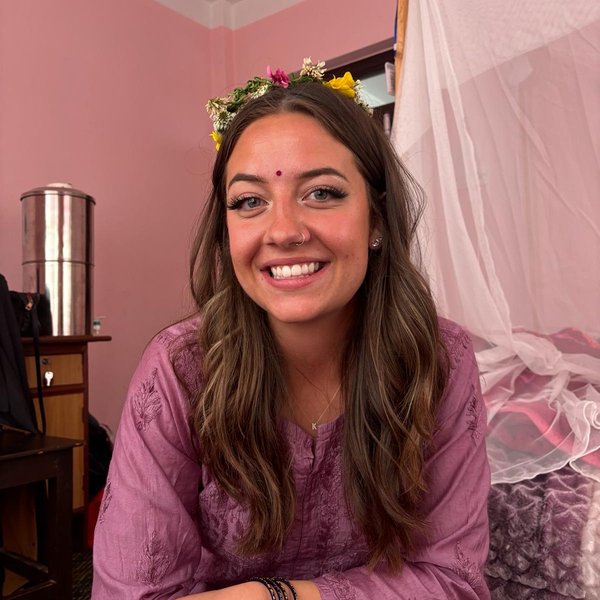
Kennedy T.
““…I truly enjoy my daily routines—whether it’s waking up at sunrise to share a cup of chia (tea) with my host family [or] eating fresh eggs from the chickens that live below me … Every day is filled with small, beautiful moments.”
1. What got you interested in the Peace Corps?
I grew up in a very small town, so from a young age, I was trying to figure out ways to expand my horizon. I had briefly heard about the Peace Corps during college, and shortly before graduating, I decided to learn more about it. The more I researched, the more excited I became about the opportunity. I was drawn to the idea of living in a culture very different from my own and experiencing life from a new perspective. At the time, I had also been feeling complacent with my life, and I was ready to step outside of my comfort zone. I wanted a challenge that would push me to grow personally while also allowing me to contribute to the greater good of the community that would be hosting me for the next two years.
2. What projects are you working on?
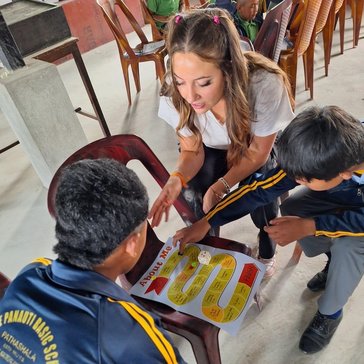
I’ve worked on several different projects. One of the first was a collaboration with a fellow Volunteer to create a pen-pal program between our schools. This project was especially exciting for our students as it helped spark interest and boosted participation in class because everyone was excited to write and receive monthly letters from a student in a nearby village.
More recently, I organized a training on menstrual health and how to sew reusable menstrual pads with my fellow female teachers and students. The goal was to provide access to eco-friendly menstrual products and to share tips on maintaining good hygiene practices during menstruation. In semi-rural villages like my own where resources are limited the reusable pads provide a low-cost and sustainable alternative.
In the future, I am planning to offer more teacher trainings, with a focus on topics like digital literacy and creating teaching aids/supplemental materials for lessons. I believe this will improve teaching quality and enhance the lessons for students. I also find that teaching from textbooks alone does not provide enough information for students, and teaching aids are one way to supplement this.
3. What strategies have you used to integrate into your community?
The most helpful strategy for integrating into my community has been saying “yes” as often as possible. My community members know the best places to visit and are always aware of local events, so whenever I’m invited to something, I try to accept. Ironically, many of these invitations come after a long bus ride or a stressful day at school, times when I’m most tempted to say no. But every time I’ve said yes, I’ve never regretted it. This approach has not only helped me map the community and its resources but has also brought me closer to my host sister and brother, who almost always join me at these events and adventures.
4. What is a highlight of your time in service so far?
From the very first day I arrived at my permanent site, my host family has treated me as one of their own. They’re always there to support me in any way they can, whether it’s helping me get rid of a giant spider in the middle of the night or making heart-shaped rotis just to make me smile. They’ve become a second family to me.
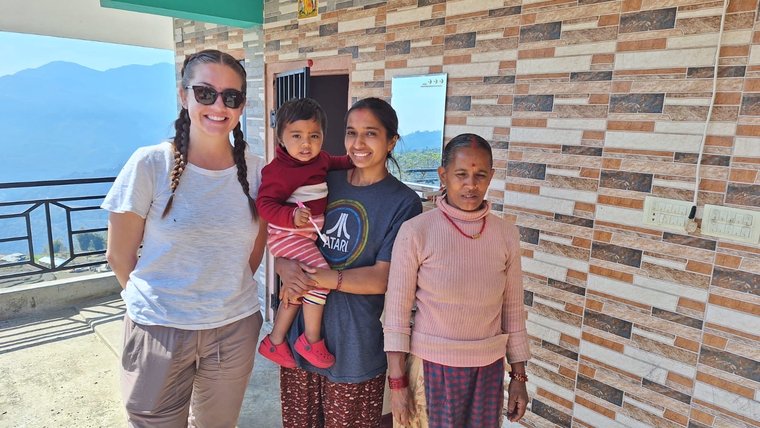
One of the highlights of my service was when my host family got to meet my family when they visited from the States. Although they had spoken a few times over FaceTime, having everyone together in person was completely different. My host family prepared a delicious dal bhat (lentils and rice), and we taught my family how to eat with their hands. Despite the language barrier, everyone was smiling and laughing the entire time. It was great to see both sides of my life come together.
5. What have you enjoyed most about the community where you are serving?
In my community, I’ve really come to appreciate the camaraderie that everyone shares. My neighbors are always willing to lend a day’s work when needed, and when the time comes, my family is there to return the favor. Everyone looks out for one another’s well-being.
That same sense of camaraderie is reflected in my students. They genuinely want each other to succeed. If a student struggles to read a passage or can’t answer a question, the rest of the class is quick to jump in and help. While this can sometimes be frustrating when I want a student to work through a problem independently, it’s also sweet to see how much they support one another.
It’s easy to get caught up in your own life and personal challenges, so witnessing a community that works together and thrives as a result is great to see.
6. What are some of the most important things you’ve learned from your community?
The most important lesson I’ve learned from my community is to slow down and appreciate the little things. Before joining the Peace Corps, I often found myself rushing through each day, always looking for the next task to fill my time. But since moving to a small, rural community, I’ve had no choice but to slow down and take it all in.
This shift took some getting used to, but now I truly enjoy my daily routines—whether it’s waking up at sunrise to share a cup of chia (tea) with my host family and eating fresh eggs from the chickens that live below me (special thanks to the rooster who wakes me up every morning), or brushing my teeth at night while watching the sun set over the Annapurna mountain range. Every day is filled with small, beautiful moments.
I’ve learned to appreciate the small moments, and I’m grateful to my community for teaching me how to slow down and see them.
7. How do you spend time when you are not working on a project?
There are a few different ways I spend my time. I wanted to have some things to do in my time off when I got to site, so I brought materials to make friendship bracelets with me to Nepal and bought a ukulele when I arrived in country. Both have been nice to have during the monsoon season when a lot of time is spent indoors.
Like many other Volunteers, I take a lot of walks around my community and occasionally bump into my students to chat with along the way. Most often, though, I am at home, playing with my 2-year-old host sister. My limited Nepali vocabulary is a big hit with her, and it’s been really fun to see her take her first steps and to watch her personality develop since I arrived. Some of the most fun days have been spent playing at home with her.
8. What are you looking forward to in your remaining time as a Volunteer?
Something I’m really looking forward to is attending some of the upcoming Nepali festivals—specifically Dashain and Tihar. Last year during this time, I was away on leave and didn’t get the chance to celebrate with my community. These are the biggest holidays in Nepal, and I’m excited to experience them in person this year. My host family and students talk about them often throughout the year, so I’m especially curious and eager to finally be part of the celebration!
9. Once you finish service, what will you do differently when you return to the U.S.?
When I return to the U.S., I want to be more intentional in every aspect of my life. Living in a community with limited resources has shown me just how excessive my consumption was before joining the Peace Corps. Whether it’s media, food, or shopping habits, I’ve realized that I don’t need nearly as much as I once thought. With this awareness, I plan to be more mindful about how I consume, spend, and give back to my community. I also hope to share these habits with my friends and family, so they can see how small changes in daily habits can lead to meaningful impacts.
Learn more about serving as a Peace Corps Volunteer in Nepal.



