 An official website of the United States government


Featured Volunteer Profile
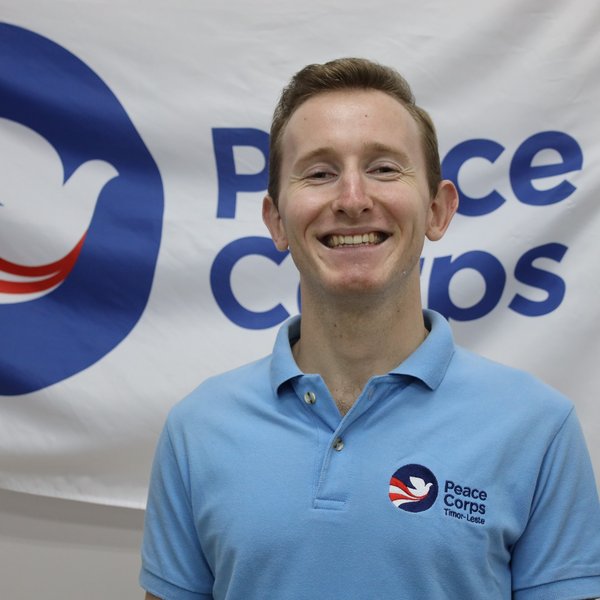
Max C.
“From the start, I’ve been struck by how genuinely invested people are in helping me succeed as a member of their community. Whenever I’ve shared a goal or project idea, I’ve been met with enthusiasm and a willingness to collaborate.”
1. What got you interested in the Peace Corps?
I've always been passionate about volunteering and making a positive impact in the lives of others. During the COVID-19 pandemic, I dedicated much of my time to volunteer work, which deepened my commitment to service and community engagement. When I learned about the Peace Corps, I saw it as a unique opportunity to take that commitment to the next level, not only by continuing to serve others, but by doing so while fully immersing myself in a new culture and environment. The chance to live and work in a country I had never heard of, on the other side of the world, was both exciting and humbling. Peace Corps service offered the perfect intersection of two of my greatest passions: helping people and learning about diverse cultures.
2. What projects are you working on?
Currently, I serve as a Peace Corps Volunteer Leader based in Dili, the capital of Timor-Leste. My role is split between supporting Peace Corps operations and collaborating with a local training center. Within the Peace Corps, I’m actively involved in the project redesign team, where we’re conducting a comprehensive review of our Community Economic Development program. Our goal is to refine the program’s objectives and develop a strategic plan to enhance its effectiveness and sustainability over the next five years.
At the local training center, I’m leading the implementation of a personal money management course aimed at equipping community members with essential financial literacy skills. Additionally, I’m working to strengthen the center’s English curriculum by introducing new materials and teaching strategies to better support learners’ language development. These projects allow me to contribute both to organizational development and direct community impact, aligning closely with my passion for service and capacity building.
3. What strategies have you used to integrate into your community?
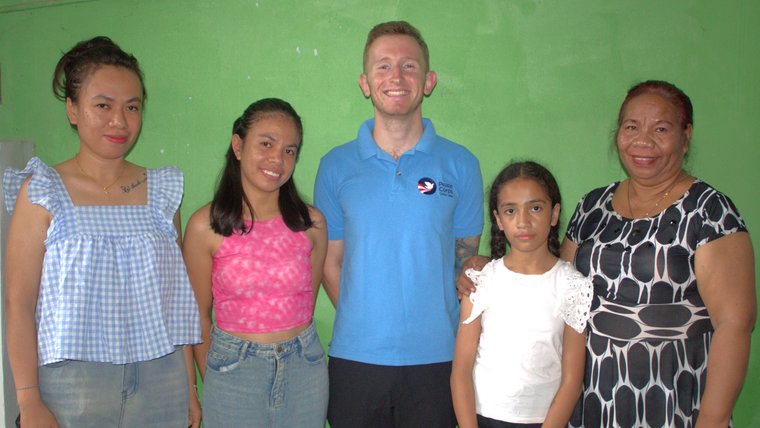
My primary strategy for integrating into the community has been to remain open, approachable, and genuinely engaged. I’ve made it a priority to build relationships by spending time with my host family, collaborating closely with my co-workers, and participating in everyday community life. I’ve learned that integration is less about grand gestures or major projects and is more about showing up consistently, listening, and sharing experiences. Whether it’s joining in local events, helping with daily tasks, or simply sitting and chatting with neighbors, these small moments have helped build trust and mutual respect. Flexibility and presence have been key to forming meaningful connections and becoming part of the community.
4. What is a highlight of your time in service so far?
Two moments stand out as highlights of my Peace Corps service. The first was successfully designing and facilitating a personal money management training course entirely in Tetum, the local language. It was a milestone that marked not only my growing language proficiency but also my ability to contribute meaningfully to my community’s development. Seeing participants engage with the material and apply it to their daily lives was incredibly rewarding. It was the first time I truly felt the impact of my work.
The second highlight of my service was joining my host mother and her church group on a whirlwind 48-hour pilgrimage from Maliana to Mount Ramelau, the highest peak in Timor-Leste. The journey involved traveling with over 100 people, sleeping for just a few hours, and culminating in a breathtaking hour-long mass at the summit. That trip remains one of the most memorable and meaningful experiences of my three years of service in Timor.
5. What have you enjoyed most about the community where you are serving?
What I’ve enjoyed most about my community is the incredible sense of openness and connection among its members. There’s a strong feeling of togetherness here. Everyone truly looks out for one another. In my neighborhood, many of the families are related, which creates a close-knit environment where people share not just space, but lives. From day one, I was welcomed with genuine warmth and treated like part of the family. Whether it’s sharing meals, participating in local events, or simply chatting on the front porch, there’s a deep sense of belonging that makes every day meaningful.
6. What are some of the most important things you’ve learned from your community?
One of the most important things I’ve learned from my community is the power of collective support and shared purpose. From the start, I’ve been struck by how genuinely invested people are in helping me succeed as a member of their community. Whenever I’ve shared a goal or project idea, I’ve been met with enthusiasm and a willingness to collaborate. Their support goes beyond encouragement; they actively offer their time, resources, and insights to help bring those ideas to life. It’s a level of generosity and solidarity that has deeply impacted me and reshaped how I think about community engagement. I’ve learned that meaningful development is truly a shared journey, and that trust and mutual respect are the foundation of lasting change.
7. How do you spend time when you are not working on a project?
I first lived in a city about an hour and half drive south from the capital. I spent much of my free time on the veranda, simply enjoying the rhythm of daily life. Whether it was morning, afternoon, or evening, I would “tuur halimar”—sit outside relaxing, taking in the scenery, chatting with neighbors and family members, and greeting passersby. Those moments of quiet connection helped me build strong relationships in the community.
Now that I’m based in Dili, I’ve found a new way to explore and unwind: cycling. The city’s bike-friendly roads have made it easy to discover different neighborhoods, meet new people, and experience the vibrant energy of the capital. Riding through Dili has become one of my favorite ways to interact with this new city I call home.
8. What are you looking forward to in your remaining time as a Volunteer?
In my final year as a Peace Corps Volunteer, I’m looking forward to witnessing the growth and accomplishments of my fellow Volunteers across Timor-Leste. As a Peace Corps Volunteer leader, one of my key responsibilities is to support other Volunteers, and it’s incredibly rewarding to see their projects take shape and make a real impact in their communities. I’m excited to continue celebrating their successes.
9. Once you finish service, what will you do differently when you return to the U.S.?
Living and working in my community here has taught me the value of patience, gratitude, and finding joy in simplicity. When I return to the U.S., I’ll carry with me a more compassionate and mindful approach to everyday life. I’ve learned to slow down, appreciate small moments, and prioritize relationships over routines. These lessons have become part of who I am, and I’m committed to living with greater empathy and intentionality moving forward.
Learn more about serving as a Peace Corps Volunteer in Timor-Leste.



