 An official website of the United States government




Featured Volunteer Profile
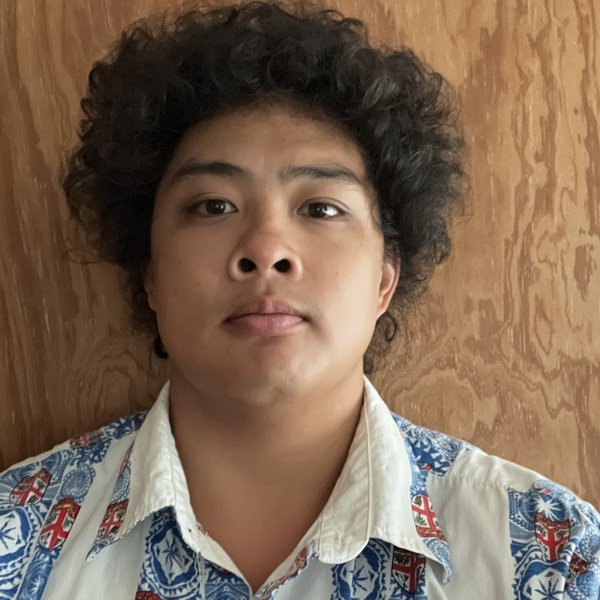
Albert B.
“I have learned that showing up and trying your best that day is all you can do, and you cannot control everything.”
1. What got you interested in the Peace Corps?
I was first introduced to the Peace Corps by a few of my professors at Humboldt State (now Cal Poly Humboldt), Tyler Stumpf and Beth Wilson. They had some great stories and adventures from their service, and it really inspired me to break out of the traditional career pathways after graduation. I wanted to learn about and see the world and contribute positively to society while utilizing my studies from university.
2. What projects are you working on?
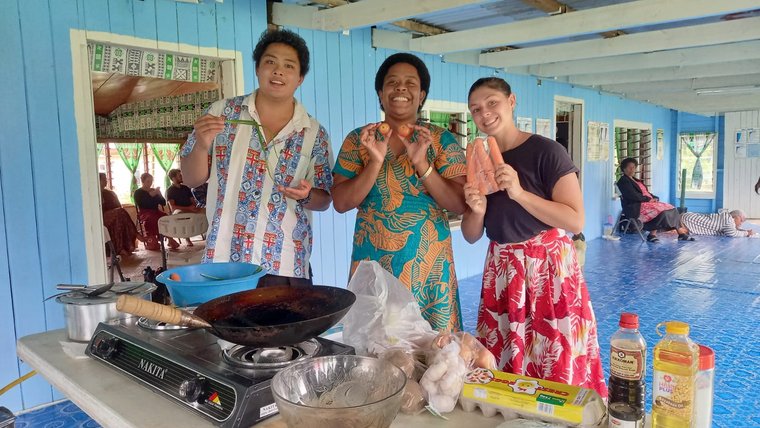
I run a weekly cooking class with a women’s group. The women members are very interested in this activity because many of them have small businesses related to food—such as selling “ice blocks” (popsicles), preparing to-go food packs for workers in town, and catering events, etc.
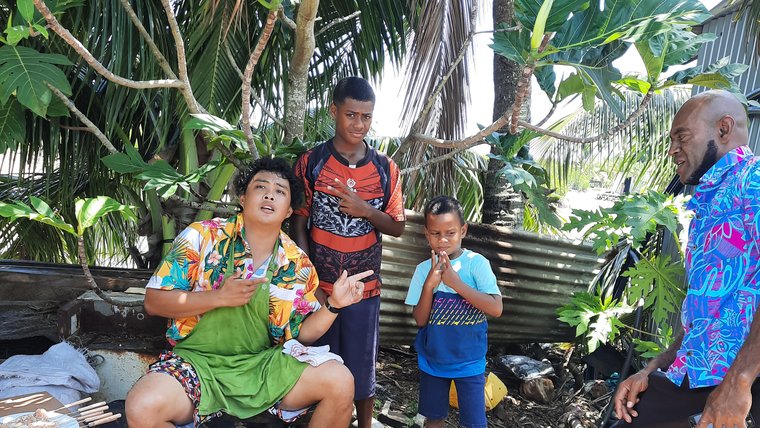
I also support some projects for youth. I started a youth money savings program, where I teach kids basic accounting skills and basic money management, and support them in setting money saving goals. The kids contribute to a money savings jar whenever they have some change.
Another project is building a village canteen that will operate as a youth group cooperative, where participating youth will be able to earn dividends at the end of the year. Youth group members will serve the community and learn many business skills, such as basic accounting, management, teamwork, basic economics, and finance, just to name a few.
A major village project is building a community hall/cyclone evacuation center. The purpose is to keep villagers safe during tropical cyclones, as well as provide a hub for learning about environmental sustainability and best practices on topics like farming, fishing, and business.
3. What strategies have you used to integrate into your community?
I’ve always had an interest in cooking, sharing, and learning about food. I always pop my head into the kitchen when someone is cooking something at home in the U.S. Here in Fiji, I am always learning about local foods and dishes, and sharing recipes/food from the U.S. and around the world, whether during a big village event like a wedding, funeral or group celebration, or a small event like afternoon tea.
4. What is a highlight of your time in service so far?
Reconnect was a memorable experience. (Reconnect is the first time Volunteers come together after 3 months of integrating by themselves in their villages.) It was a week together of sharing stories about our first months in service, and seeing and chatting with staff who supported us during training. It is kind of like when your hometown friends who went to different universities all came back for the first Thanksgiving break. It was a refreshing experience.
5. What have you enjoyed most about the community where you are serving?
The openness and acceptance of the community. They are incredibly nice, helpful, and willing to try new things, whether it is something fun like trying out a new recipe together or something more studious like a workshop on income-generating activities. The community members always have a smile on their face and are fully engaged in the workshop or task.
6. What are some of the most important things you’ve learned from your community?
I have learned that showing up and trying your best that day is all you can do, and you cannot control everything. One can prepare all day, and no fish may be caught, but somedays you might just get lucky. It’s important to have a flexible and positive outlook, no matter how big or daunting the obstacles look.
7. How do you spend time when you are not working on a project?
I love to train and lift weights, be in nature, go swimming, make a meal with my family and have talanoa (sharing stories) sessions with the youth group.
When I am at home, I like to practice the local language, read, watch movies, play with my cats, cook a nice meal, and experiment with fermentation (by making pickles, kimchi, etc.).
8. What are you looking forward to in your remaining time as a Volunteer?
Working together and enjoying the process of building something, whether it is the community hall, someone’s small business. Just observing people’s personal growth is rewarding.
9. Once you finish your service, what will you do differently when you return to the U.S.?
Smile more and greet everybody with an open heart.



