 An official website of the United States government


Featured Volunteer Profile
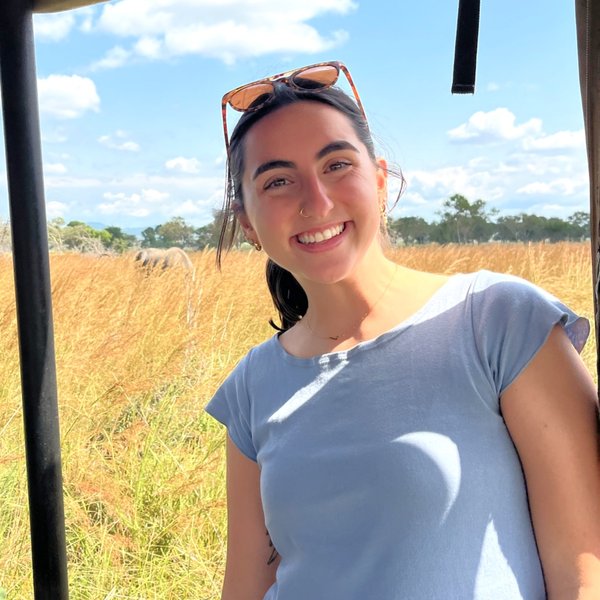
Liora M.
“The women in my village are some of the strongest people I have ever met; they graciously work on their farms, take care of the family, and complete other responsibilities, all while remaining positive and hopeful.”
1. What got you interested in the Peace Corps?
I first heard about the Peace Corps in high school. The idea of experiencing a new culture and way of life through volunteering immediately resonated with me. I have always been passionate about service, whether through school clubs, community groups, or local volunteering, and I knew I wanted to learn from and contribute to a community different from my own. Throughout college, I continued to think about the Peace Corps. The chance to build relationships, share knowledge, and gain a deeper understanding of the world felt like the perfect opportunity. I am lucky to have a strong support system of family and friends who encouraged me to apply. When I saw the call for Health Education Volunteers in Tanzania, and my environmental health degree was listed as desirable, I knew it was meant to be.
2. What projects are you working on?
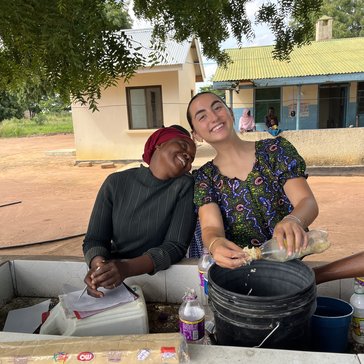
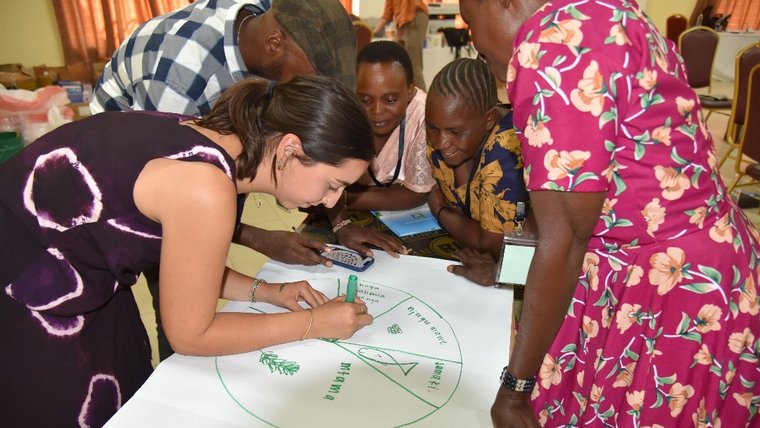
I was lucky enough to secure a Peace Corps Partnership Project grant to support a project focused on beekeeping and income-generating activities for a group of mothers, fathers, and people living with HIV in my village. We plan to build bee boxes and harvest honey to sell at local markets. The money earned will be re-invested into the project, group members, and the health and nutrition of their families.
Outside of the beekeeping project, I have begun building majiko banfiu (fuel-efficient stoves). In Tanzania, women cook on charcoal stoves, and many of them support children on their backs while doing so. This increases illness and respiratory issues for mothers and their children, while the efficient stoves reduce this risk. I also work with mothers, pregnant women, and children at the zahanati (local clinic) to help deliver education on safe birthing practices, nutrition, safe water, hygiene and sanitation, and other maternal and child health topics!
3. What strategies have you used to integrate into your community?
I simply leave the house. Whenever I go to the market, a celebration, or even a funeral, I get the chance to spend more time with people in unique and meaningful ways. It's helpful to be present physically and emotionally so that I can have conversations, create new connections, and have different experiences.
A huge part of living in Tanzania is the language, and learning Kiswahili has been the single best way to build relationships and feel connected to people around me. Because my community speaks a lot of Kigogo, the local tribal language, I’ve also made an effort to learn useful phrases like “goodnight,” “I’m hungry,” and “I appreciate you,” which people love hearing. I was lucky enough to be given a Kigogo name that translates to “rain.” The region I live in is extremely dry and to local people, rain is a huge blessing. My Kigogo name is a reminder of the warmth and acceptance my community has shown me from the very beginning.
4. What is a highlight of your time in service so far?
A highlight of my service has been the trainings I have been able to attend with my counterparts. Most recently, I participated in a training focused on nutrition for people living with HIV and animal husbandry. Both topics are deeply relevant to the daily lives of people in my village, and being able to learn the topics with my counterpart made the training even more impactful. I believe that the first goal of the Peace Corps, to help countries interested in meeting their need for trained people, is extremely important and can serve as a guiding principle. Knowledge and skills transfer will help to create sustainable change and strengthen capacity within our communities. After I leave, I know that my counterpart will continue to value and appreciate the things we were able to learn together. That sense of continuity—of leaving something useful behind—is one of the most rewarding parts of my service.
I am very close to many Volunteers in my cohort, and we were able to celebrate three birthdays that fall close to each other by visiting Zanzibar, a gorgeous island off the coast of the mainland. It coincided with our one-year mark in country, so it was the perfect way to celebrate, relax, and see a new part of the country.
5. What have you enjoyed most about the community where you are serving?
I have enjoyed the welcoming response I have received from my community and others. Tanzanians are known to be extremely kind, and my village is no exception. I am kindly greeted almost everywhere I go and those everyday interactions make me feel valued and cared for. I feel rooted within my networks because people consistently check on me, offer a helping hand when I need it, or simply make space for me in their day. I live in the dry part of Tanzania, but my site is gorgeous with mango trees lining every street.
6. What are some of the most important things you’ve learned from your community?
My community has taught me so much about strength, hard work, and resiliency. The women in my village are some of the strongest people I have ever met; they graciously work on their farms, take care of the family, and complete other responsibilities, all while remaining positive and hopeful. From them, I will take away lessons on womanhood, patience, and quiet perseverance, and hope to one day be as kind and optimistic as they are.
People in my community have taught me that small gestures or interactions can mean a lot. Strangers inviting me to share a meal, offering gifts, or extending other kindnesses have taught me that generosity does not have to be large and extravagant. Through everyday acts of warmth and openness, my community has shown me what kindness and compassion look like, and those lessons will stay with me long after I leave.
7. How do you spend time when you are not working on a project?
When I am not working on a project, I spend my time doing lots of different things! As a Health Volunteer I can create my own schedule, which allows me to explore many places and things in my community! I mostly enjoy cooking, gardening, reading on my Kindle, playing with kids in my village, or visiting the primary and secondary schools. I visit the “chekechea” (preschool-aged kids) once a week and have been teaching them count, add, and sound out their vowels. I recently purchased a popsicle mold, and the kids have been my taste testers! So far, we have tried coconut/banana, mango/passionfruit/orange, milk/chocolate, and coconut/mango. I also have chickens in my courtyard, and my reward is getting to eat fresh eggs! Finally, I am also training to hike Mt. Kilimanjaro, a common challenge many Tanzanian Volunteers take on; I go on daily long walks and have begun practicing yoga and Pilates to prepare!
8. What are you looking forward to in your remaining time as a Volunteer?
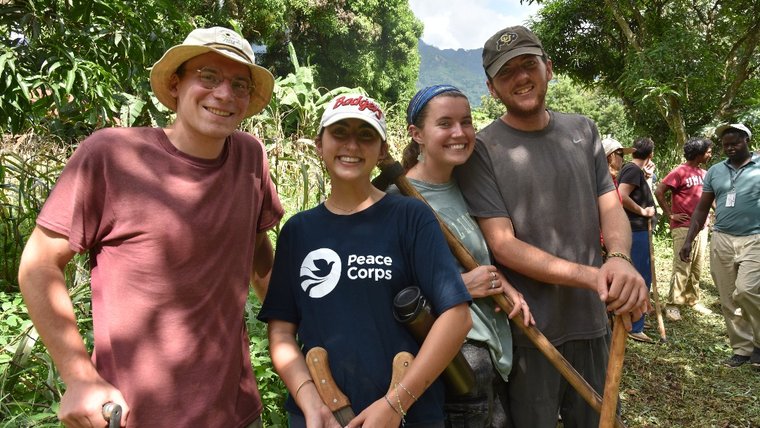
I am looking forward to summiting Kili! I am also excited and eager to continue working on projects in a sustainable manner while further developing relationships in my community. Now that I’m in my second year as a Volunteer, I feel more settled and confident, which makes me even more motivated to bring new ideas and opportunities to the people I work with (such as a world map project). I also hope to attend more trainings that will build my skills and help me support my community more effectively. Eating more home-cooked Tanzanian meals and spending time with my friends are also goals during my remaining time. I am also excited to travel the continent and hope to visit South Africa, Victoria Falls, and Egypt!
9. Once you finish service, what will you do differently when you return to the U.S.?
The Peace Corps has taught me more about myself than I think I will ever realize, and being in Tanzania has given me the space to reflect deeply on my goals and priorities. I’ve learned more about how deep connections can fulfill your life and inspire others, and because of this, I now know I want to be more involved in whatever community I eventually live in, because relationships and shared experiences can add a lot of meaning to our personal lives.
Additionally, I have had time in the Peace Corps to reflect on my spending and consumption. Life here is very simple when it comes to food, clothes, and other resources, and people often buy only what they need rather than stocking up on extras. I hope to be mindful of my habits back in America and continue a lifestyle that values connection and sustainability long after I finish my service.
Learn more about serving as a Peace Corps Volunteer in Tanzania.



