 An official website of the United States government


Featured Volunteer Profile
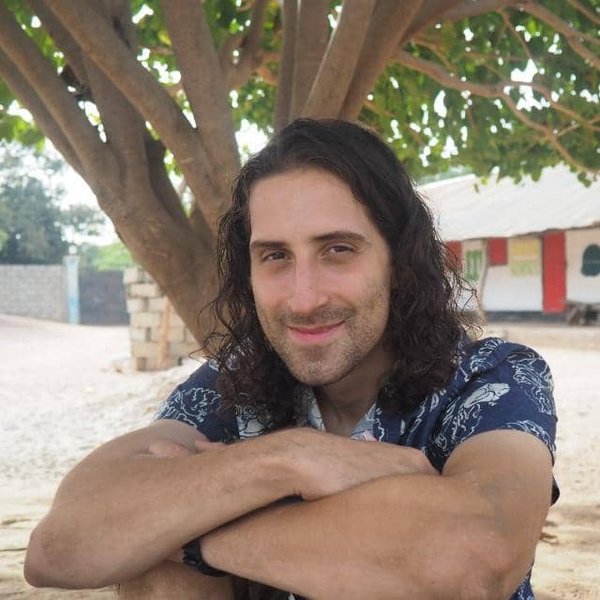
Macklin D.
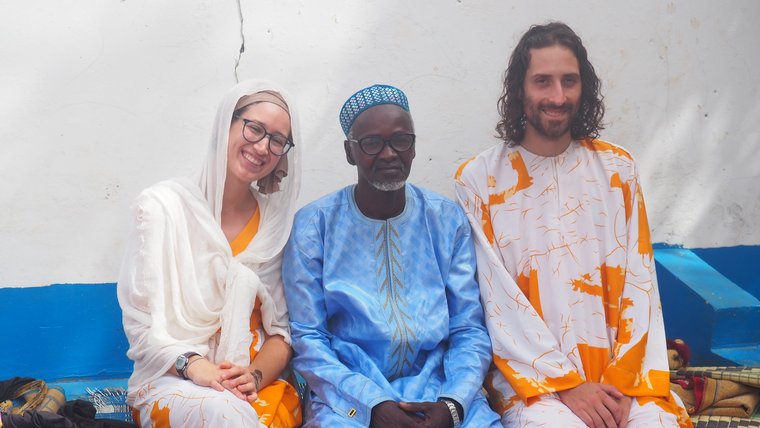
“Our host family has helped introduce us into our community, as well as improve our language and cultural awareness. They are our biggest cheerleaders and support system in the village.”
1. What got you interested in the Peace Corps?
My wonderful wife, Ellie, whom I am serving with, originally suggested it. We were both interested in going abroad for an extended period of time and the Peace Corps seemed to be a good fit. We liked that we would learn a new language, be immersed in a new culture, and directly serve people.
At my desk job in the U.S., it was difficult at times to feel like I was making an actual impact. While the work I was doing prior to the Peace Corps was satisfying in its own way, being able to interact with the people you serve face-to-face is a different kind of gratifying.
2. What projects are you working on?
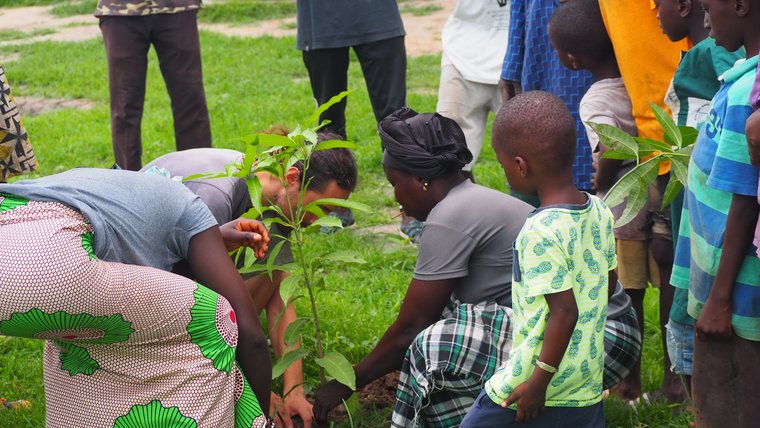
I am working on a grant to improve water availability for the local women’s garden. In the dry season, which lasts for 9 months of the year, the water infrastructure in the garden is not large enough for the women to grow crops without rationing water. My grant aims to install more capacity for water storage, as well as provide training on watering methods that reduce the risk of over-watering.
I am also developing a tool to help digitize and track patient visits and births at the local health clinic. I’m currently working with the Regional Health Directorate to pilot the tool at multiple health clinics within the region, and I will implement feedback from their findings going forward.
3. What strategies have you used to integrate into your community?
Ellie and I walk around our community a lot, without having a specific goal or place to be. Sitting and chatting is a large part of village culture, and it is important to set aside some time to do nothing with other people. This is where you will deepen your relationships with others, and more often than not, they will ask questions about life in America and elsewhere in the world.
Another strategy is to take interest in what people are doing. They will almost always be happy to answer questions and give you hands-on experience. For example, Ellie and I have woken up at 4 a.m. to bake bread with the village baker to better understand what it takes to make bread by hand every day for three villages. This experience strengthened our relationship with that family and allowed us to share the story with other local people and practice our language skills.
4. What is a highlight of your time in service so far?
One highlight from my service has been working with the local health center to conduct monthly clinics for children under five. We weigh the children, ensure they are up to date with their vaccinations, and give pre-natal supplements and mosquito nets to expecting mothers. This free service is delivered to rural communities once a month, and it has allowed me to see and serve different parts of the region I live in. The clinic can serve anywhere from a few dozen to over a hundred mothers and children at a time. It is a highlight for me because it allows me to have a very direct impact on rural communities, which was an aim of mine volunteering with the Peace Corps.
5. What have you enjoyed most about the community where you are serving?
My host family has been a major contributor to the success and enjoyment of my Peace Corps service. At the beginning when we did not share a language, my host family was patient and understanding when we tried to slowly piece together a simple thought. They are always understanding if we want space, if we want to chat, or if we want to organize something in the community. Our host family has helped introduce us into our community, as well as improve our language and cultural awareness. They are our biggest cheerleaders and support system in the village.
6. What are some of the most important things you’ve learned from your community?
It is very hard not to feel inspired by the Gambian culture of sharing and community. Every meal is preceded by “come and eat” to anyone and everyone who is passing by, and it is not just an empty nicety—they are genuinely thrilled if you join them for a meal. It is difficult to explain to them that this is not the case everywhere. Coming from an individualistic society, I’ve enjoyed experiencing the charm of a community with a more collectivist view—something that is difficult to explain without firsthand experience.
Another thing I’ve learned is effective intercultural communication. It is important not only to consider someone’s words but also the cultural norms and past interactions when communicating across cultures. The last important thing is the Mandinka language! My community has helped me a great deal in learning how to speak Mandinka.
7. How do you spend time when you are not working on a project?
I spend time reading, cooking, or running. While I’ve been in service, I’ve also taken up yoga and meditation, which help me manage stress and stay focused. When it isn’t too hot, I play football (soccer) with the village boys at the school in the evening. It’s such a different game from what I was used to, as the ball is extremely inflated to counteract the sandy pitch. I’m not very good, but it is still fun to try!
8. What are you looking forward to in your remaining time as a Volunteer?
As I am approaching the end of my service, I look forward to closing out projects and saying heartfelt goodbyes to everyone. I’ll be sad to leave, but I’m grateful for the opportunity to serve this community for two years. I am looking forward to seeing how projects progress after I leave and how the community continues to grow. I’m also looking forward to celebrating with my fellow Volunteers and staff members. I know I’ve made some special connections during my time here that will last far longer than my two-year service.
9. Once you finish service, what will you do differently when you return to the U.S.?
I think I will bring a more community-oriented mindset back to the U.S. when I finish serving here. When I see what a difference I have made in a community that I had no previous connection to, it inspires me to think of what I can achieve in my local community in the States. My service has showed me the importance of community service on an individual level. I am looking forward to volunteering and getting more involved with local initiatives once I return. I will also continue my yoga, meditation, and running habits that I have developed during my service.
Learn more about serving in The Gambia.



