 An official website of the United States government


Featured Volunteer Profile
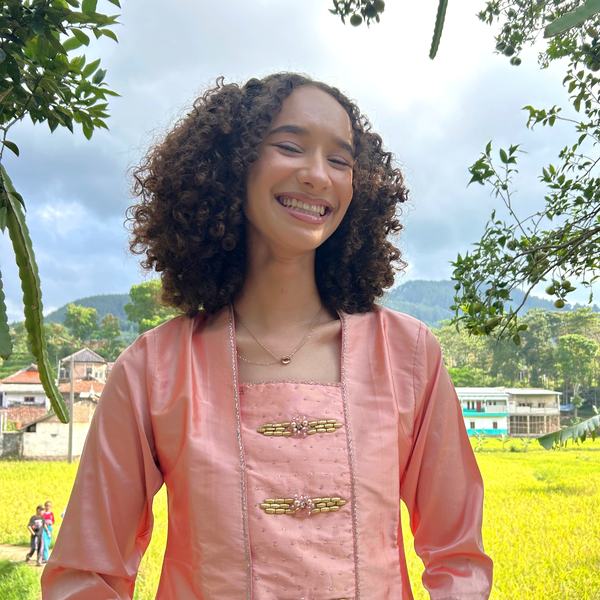
Kennedee H.
“My host mom’s a fiery woman: relentlessly hard-working, strategic, and hilarious … During my first year here, we spent every evening watching Indonesian soap operas and gossiping, which is how I developed fluency in Bahasa Indonesia.”
1. What inspired you to apply for this Peace Corps position?
My interest in the Peace Corps began while working at an emergency housing unit that offered free counseling and other resources to displaced youth in Milwaukee, Wisconsin. At the time, I was a wide-eyed and open-hearted 16-year-old working a few odd hours a week to maintain a peer volunteer program. I was eager to become a student of my new role and often ended up in enthusiastic conversations with the social and healthcare staff at the center, some of whom were Returned Peace Corps Volunteers.
Through conversations with these Peace Corps alumni, I began to see the Peace Corps as a bridge to a curious and fantastic future, where a service-oriented idealist like myself could immerse myself in learning new languages and cultures. What motivated me to join was not just the enchanting tales of their travels, but their social impact. Returned Peace Corps Volunteers approached community work with resilience, creativity, and cultural awareness, which are essential skills for any people-centered work. I knew that joining would help me become the best advocate and change agent I could be for my home community. All these years later I am proud to call myself a Peace Corps Volunteer.
2. What projects are you working on?
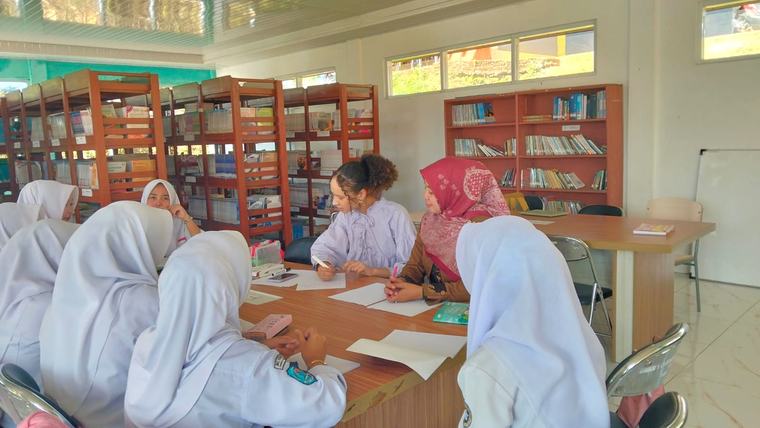
As an Education Volunteer, my first and most important project is working with other English teachers to create safe and joyful classrooms where students are eager to learn! I teach at a vocational high school, so the majority of my students will head straight into the workforce following graduation. My goal is to convince them, before their primary education ends, that learning English could unfurl a world of professional and social opportunities for them. And, just as significantly, it can be a lot of fun to learn!
To accomplish this, my counterparts and I try to integrate as many games and activities as possible into our lessons, including some American childhood favorites. Bingo, for instance, is a major hit in Indonesian classrooms and an easy way to sneak in grammar, listening practice, and other foundational language learning skills. My students, including the staff members who join me for Teachers’ English Club each week, appreciate the opportunity to be playfully engaged, and just a little bit silly, together.
3. What strategies have you used to integrate into your community?
Approaching a new environment and community with curiosity is key! The number of questions I ask about Indonesian languages and culture might lead you to think I am secretly using my time outside of class to write a dissertation. But I am deeply interested in learning about the diversity of the world—Indonesia itself being a diverse nation of over 17,000 islands—and the best way to do that is to collect as many details, anecdotes, jokes, and photos as I can.
One of my favorite cultural facts about Indonesia, learned from my Peace Corps language and intercultural facilitator, is that travelers are expected to bring home gifts of food or small treasures for their family and friends, called “oleh-oleh.” Each Indonesian city sells a popular form of oleh-oleh, from peanut mochi in Sukabumi to sponge cakes in Surabaya. Even if I am only traveling to the nearest city, I often use oleh-oleh as an excuse to share snacks and stories in the teachers’ room, uniting over a mutual love of good food and even better conversation.
4. What is a highlight of your time in service so far?
Indonesia is home to the largest Muslim population in the world, with nearly 90% of its people identifying with the Islamic faith. Still, no amount of data or statistics could have prepared me for the palpable excitement that buzzed in my community during Ramadan. For the last two years, Ramadan, the Islamic holy month of fasting and charity, has fallen during March.
During Ramadan, faith and community come to the forefront as people commit to fasting, dawn until dusk, abstaining from all food and drink. As a non-Muslim who joined my host family in fasting for the first year, I learned so much about the strength of my own body and mind, pushing past fatigue to help my host mother sell sweet treats door-to-door.
I feel so honored to have been able to take part in such a special time in the lives of many and will never forget the generosity my community showed me, despite our religious differences.
5. What are some of the most important things you’ve learned from your community?
Living in a farming town with an abundance of sawa (rice fields) offers a rich, but slow pace of life. Our community is deeply synced to the daily cycle of strong morning sunshine and heavy evening rain. Since arriving to site, I have felt deeply moved by the radical generosity that defines Indonesian culture. At my site, distant neighbors greet me by name and offer their best—bunches of bananas, cups of hot tea, kind compliments, and most often, a sympathetic ear to my clumsy Bahasa Indonesia.
From speaking with older relatives back in the States, I’ve realized how similar rural living in Indonesia is to daily life in the American South for my ancestors. Before the Great Migration, my distant relatives inherited sharecropped land and split it between their relatives. They lived as one, worked as one, and relied on each other’s generosity to generate a successful life for their family.
Unexpectedly, living within my host community has helped me understand how my ancestors might have lived, bringing me closer to my Southern Black (African American) heritage.
6. How do you spend time when not working on a project?
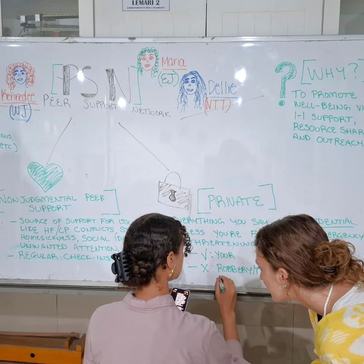
Outside of the classroom, I am part of the effort to relaunch our post’s peer support network! Serving on the network has given me a meaningful opportunity to formalize the social and emotional support I receive daily from my community within and beyond Indonesia. On an average week, I write blog posts for our community newsletter, organize outreach programming on mindfulness and well-being, and provide an empathetic ear to fellow Volunteers seeking confidential support.
My time at site’s not all work though! On the weekends, I love playing games and making slime with the neighborhood kids, taking photos of neighbors and friends with my film camera, swapping fiction recommendations with my cohort, and heading to nearby cities in West Java to gather with other Volunteers. Being a Volunteer is a master class in time management and finding work-life balance!
7. Tell us about the strongest relationship you’ve developed while in country.
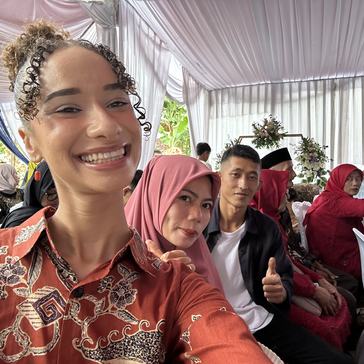
My host family here in Indonesia is indispensable, particularly my ibu (mom). My host mom’s a fiery woman: relentlessly hard-working, strategic, and hilarious. She’s got an affinity for Hello Kitty, so our living room’s hot pink with a set of loveseats shaped like Hello Kitty’s face. I balk at the number of tasks she manages within a day: running a household, singlehandedly operating a warung (our school’s unofficial kiosk and canteen), raising a preschooler, and maintaining side businesses selling furniture and making cakes. I help her create a little more breathing room in her schedule, which means taking on mundane business tasks, like packaging rice flour cakes, and helping with childcare.
During my first year here, we spent every evening watching Indonesian soap operas and gossiping, which is how I developed fluency in Bahasa Indonesia. We share nail polish and thrifting tips. When we eat dinner together, she brings the bowls, and I carry the plates. She has helped me find belonging and grounding in an unfamiliar place, and our relationship is a constant highlight.
8. What are you looking forward to in your remaining time as a Volunteer?
Hiking more mountains and volcanoes. Learning enough Indonesian to write poems … and sing a few karaoke songs. Promoting literacy by building up library programming/infrastructure and collecting reading resources for neighborhood children. Walking my 5-year-old host brother to kindergarten for the first time. Seven months is a deceptively short period of time, so mostly I hope to savor remaining moments with my school community, friends, and family here.
9. What will you do differently when you return to the U.S.?
Although Peace Corps service ends soon, I’m aiming for a lifetime of sharing stories, memories, and recipes from my community here in Indonesia. Even a long-winded, funny story is an act of diplomacy, promoting intercultural understanding between nations.
On a smaller level, I hope to bring Indonesian neighborliness back with me to the States. In the last two years, I’ve learned the importance of remembering neighbors’ names and students’ birthdays. Enough kindhearted strangers have stood in roadside ditches with me, helping me hail transportation, or answer bewildered questions, to pass forward this patient attentiveness. I hope to always look out for others’ welfare, especially those vastly different from me, because I have also been the lost, the outsider, and the foreigner.
10. What would you say to someone thinking about joining the Peace Corps?
Peace Corps service is unpredictable. Items from home deteriorate, you gain weight, you unpack and repack constantly, and each time you become a slightly different person with different needs. It’s the journey of a lifetime, and the only way to fail is to resist change.
The Peace Corps calls people seeking transformation, who’ve realized they need a life pivot toward meaningful work, exploration, service, global awareness, belonging, and more. If this describes you, the Peace Corps welcomes you to apply. You are wanted out there, somewhere.
Learn more about serving as a Peace Corps Volunteer in Indonesia.



