 An official website of the United States government


Featured Volunteer Profile
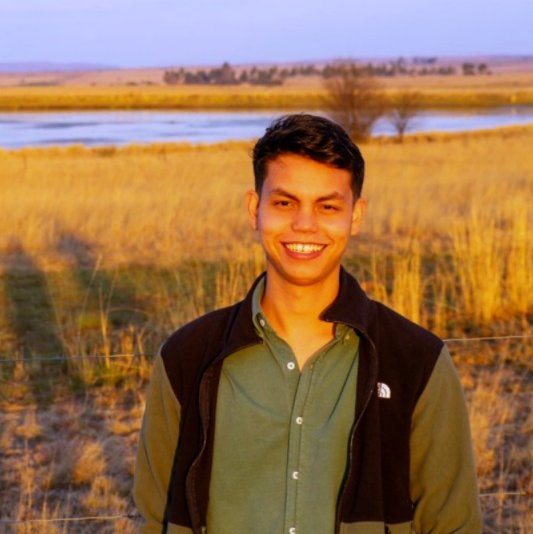
Joe M.
“The unique sense of humor among the Basotho people is one of my favorite aspects of this culture, and it’s lifted my spirits when I’d ordinarily be bummed about something going on in my professional or personal life.”
1. What got you interested in the Peace Corps?
I grew up overseas with two parents who worked in international development. Growing up I would sometimes accompany them when they went out into the field, and I absolutely loved it. Experiencing a different culture and playing outside in the rural parts of the countries we lived in gave me some of the fondest and most formative memories I have. When we returned to the U.S. I would hear my parents’ stories about the incredible humanitarian work they did around the world and felt inspired by the idea of a career that would make a meaningful and tangible impact on communities I grew up around. It turned out that a lot of people in the field I wanted to enter had either served in the Peace Corps, or sang the praises of those who had served. So for me it was quite an easy decision, and I’ve actually served twice now.
2. What projects are you working on?
My flagship project has been a multi-phase data collection and analysis program aimed at identifying community perceptions of public health. Clinic staff, village health workers, and Ministry of Health staff noted a distinct lack of recent and readily available demographic, geographic, and public opinion data at the clinic catchment level that could, if collected, provide valuable insight for more targeted outreach initiatives. To meet this need we developed a basic survey designed to be simple and easily comprehensible by a diverse range of respondents. We then trained village health workers to administer this survey. Survey data were then analyzed and visualized with a geographic information system (GIS), highlighting where in the catchment certain health phenomena were occurring. We presented findings to key stakeholders (clinic staff, village health workers, Ministry of Health, local government, etc.) and plan to continue to do so through the rest of the year. Additionally we’re documenting and sharing our methodology with other Peace Corps Volunteers and their counterparts should they want to implement a similar project in their own communities.
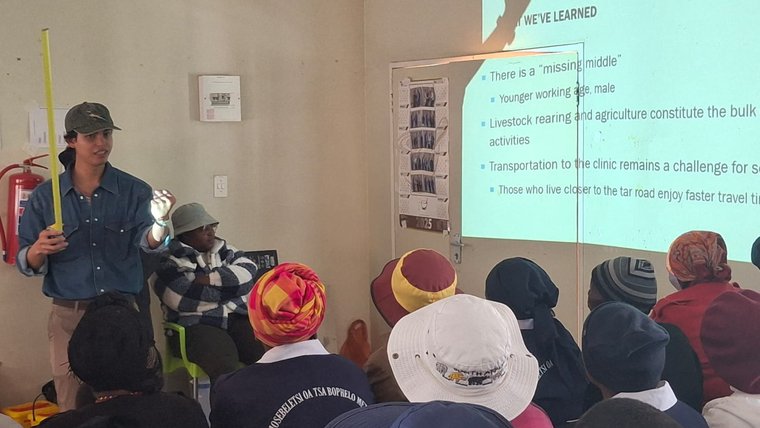
Beyond this I’ve also consulted for the Ministry of Health on an adolescent health phone app in partnership with the CDC and implemented youth health programming at the local secondary school. Other projects at the clinic have focused on reforming and optimizing pharmaceutical supply chain procedures, monitoring and evaluating clinical quality assurance data, and conducting data analysis for the various services the clinic offers.
3. What strategies have you used to integrate into your community?
Mostly I’ve been making my face known to those living in the catchment area. I made concerted efforts to visit various institutions in the area, such as schools and local government centers. During my first month I worked in patient in-processing at the local clinic, so every patient had at least some face-to-face contact with me.
On weekends I like to hike and explore the area, and that’s been a great way for people to become familiar with me and my role as well.
When I can, I enjoy attending community events. Our local professional soccer club has been performing really well for a few years now, so going to matches has been a lot of fun. Of course, becoming conversant in Sesotho has been a huge leg up in getting to know community members on a more personal level, and I hope it demonstrates my commitment to my community and the wider kingdom.
4. What is a highlight of your time in service so far?
Last year I had the opportunity to serve as a member of the training cadre for new Peace Corps Trainees. For about a week I helped training staff teach crucial concepts around programming, monitoring and evaluation, and integration. When I wasn’t actively instructing, I was sharing experiences and perspectives I had cultivated over the course of service—the unwritten “rules” only a currently serving Volunteer would know. The whole experience was incredibly self-illuminating as well, as I was forced to reflect on my “why” when asked questions by Trainees. I also came to realize how much I had learned and grown in only a year, which became a source of motivation later in my service. Being part of orienting the next generation of Volunteers was also deeply fulfilling in a way I hadn’t expected. Since they swore-in last December, watching them learn and grow has been an absolute joy. I’m excited for them and the communities they serve, and I’m confident they’ll leave a positive legacy.
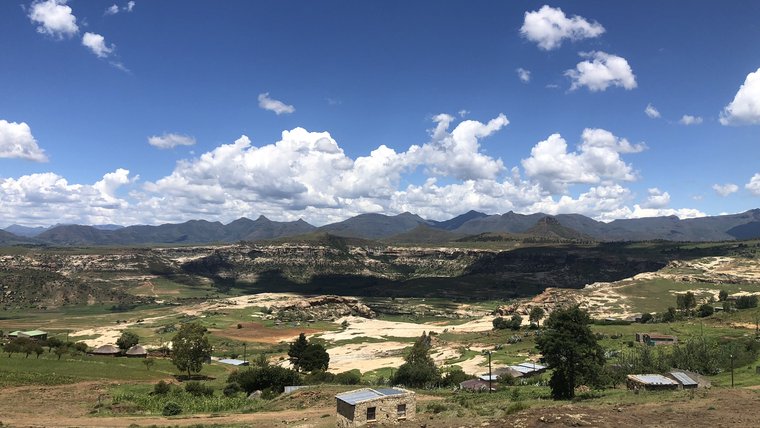
5. What have you enjoyed most about the community where you are serving?
How motivated people are to work for the betterment of the community. It’s unfortunate I’m not able to work with community partners on their individual projects, but it’s not a bad problem to have. The enthusiasm village health workers show every time I work with them motivates me to show the same enthusiasm when I’m working on totally unrelated projects. My counterparts at the local high school where I do health programming sought me out after being inspired by a previous Peace Corps Volunteer, and continue to implement the curriculum we developed together on their own. Experiences like these make work here an absolute pleasure, and I remain their number one fan.
6. What are some of the most important things you’ve learned from your community?
Laugh about it. The unique sense of humor among the Basotho people is one of my favorite aspects of this culture, and it’s lifted my spirits when I’d ordinarily be bummed about something going on in my professional or personal life. It’s dry, sharp, absurdist, and full of banter—a humor that embraces the chaos of daily life. It’s taught me to not take myself too seriously, even though I take my work seriously. Something outside our control can make life difficult, but what else can we do but laugh about it?
7. How do you spend time when you are not working on a project?
One of my favorite things to do on a free weekend is to pick a random road or a cardinal direction and hike that way for miles and miles to see what I come across. So little is formally written about Lesotho and its communities compared to other nations that coming across another village, a religious mission, a natural landmark, or some form of civil infrastructure feels like a discovery. I will ask local people about the area and it feels like I’m being let in on a secret few know about. Later, at home I will read what has been written about that area, and then piece together all the information to gain a better picture of Lesotho. It’s a quirky yet personally fulfilling hobby of mine. You can learn so much about a place and its people just by being quiet and observing it all.
When not in my community, I love spending time with other Volunteers in town or in their communities. One of the things that makes Peace Corps service so special to me is not just the memories we Volunteers create together, but the stories we tell when we see each other again. These stories make us laugh or cry, teach us something new, and show us that every Volunteer’s service looks different.
8. What are you looking forward to in your remaining time as a Volunteer?
I’ll feel pretty good once I can wrap up the projects I’ve started and ensure they’ll be sustainable once I’m gone. On a personal note, I’m really looking forward to spending quality time with my friends and host family, taking in and truly appreciating the dramatic natural beauty of this country, and revisiting some of my favorite places one last time.
I am extending for a third year in Namibia, so I’m incredibly excited for that opportunity as well. I’ll see you soon, Land of the Brave!
9. Once you finish service, what will you do differently when you return to the U.S.?
Again, just laugh about it! It’s important to take your work seriously, but taking yourself too seriously ends up making your work more difficult. What’s happened has already happened; we just need to learn from it, laugh about it, and move on with a positive attitude.
There’s a quote from a famous professional boxer out of Philadelphia: “It ain’t about how hard you hit, it’s about how hard you can get hit and keep moving forward.” Peace Corps service has forced me—and shown me how—to roll with the punches. It’s a job where success is dictated not by pure intelligence or pedigree or background, but by character. The composure you demonstrate when a project falls apart; the grit you show when the weather doesn’t cooperate; the resilience you inspire others with when you pick up the pieces of that project; the ingenuity to do the most with the least; and the compassion and empathy you adopt when working outside of your own culture. I’m excited to share that character with those back home.
Learn more about serving as a Peace Corps Volunteer in Lesotho.



