 An official website of the United States government


Featured Volunteer Profile
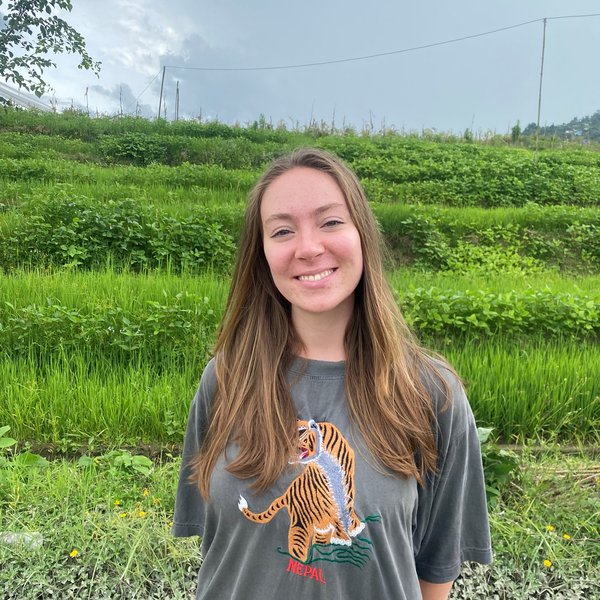
Jennifer S.
“...I already have many great memories in Nepal. Celebrating Teej, a festival celebrating women, with my community was a highlight for sure—lots of dancing and fun and really feeling like a part of the community.”
1. What got you interested in the Peace Corps?
For a long time, I have been interested in a career in international development and the environment. This was solidified after I spent 6 months working on humanitarian aid for an NGO in Benin. Along with this, from a young age I’ve been passionate about protecting the environment, living sustainably, and sustainable and equitable development globally. Peace Corps is a renowned organization, and I had heard positive experiences of working with them, so when I saw the opportunity to serve as an Environment Volunteer in Nepal, a country I had always wanted to visit and truly understand, it felt like an opportunity I could not pass up.
2. What projects are you working on?
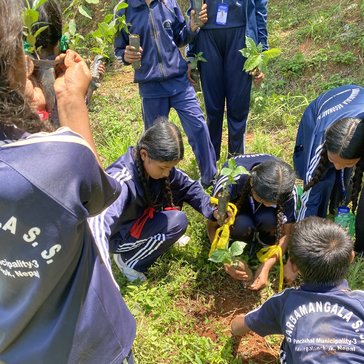
I spend 3 days a week in school teaching students in grades 5 through 8 about various environmental topics, such as ecosystems, biodiversity, waste management, “reduce, reuse, recycle,” etc., and deliver at least one class to each grade weekly. In my school, we are currently focusing on proper solid waste management. In Nepal, burning trash or dumping it in rivers is a common practice. Now, the school has organized for trash to be collected weekly by a private company, instead of burning it. Also, I plan to start an eco-club with the aim of getting kids more excited about and respectful of nature. In the near future, I plan to create a school garden and outdoor teaching space so that kids can get hands-on experience with local flora and fauna, organic farming, etc.
I also spend 3 days a week collaborating with members of a community forest. After monsoon season, we plan on creating large compost pits. Here, leaf litter collected for fire management can decompose and later be used and sold as compost. Also, along with another Volunteer and my government supervisor, we are scoping out an area to establish a hiking trail between different community forests to boost local eco-tourism.
3. What strategies have you used to integrate into your community?
Being open and friendly goes a long way. Showing my face, talking with shop owners and having chiya (tea) with people sitting on their porches has also helped me integrate into the community.
What has made a big difference for me is sitting down with shopkeepers and neighbors, joining local festivals and pujas (religious ceremonies), and being enthusiastic about helping in the fields. Saying “yes” to things, even when you’re tired, pays off. The week I arrived at site, I insisted my host mom let me help her in the field (although I really didn’t help all that much). For weeks afterwards, people in the community would say, “Hey, you went out to the fields!” with big grins on their faces. When rice planting season came around, several neighbors asked me to help plant rice, which is a really fun experience.
Recently, I visited a temple for a Hindu holiday celebrating Lord Krishna’s birthday and everyone got so excited when I told them that I was also fasting. Simply talking and relating to people and being interested in them and their culture has been the best way to integrate into the community.
4. What is a highlight of your time in service so far?
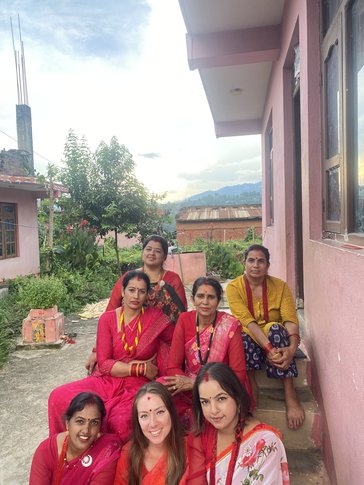
Although I haven’t been here very long, I already have many great memories in Nepal. Celebrating Teej, a festival celebrating women, with my community was a highlight for sure—lots of dancing and fun and really feeling like a part of the community.
But also simple things like developing relationships, forming friendships, improving language skills, coming back from a day of work and being greeted by the neighborhood dog (I look forward to seeing her smiling face and wagging tail everyday), as well as the neighbor, a 9- year-old boy, who screams “Namaste, didi (sister), how are you?”
5. What have you enjoyed most about the community where you are serving?
While I have thoroughly enjoyed all the local dogs and mango season, I have most enjoyed people’s friendliness and their patience with my language. People here are really inclusive, welcoming and warm. They invite me to take part in their day-to-day lives and celebrations. People in my community are interested in me, my family, and culture and are constantly asking questions to understand more about my culture and way of thinking. It really feels like a second home, where everyone knows each other. Although sometimes exhausting, saying hello to a dozen or more people on my way home feels nice and reminds me that people are looking out for me.
6. What are some of the most important things you’ve learned from your community?
Here, one of the most noticeable things that is different from home is the true sense of community. People go out of their way to help neighbors without questioning why or expecting anything in return. They know when it’s their turn, they will be supported; society works because of this sense of community. Days are dedicated to helping out in friends’ fields. When someone is sick, everyone goes and checks up on them, sitting by their bedside, comforting the ill and their loved ones, and offering opinions and suggestions.
I have also improved my patience and flexibility. Oftentimes, 10 a.m. becomes more like 12 p.m., and things scheduled for tomorrow can be pushed to next week, so not having fixed plans or getting frustrated when things get moved around has been an essential lesson. Furthermore, much of the days’ activities, especially when it comes to agriculture, are heavily dependent on the weather; for example, in rice season rice planting can be delayed for weeks until there is sufficient rain.
I’ve also acquired some really important skills like how to cook Nepali food, cut grass, plant rice, or give puja at the temple.
7. How do you spend time when you are not working on a project?
In my free time, I like to go on walks and explore different areas, especially as the landscape changes so much from season to season. Frequently, I find a nice spot (often by the river or overlooking fields) where I stop and read, journal, or paint. I really enjoy capturing my surroundings as the seasons change through sketching and painting. After work, I regularly go to a local café, where I relax and talk to the owners about everything, but especially about Hinduism and spirituality. At the end of the day, I love to hang out with neighbors, chatting over a cup of tea or playing with the kids and dogs.
8. What are you looking forward to in your remaining time as a Volunteer?
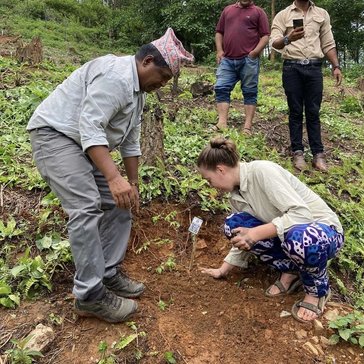
I’m looking forward to continuing to help manage the community forest and developing new projects, as well as building an interest in the younger generations, who seem to care less about their local forests and nature than older generations. Spending more time at the school and getting to know the students better, increasing their environmental stewardship, creating the school garden/outdoor environment classroom, and potentially pairing up with a school in the U.S. for a pen pal exchange are all projects I am looking forward to. I am excited to work with other Volunteers on different projects here in Nepal (such as beekeeping and the tradition of honey hunting in Lamjung). I’m also eager to celebrate more Nepali holidays and festivals, continue to see the landscape change through the winter (when hopefully, there will be some amazing views of the Himalayas), as well as travel more in-country (some treks planned for the autumn) and visiting other Volunteers at their sites.
9. Once you finish service, what will you do differently when you return to the U.S.?
I will definitely spend more time gardening and taking care of the kitchen garden, as I have seen how good eating local, seasonal produce is. I hope to continue saying “yes” to things and maybe get involved in different cultural activities in my city (like in the Nepali or Indian communities). I would also love to install a bidet in my bathroom, which I really think is the best way forward.
Learn more about serving as a Peace Corps Volunteer in Nepal



