 An official website of the United States government




Featured Participant Profile
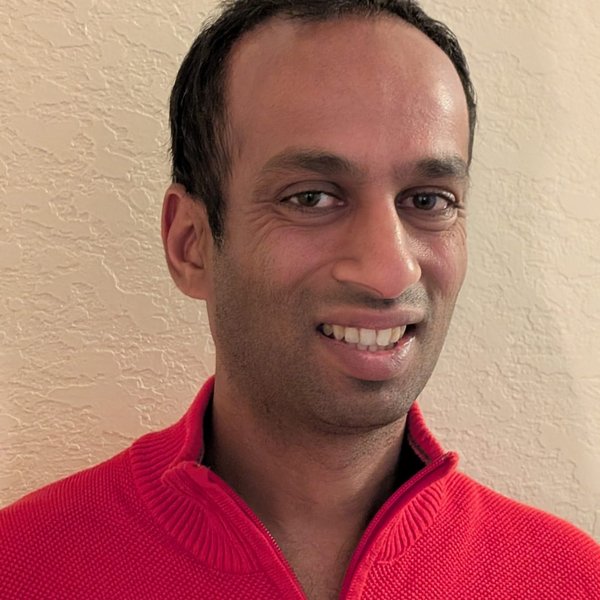
Jeevan N.
“The beauty behind the Virtual Service Pilot is that we can break barriers down no matter where we are physically.”
1. What got you interested in the Peace Corps, specifically VSP?
As a Returned Peace Corps Volunteer, I can say this beautiful organization continues to foster friendships abroad with so many nations for the sake of not only sharing our values but learning about and sharing those of other countries. VSP allows me to work with people through education. I’ve always wanted to build community with Ukrainians. While ideally, I’d like to be there in person, VSP allows me the opportunity to work virtually with Ukrainian teachers and students, who are demonstrating such resilience in their country during a time of war. Being involved with VSP was another excuse to learn and understand what matters to students and teachers of another country. I’ve always admired the Peace Corps for its willingness to sacrifice time and space to build and strengthen relationships with host nationals abroad.
2. What projects are you working on?
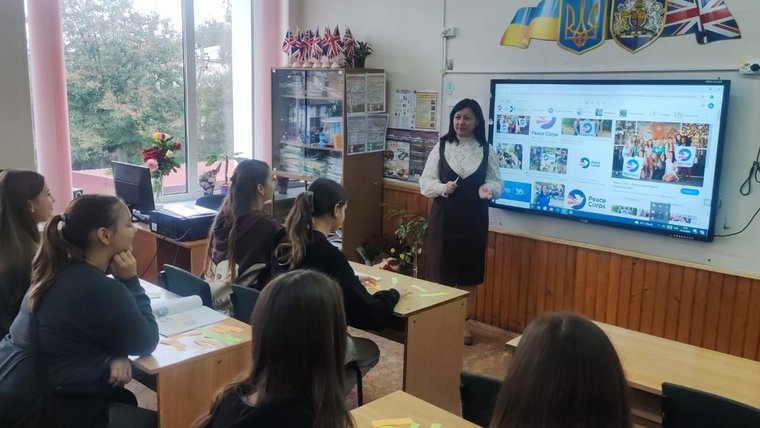
The projects are primarily focused on conversational English. We have touched on various topics such as school life, hobbies, and holidays at the beginning of our club meetings. We use online games and platforms to help the students practice English. We have done a couple lessons on resilience and discussing our emotions throughout the week. We have also compared cultures to practice speaking English.
3. What are the results of your collaborative work with the community?
The collaborative work with the community has resulted in better English practices in fun ways. Students are able to speak about their daily life at school. Students can feel confident and share the love of their culture with co-teachers and myself. The students and teachers can address things that matter to them the most when learning another language. It’s also resulted in new lesson plans and perspectives that can be used with future students.
4. What has been a highlight of your VSP experience?
A highlight of [my] VSP experience was when the students shared about their hobbies during our club meeting. One of them played the guitar and another showed a drawing they had made. It was a fun time, and the students expressed themselves well in English even though they were out of their comfort zone. There was laughter and students felt a little more confident to share. Many of the students even shared some pictures of their hobbies.
5. What strategies do you use to meet the challenges of a short-term and remote experience?
I listen and take note of what my colleagues suggest we do differently. We have learned the importance of keeping our videos on, so we have a deeper and more meaningful interaction. We also have met the challenge of teaching during a time of war, addressing sensitive topics related to their situation, although I don’t bring up topics that remind them of difficulties they are facing in daily life or at school during wartime.
6. What will you take away from your experience as a VSP Participant?
We can [do] just about anything if we put our minds to it. The fact that I’m in my room, far from the gorgeous landscape of Ukraine, teaching students in English while sharing about my life and learning about theirs means that intercultural friendships can start anywhere in the world. We can make things happen online even though we’d rather sit with each other in the classroom or take a walk around campus. I’ve also learned to hope again and believe in peace and friendship not as formulaic ideas, but as a long-lasting commitment through my own willingness to lay aside cultural differences and build and strengthen community-based goals and initiatives.
7. How does the VSP experience compare to your previous Peace Corps service?
I can say that there is no difference other than the fact that VSP is virtual rather than in person. There is a laughter, conversation, and sometimes the occasional challenge to how a certain thing should be done. Really, the only difference is that I’m not eating at the table of my brothers and sisters in Ukraine. I show them the beautiful mountains of Arizona outside my window, and they share about their parties, Easter meals, and the fun they had at the lake. It’s not always easy, but it’s doable, and technology can do wonders to teach people English without a physical classroom.
8. What would you say to someone considering the Virtual Service Pilot?
I would say that you can work VSP into your schedule if you don’t have too many other commitments. Secondly, it may not be the same as in person, but you can still build professional and personal friendships. You can still promote the goals of the Peace Corps. You will learn about the culture and to a certain extent experience it by conversing and seeing pictures. You get to share who you are from thousands of miles away. The beauty behind the Virtual Service Pilot is that we can break barriers down no matter where we are physically. Consider your talents and gifts. Look at the opportunities and countries. There is something for everyone.



