 An official website of the United States government




Featured Volunteer Profile
Jackie S.
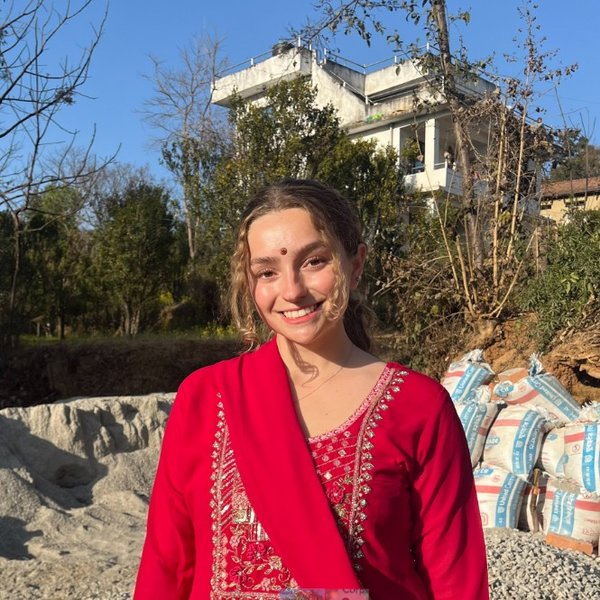
“A highlight of my time in service so far has been celebrating Teej, a women-centered holiday with many opportunities to dance, get dressed up, pray, fast, and sing local songs. Streets, temples, and homes are filled with a joyful energy.”
1. What got you interested in the Peace Corps?
I became interested in serving in the Peace Corps after discovering my interest in global affairs and my dedication to service. I have always been passionate about volunteer work and found it extremely
fulfilling. In my studies, I decided to pursue a route that would allow me to serve my country and communities elsewhere. I am also dedicated to learning about new cultures and making connections between my home country and other places in the world.
2. What projects are you working on?
I am working on a project to propagate fruit trees using a technique called “air layering.” There is no nursery near my community, so being able to grow new saplings in this way is very valuable. With this project, I also plan to lead a demonstration on proper fruit tree planting and care with neighbors in my community. This will enable people to grow their own fruits in an area where fruit is not readily available, and to increase the nutritional value of their diets.
Another project is leading trainings on how to make reusable menstrual pads. Using old fabric community members are able to create an ecofriendly and cost-effective way to support women of reproductive age.
Single-use menstrual pads are very expensive, and hard to get every month. Additionally, disposal of these items is difficult as garbage is burned in a public area. There is also a stigma around menstruation, and these trainings open a space for women to talk about issues and come up with solutions together.
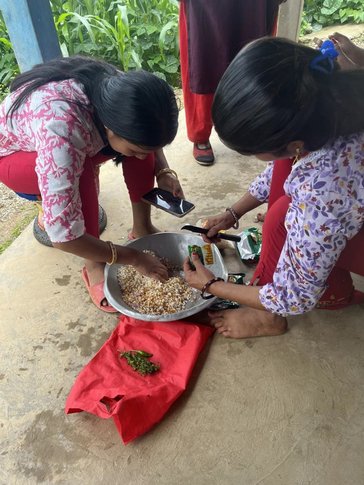
Many people in my community suffer from high blood pressure and diabetes. The Nepali diet can be imbalanced due to lack of access to nutritionally diverse foods. To combat this, I have been inviting neighbors to my host family’s kitchen where I demonstrate how to prepare and cook healthy meals, as well as easy ways to stay active. Certain foods can help lower blood pressure or reduce the risk of diabetes, while other foods should be eaten in the proper portion size. For example, it is important to avoid very high fat and carb content, which are both very prevalent in the Nepali diet. Fruits, vegetables, nuts, and yogurt are some foods that can help maintain a balanced healthy diet.
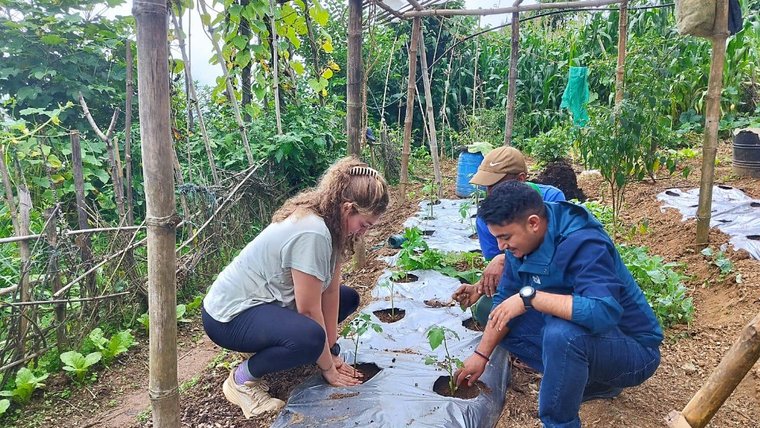
We have also just ordered mushroom spores in order to propagate mushrooms, a healthy food that is expensive and not normally accessible to many households. This means that many people miss out on a food that is very nutrient rich. This training will teach community members that it is possible to grow certain vegetables that are not commonly grown here. Many people are also unaware that you can grow mushrooms outside of the normal growing season.
3. What strategies have you used to integrate into your community?
To integrate into my community, I’ve participated in Nepali cultural celebrations and shared American culture.
Events like weddings, religious ceremonies, and family gatherings have given me the opportunity to get to know community members on a deeper level and demonstrate my interest in becoming a part of the community. By taking interest in their culture, community members have felt more comfortable having me around and talking to me. Dancing at these events has allowed me to reveal more of my personality. With the language difficulties, it is sometimes hard to share my humor and personality, but these events have enabled me to open up more. Being able to converse with people at these events makes them feel more comfortable talking to me and trusting me. I practice daily with my host family and try to learn new aspects of the language online.
4. What is a highlight of your time in service so far?
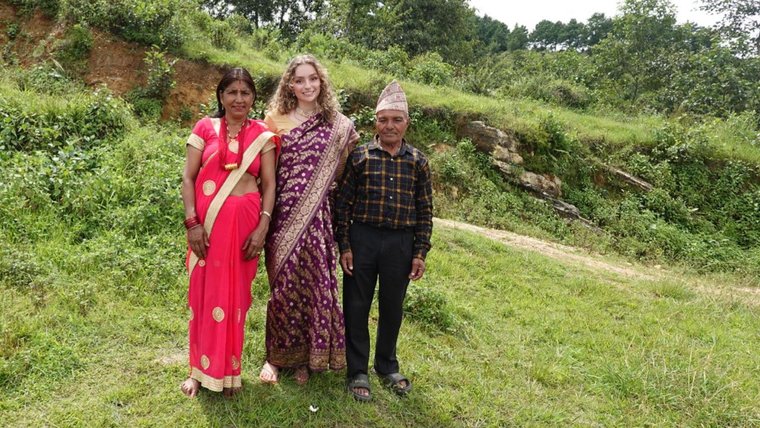
A highlight of my time in service so far has been celebrating Teej, a women-centered holiday with many opportunities to dance, get dressed up, pray, fast, and sing local songs. Streets, temples, and homes are filled with a joyful energy that blends devotion and festivity in a way that is uniquely Nepali. It is a cultural event highlighting female unity, strength, and joy. Each village has their own unique songs that they dance to. During Teej, many women return to their maternal homes, allowing me to meet many women who grew up in my area.
5. What have you enjoyed most about the community where you are serving?
I have enjoyed the dedication of women helping other women in Nepal, where it is common for men to go abroad to work. This leaves many communities with significantly more women than men. Over time women have become responsible for taking care of the land, their homes, and the children. This has created strong bonds among them and a willingness to help each other that I have not seen anywhere else. For example, when my host brother became ill, many women came to our house to support his mother. We were able to brainstorm the best course of action and what should be done to support his health. This sense of community is not as common in America, and I intend to bring these values back with me by building strong bonds with those around me in the U.S.
6. What are some of the most important things you’ve learned from your community?
The most important thing that I have learned is that to be a part of a community you need to show up for both yourself and others. Working hard only for your own benefit is not enough to stay motivated long term. Only working for the benefit of others can lead to burnout. My community balances what they need to do for themselves with what their neighbors need. When someone is sick, the neighbors will help with the farm work and collecting fodder for the animals. But if you call in sick every day other community members will not be able to succeed.
7. How do you spend time when not working on a project?
When I am not working on a project, I like to spend time with community members or my host family. I often go to the local bajaar (market) to chat with many different kinds of people.
At home, I like to work on my language skills (both Nepali and Spanish) and do home workouts. It is fun to find different ways to keep your body active without access to equipment or a gym. A fun way to do this is with large rocks, and 1L water bottles. Lifting these objects keeps me in shape and keeps my mind sharp. I also regularly practice yoga; this is important to me as it was something I did in America and requires no equipment.
I work on my language skills by watching YouTube videos and practicing the words that I learn in the video throughout the day. I also enjoy having conversations with community members and my host family. Conversing with people with people improves my language skills and also helps me integrate in my community.
8. What are you looking forward to in your remaining time as a Volunteer?
In my remaining time as a Volunteer I look forward to seeing my community increase their already extensive agricultural skills. People have been farming here for a very long time, and they have vast knowledge that I can learn from. Supporting them to increase yields or become more self reliant is something that I will continue to do in my time as a Volunteer.
I also look forward to celebrating more holidays and learning more about my host country’s culture. I also look forward to seeing more of Nepal and exploring regional cultures.
9. What will you do differently when you return to the U.S.?
When I return to the U.S. I will be much more aware of waste. In my community, you only receive a certain amount of water a day, so it is vital to use only what you need. We always have enough, or can get more from the community water source, but this allocation makes me aware of how much I use for brushing my teeth or washing clothes by hand. This translates to many other areas as well, like trash. In the U.S. you don’t realize how much you are generating because it is removed so quickly. When my family has to burn my trash, I come face to face with what the waste I produce each month and that has made me much more aware.
Learn more about serving as a Peace Corps Volunteer in Nepal.



