 An official website of the United States government


Featured Volunteer Profile
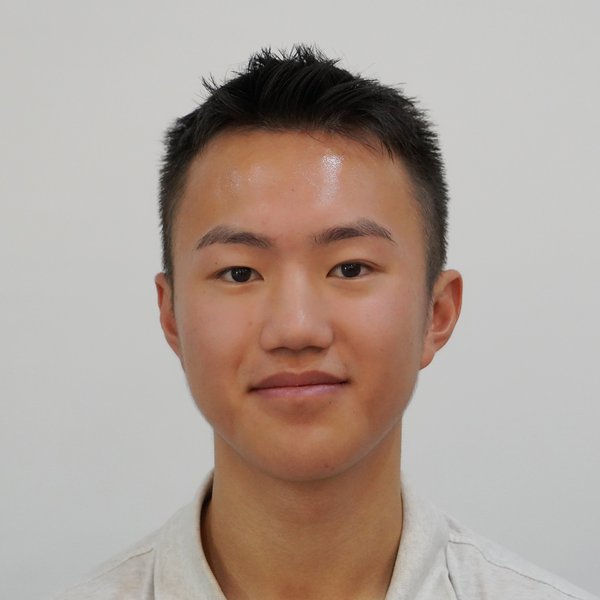
Raynold C.
“I’ve answered the same questions hundreds of times already from many different people but it never gets old. It’s nice to have these new friends because it helps you integrate into the culture even more and it makes me feel safer...”
1. What got you interested in the Peace Corps?
As the child of two Chinese immigrants, I see that my mom and dad have worked so hard throughout their entire life for my sister and me. I wanted to give back to my family by making them as proud as I could. I also believed that I would find the blueprint for the rest of my life after two years in the Peace Corps. After receiving my bachelor's degree in 2023, instead of looking for a fulltime job, I realized that joining the Peace Corps could be a way I could experience something similar to the way my own parents grew up in China. These new experiences of living in a community—the lifelong friendships, the intangible life skills, and the humility—will stay with me even after my service is over.
2. What projects are you working on?
I started writing a grant proposal in October 2023 to fund the building of a new basketball court at the high school where I teach. In order for my school to become a model school in the province, the school must have at least five different sports teams. My school also had a large empty field that was unused so the situation was ideal. The grant was approved about a month later and the basketball court was constructed by the middle of February.
I am currently working closely with the school’s sports/fitness coach to create a men’s and women’s high school basketball team which will be able to compete competitively with other schools around the country in the future. Because basketball is not a very common sport in Cambodia, this will require a lot of time, training, and dedication from both the coach, students, and even the school's administration. I hope to see continuous motivation for this project for a long time from my community.
3. What strategies have you used to integrate into your community?
As an Asian American living in Cambodia, it was easier for me to integrate because Chinese food and culture are similar to Cambodian food and culture. Being able to speak the native language was a big factor. Also, being able to communicate with your community members in their language is perceived as a sign of respect, as it shows you are interested and care about their culture. The Peace Corps also taught all Volunteers the DIVE model (describe – interpret – verify – evaluate), which was really helpful during the integration period. It helped to observe everything around me rather than to judge or make comparisons with American culture. At the end of day, people will always still see me as a foreigner in community and treat me differently from other Cambodians, but this is all part of the Peace Corps experience.
4. What is a highlight of your time in service so far?
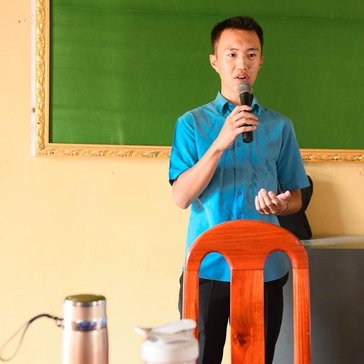
At one point I was trying to come up with new projects for my school. I suggested a public English-speaking event where a few students can demonstrate their English-speaking abilities in front of the whole school. When the news of the event spread around the community, community members donated money to make the event bigger than I originally anticipated.
Four students accepted the challenge of speaking in front of a large crowd. They worked hard on writing the speeches by themselves. The topic was why you should learn English, including their own personal experiences with learning the language. The day of the English event had a few special guests in attendance including the vice governor of my district along with several other notable members from the ministry of education. This English event was well received by both the community and other high schools in the area. One day, they will also host their own English events. It’s experiences like this that give my service more meaning.
5. What have you enjoyed most about the community where you are serving?
Cambodian people are very social, which makes it easy to make many friends. Sometimes when I’m biking in my district, neighbors and vendors call out for me to sit with them outside their house and socialize. Maybe they’d seen me before or heard about me from other people. Word gets around in a small community. Especially as a foreigner, they become more curious and want to ask a lot of questions to get to know me. I’ve answered the same questions hundreds of times already from many different people but it never gets old. It’s nice to have these new friends because it helps you integrate into the culture even more and it makes me feel safer because more people know who I am. Once in a while, I get an invitation to go somewhere with them, whether it’s an event or just eating together. This is one thing that makes service exciting.
6. What are some of the most important things you’ve learned from your community?
It’s all the little, but simple things living in rural Cambodia that is what made my journey so far, unlike any other. Things such as having to scrub my own clothes every other day, dealing with constant power outages, biking everywhere I go, the intense heat, and even using fans instead of an air conditioner made me realize how fortunate I am at home in America. I learned that many things are not fair in life and it really humbles you when you truly think about it. Another big thing I’ve learned from my community is the value of sharing resources rather than being more individual-oriented. In my host family, we all share food and materials naturally. It’s simple, but it creates trust and stronger bonds among us.
7. How do you spend time when you are not working on a project?
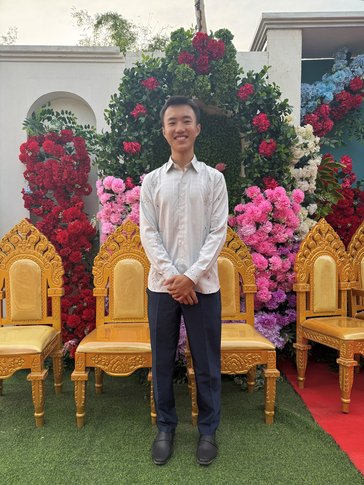
Aside from teaching, I spend a lot of time at home hanging out with my host family and doing chores. The weather is so hot that I don’t want to do much outside of the house. Luckily, both my host mom and dad are well-known teachers, and I can accompany them to many events in the evenings. I used to bike to explore new places during my first year, but I’ve been branching outside of my community in my second year of service. Lately, I’ve been trying to meet more volunteers from other organizations that also work in my province to expand my social network. It’s nice to hang out with foreigners once in a while.
8. What are you looking forward to in your remaining time as a Volunteer?
I’m looking forward to continuing to experience more things through expanding my social network. I want to do as many things as I can while I’m still here to make the best of my time. There are so many things to do in and outside my community. Having more connections will help. When I come back to Cambodia someday, these friendships will still be here. And, what better time to do these things while I’m still young and have the support of the Peace Corps?
9. Once you finish your service, what will you do differently when you return to the U.S.?
I don’t even feel like the same person I was before coming to Cambodia. I’ve learned so much from other people here, directly and through observation. I’m sure things will still be the same when I return to the U.S., but I have a broader view on life than before. Because of this, I plan on traveling a little bit after my service is over. I want to continue learning new cultures and languages, meeting new people, trying different foods, and hearing different stories. I feel more confident than ever in taking risks during the next chapter of my life.
Want to learn more about serving in Cambodia? Connect with a recruiter today.



