 An official website of the United States government


Featured Volunteer Profile
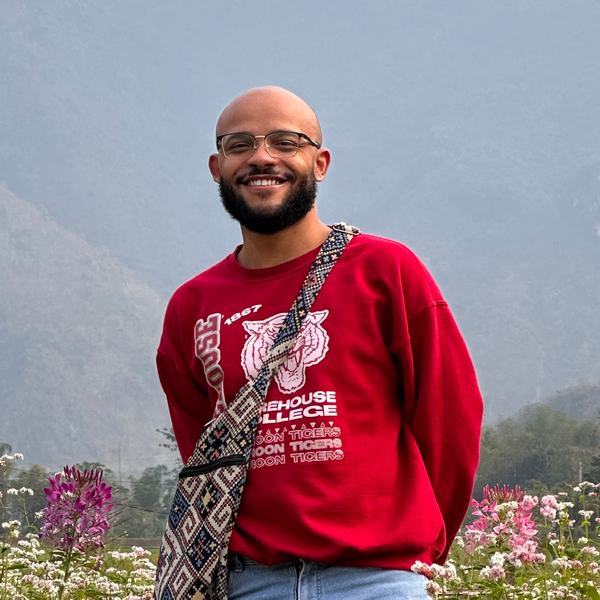
Carleon O.
“In Sa Pa, I tried horse meat hot pot, and in Mai Chau, I experienced “balut,” or fertilized duck egg, for the first time—challenging dishes that nonetheless deepened my cultural understanding through shared learning with fellow teachers.”
1. What got you interested in the Peace Corps?
I have spent approximately the past decade studying, working, and serving abroad in partnership with the U.S. Department of State, beginning in my junior year of high school. During the academic-year Arabic program with the National Security Language Initiative for Youth in Morocco, my program leader—a former Peace Corps Volunteer—prioritized immersive cultural engagement by introducing our cohort to rural communities where she had previously lived and served. This experience provided meaningful insight into community-centered service and grassroots development.
I continued to expand my global and civic engagement by volunteering as a Youth Ambassador at Expo 2020 Dubai, where I collaborated with diverse international participants and supported intercultural exchange on a global stage. I further strengthened my linguistic and cultural competencies through participation in the Portuguese language program with the Critical Language Scholarship Program in Brazil.
Domestically, I served as a Bonner Community Service Scholar at Morehouse College, dedicating my time to supporting the Greater Atlanta community while deepening my sense of self-discovery, leadership, and civic responsibility.
Collectively, these academic, professional, and service-oriented experiences solidified my aspiration to join the Peace Corps, where I hope to apply my skills, cultural fluency, and passion for service in meaningful collaboration with like-minded individuals around the world.
2. What projects are you working on?
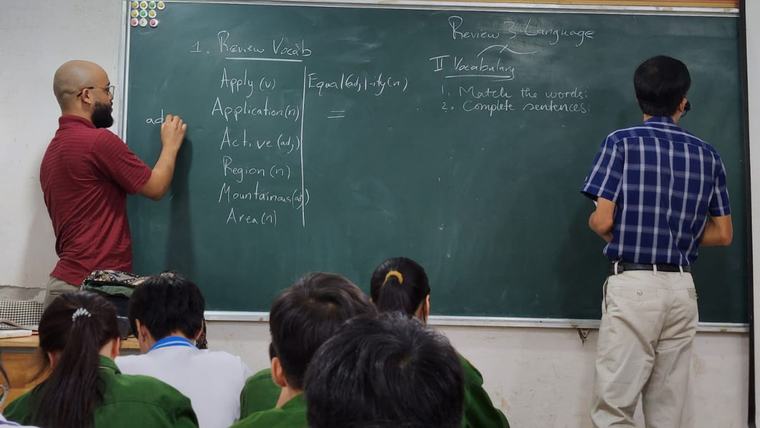
I currently serve as an English Teacher, a role that has challenged me to rethink language instruction as a tool for connection rather than solely communication. Beyond teaching foundational English skills, I intentionally ground my lessons in real-world contexts that invite students to draw from their own lives, perspectives, and experiences. This approach has allowed the classroom to become a shared space of learning, as we have fostered an environment where language serves as a bridge between cultures rather than a one-directional transfer of knowledge.
One aspect of the English education system in Viet Nam that I find especially meaningful is its integrated curriculum, which develops reading, writing, speaking, and listening skills while engaging students in topics such as environmental justice, family life, and national treasures. Teaching these themes has not only deepened my students’ engagement but has also expanded my own understanding of how education reflects a nation’s values and priorities.
In addition to my daily classes, I teach two private English courses—one for school administrators and teachers across multiple disciplines, and another for their children. These classes have become one of the most impactful parts of my experience, as we have fostered relationships rooted in trust, curiosity, and mutual respect. Through ongoing dialogue, I have gained insight into Vietnamese culture and traditions in ways only possible through local connection—learning how people truly live, travel, eat, and sustain deep family bonds within my host community. This reciprocal exchange has profoundly shaped both my teaching practice and my personal growth.
3. What strategies have you used to integrate into your community?
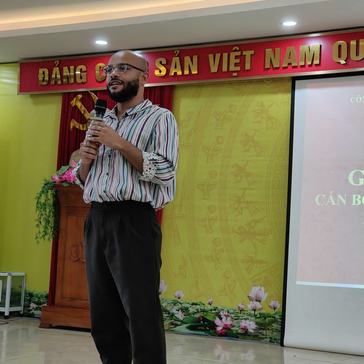
Outside of my private classes, I have been intentional about building inclusive relationships with colleagues, families, and individuals throughout the community. Recognizing the importance of accessibility and everyday presence, I make a consistent effort to take daily walks—regardless of heat or humidity—and to acknowledge both familiar and new faces with a greeting, smile, or wave. These small, respectful gestures have served as accessible entry points for connection, allowing community members to engage with me on their own terms and fostering mutual trust. This approach has been particularly significant in addressing the feelings of isolation that can arise during Peace Corps service, especially as a Black, queer individual navigating a new cultural context. By prioritizing visibility, openness, and humility, I have been able to counter feelings of alienation and affirm my presence within the community while honoring local norms.
The kindness and hospitality extended by local Vietnamese community members—often through invitations to share meals or traditional rice wine—have reinforced the value of cultural exchange grounded in respect, equity, and reciprocity. Additionally, choosing to eat at local restaurants rather than cooking at home has become a practical strategy for inclusion and integration. These shared public spaces create ongoing opportunities for dialogue, relationship-building, and cultural learning, supporting my broader commitment to equitable engagement and community belonging. Through these intentional practices, I strive to model Peace Corps values by fostering environments where diversity is acknowledged, differences are respected, and all individuals feel seen and valued.
4. What is a highlight of your time in service so far?
During my service, I greatly valued opportunities to travel with my school and fellow teachers, as these shared experiences strengthened both professional and personal relationships.
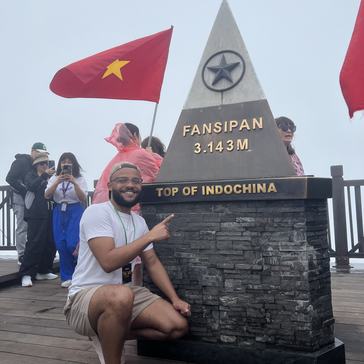
Two of my most memorable trips were to Sa Pa in the northern region and to Mai Chau, located west of my site. In Sa Pa, I traveled with my teachers and climbed Fansipan, the highest mountain in Indochina, standing at 3,143 meters (10,312 feet). After taking a cable car to the lower portion of the mountain, it took approximately two hours to reach the summit, making the achievement especially meaningful given my limited experience with climbing. Reaching the top allowed me to document the moment and celebrate a personal milestone alongside my colleagues.
Food also played a central role in these experiences, offering insight into local traditions and relationship-building. In Sa Pa, I tried horse meat hot pot, and in Mai Chau, I experienced “balut,” or fertilized duck egg, for the first time—challenging dishes that nonetheless deepened my cultural understanding through shared learning with fellow teachers. During our stay in Mai Chau, we traveled with approximately 900 students and 40 teachers, an experience that highlighted the scale of community and allowed me to witness student performances set against a striking mountainous landscape. Through additional introductions by my principal to traditional foods such as snake, rabbit, and soft-shell turtle, I have continued to engage with Vietnamese culture in meaningful and memorable ways.
Collectively, these moments strengthened relationships, expanded my cultural awareness, and reinforced my sense of belonging within the school community.
5. What have you enjoyed most about the community where you are serving?
I have come to appreciate the balance between work and leisure that is shaped by the calm resilience of my community. Each day begins at or before sunrise, as residents open their restaurants, clean the spaces in front of their homes, and greet neighbors—sometimes loudly, but always with an energy that sets a positive tone for the day. When the heat becomes overwhelming, I notice others adapting in the same ways, taking refuge under awnings and umbrellas while continuing their work with steady determination.
Beyond these daily rhythms, the generosity of community members has been a defining part of my experience, from spontaneous invitations to share meals to moments of conversation that require no formal setting. These interactions have helped me feel grounded and supported, particularly during times when living and serving far from home feels challenging. Together, these shared experiences have deepened my appreciation for a community that meets hardship with grace and extends belonging through everyday acts of kindness.
6. What are some of the most important things you’ve learned from your community?
One of the most important lessons I have learned from my community is patience—both with circumstances and with myself. Living within a school setting has required a heightened level of awareness and adaptability, teaching me to respond thoughtfully when unexpected situations arise rather than react with frustration. This environment has encouraged me to remain present and engaged outside of my work, prompting me to spend more time moving through and observing everyday life in the community. Through these moments, I have learned the value of slowing down and finding meaning in simple, shared experiences, whether sitting at a local coffee shop or listening to the rhythm of daily conversations unfold around me.
My community has also shown me the importance of resilience and consistency, as people continue their routines with grace despite challenges such as heat, long hours, or limited resources. Ultimately, these lessons have reshaped how I approach both service and relationships, grounding me in humility, patience, and a deeper appreciation for collective strength.
7. How do you spend time when not working on a project?
I am a film and theater enthusiast, and I often spend my free time watching movies, imagining future productions, or reading to recharge creatively. While I make a conscious effort to spend time in cafés and shared spaces, living on a school campus can be socially demanding, so I value quiet moments of rest and yoga in my room to restore balance.
Over time, I have also built meaningful friendships in the city, which has become an important source of renewal for me. To reconnect and reset, I travel to the center of Hà Nội about once a month to catch up with friends, visit museums, or enjoy some of my favorite restaurants. I also enjoy taking solo trips to nearby destinations such as Ninh Bình and to southern areas of the city I have yet to fully explore. These moments of movement and discovery allow me to care for my well-being while continuing to deepen my relationship with my host country.
8. What are you looking forward to in your remaining time as a Volunteer?
With the time I have left in service, I am intentionally focusing on being fully present in my everyday life. Much of the past school year was spent preoccupied with the program’s ending and uncertainty about returning to the United States, which often pulled me out of the moment and into cycles of overthinking. Recognizing the toll this took on my mental health, I have made it a priority to ground myself in my body, mind, spirit, and community during these final months. I now say yes when people invite me to join them, move when restlessness sets in, and allow myself to enjoy moments of comfort and pleasure without guilt. These choices have helped me slow down, soften, and more fully embrace the people and experiences around me. This service has been both nuanced and expansive, and I want to leave it having honored the opportunity with openness rather than regret. By choosing presence over anticipation, I am learning to carry the fullness of this experience with me, wherever I go next.
9. What will you do differently when you return to the U.S.?
Upon returning, I plan to either continue my theater studies through a graduate acting program or pursue opportunities to live and work in another country.
Drawing from my Peace Corps experience, I hope to move forward with a calmer spirit—one that prioritizes presence, balance, and a more peaceful approach to life. While this journey has at times been isolating and challenging, it has also been deeply transformative, strengthening my care for both family and community. Through service, I have learned to value relationships more intentionally, recognizing the importance of investing time and energy into the communities I am part of. This perspective is something I will carry with me long after service ends.
I also feel more confident traveling independently, seeking out new experiences, and building connections across cultures as I continue to explore the world. These lessons will guide how I engage with people, places, and opportunities in the next chapter of my life.
Learn more about serving as a Peace Corps Volunteer in Viet Nam.



