 An official website of the United States government


Featured Volunteer Profile
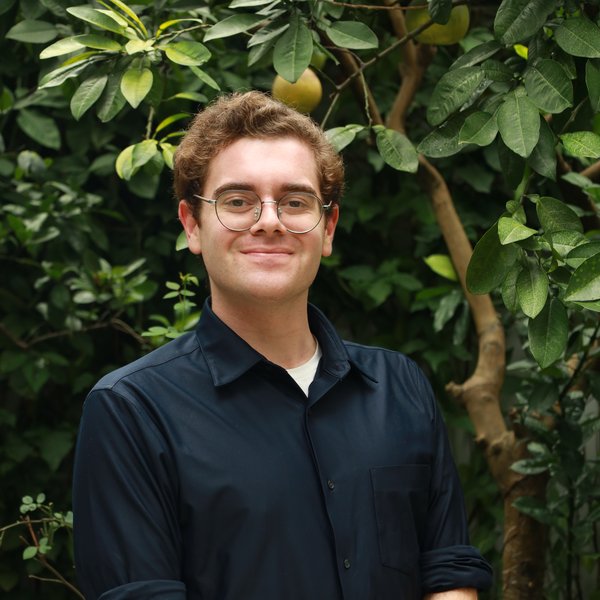
Matthew B.
“There have been so many times I have felt discouraged or upset about something only to walk into a classroom or have a brief chat with a student and feel my spirits instantly lifted.”
1. What got you interested in the Peace Corps?
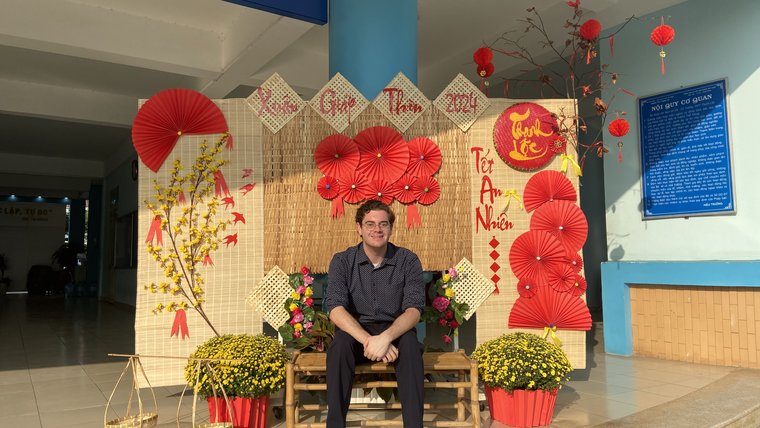
I first visited Việt Nam in spring 2019, while studying abroad on Colorado State’s Semester at Sea program. I could detail so many highlights from my week there that I still circle back to: trekking along the terraced emerald hillsides of Sa Pa, dodging motorbikes and hordes of travelers in the bustling streets zig-zagging to Hoàn Kiếm Lake, and gazing in awe for the first time at Nguyễn Huệ walking street shrouded in rainbows of lanterns and flowers for the Year of the Pig.
Of all these moments, and perhaps of all memories I made that entire semester, nothing left as lasting an impact on me as the very first night I spent in Ho Chi Minh City. While sitting in the library of the ship and with no plans for the evening, I heard an announcement about an opening for an excursion to a family’s home for Tết dinner. I ran down to the front desk and claimed the first spot. A dozen of us were shuttled over to the family’s home in Bình Thạnh district, where we observed the cooking process of various dishes and Tết specialties. The significance of this — a family opening their home to complete strangers to dine with them on such an important holiday — was not lost on me, and the warmth and hospitality I felt that night was unlike anything I had ever experienced before. Little did I know, I would come to experience this countless times in the two years I would spend volunteering with Peace Corps in Việt Nam.
Recognizing the importance of Peace Corps service to communities and Volunteers alike worldwide, I always kept the option of volunteering with Peace Corps in the back of my mind, and I grew increasingly determined to return to Việt Nam as time passed. When I found out Peace Corps was opening a Việt Nam post, I knew I needed to apply. After teaching at an English center in South Korea for a year, I felt better prepared to contribute to Peace Corps’ mission of supporting English education in high schools in Việt Nam.
When I applied to Peace Corps/Việt Nam, I wrote in my motivation statement, “I firmly believe stewardship only properly begins when we learn to foster interconnectedness through knowing and understanding each other better and working together productively, and I believe the Peace Corps not only promotes this idea but furnishes the opportunities and tools for this to take place.”
I was accepted, and the rest is history.
2. What projects are you working on?
As part of Peace Corps Việt Nam’s effort to establish and promote English education in high schools throughout the country, and in alignment with government initiatives, I work with a local high school in the Ho Chi Minh City area to support English instruction for 10th and 11th graders. I collaborate with the school’s English department on co-planning and co-teaching lessons, and over the course of my service, I have typically taught 17 to 18 periods per week, each lasting 45 minutes.
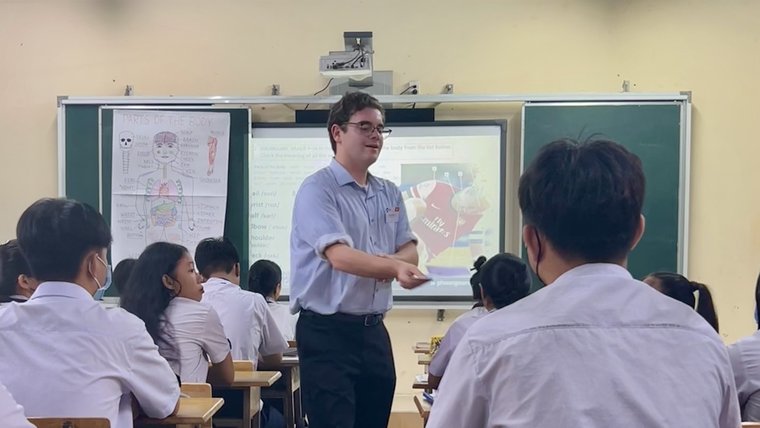
Aside from formal classroom teaching, I take part in a number of extracurricular activities, most notably English club meetings, where I assist with one of my co-teachers. I have also provided individual tutoring sessions for students, designed and delivered English lessons for children within my community, conducted individual and group English lessons for teachers and security guards at school, co-led English department workshops, and even held singing classes in which students learned the English lyrics to “The Ballad of Ho Chi Minh” by Ewan MacColl.
Both inside and outside of the classroom, I interact with students daily, supporting opportunities for informal conversation and helping to reinforce their confidence, fluency, and interest in their English usage.
3. What strategies have you used to integrate into your community?
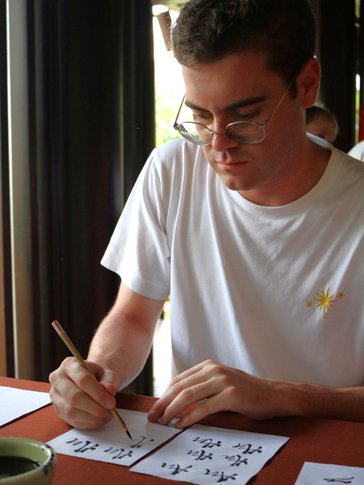
Keeping an open mind has always been the most crucial and essential way for me to smoothly integrate within a community. My personal approach has often been to lean toward saying “yes” — to accept invitations, try new things, and embrace experiences as they come. Of course, it is equally important to recognize when to say “no” and set boundaries, especially when it comes to taking care of one’s own well-being. But I feel fortunate to have had ample opportunities to say “yes” during my time here — to hangouts, parties, weddings, festivals, trips, funerals, and death anniversaries. Simply showing up and being present at these events has been one of the most meaningful and effective ways I have built relationships with community members. I am far from confident when it comes to my Vietnamese language abilities, but I have found that just sitting together and sharing a meal is enough to foster a sense of mutual appreciation for each other’s presence and company, and that only strengthens relationships over time and facilitates integration.
4. What is a highlight of your time in service so far?
I deeply cherish the everyday interactions I have with my students. There have been so many times I have felt discouraged or upset about something only to walk into a classroom or have a brief chat with a student and feel my spirits instantly lifted. It is always the random, unexpected, or even unhinged moments — tangents or questions students have that may be entirely unrelated to the lesson material — that I really get a kick out of.
For instance, during one of my vocabulary lessons on landscapes last year, my students and I ended up having a 5-minute conversation about our favorite Vietnamese brands of condensed milk. Just the other day, I was teaching a vocabulary lesson on words related to films and TV programs. One of my PowerPoint slides included a gif from the movie Maleficent and upon seeing that, a student in the front row dubbed me “Matt-leficent.” From that point until the end of class, every student I subsequently called on or who had a question for me addressed me that way. I had already taught a couple of lessons earlier that day and was feeling a bit worn out, but that one moment completely turned my mood around — I kept cracking up every time I heard my new title.
Another moment that has stuck with me happened on a day that was particularly difficult. After the school day ended, I walked over to the house of a family whose daughters I was tutoring at the time. As I passed the front gate of the school, a student sitting outside greeted me before biking off. A couple of minutes later that same student rode up beside me and handed me a bottle of water. This student had gone out of his way to stop at a convenience store, pick up a bottle of water, and then bring it to me. I was so touched by that gesture, and whatever I was going through that day did not really matter after that. Looking back, it is the small moments that have often left some of the deepest impressions on me.
5. What have you enjoyed most about the community where you are serving?
I feel fortunate to have been able to participate in many activities with my counterparts in the community where I am serving. We often spend time together at local restaurants and cafés, and we regularly hold small celebrations for different occasions both in and outside of the school. These experiences have helped me build meaningful connections and feel more a part of the community.
When I have time to myself, I simply enjoy walking around and exploring the area. Since the community is on the outskirts of the city in an area that gradually becomes more rural, there are many forested and grassy spaces that offer a break from the hustle and bustle. A network of canals girds the area around my school, and the Saigon River is about a 20-minute walk away. Oftentimes, I will walk along the canals and river or sit at a riverside café for a couple of hours, watching people fish and boats drift past.
I also appreciate how easily I can travel between this community, neighboring districts, and the city center. Getting around is simple and straightforward, which makes visiting other parts of the city convenient.
6. What are some of the most important things you’ve learned from your community?
In the two years I have been here, I have come to truly understand and appreciate the value of community. I can’t recall the exact emotions I felt before arriving, but as someone who leans more introverted, I probably felt somewhat overwhelmed by the idea of being in a space shared by over 2,000 people on a regular basis. On most days, I am around people more often than not; I spend more time with other people than by myself.
But what I quickly discovered is how special it is to be surrounded by people who are always there for you. What first seemed daunting soon became a source of strength and reassurance, grounding and guiding my experience here.
Community feels so woven into daily life here that it becomes a simple fact of living. Community does not just accompany life — it shapes and guides it, giving it meaning and purpose. I have experienced such a genuine sense of hospitality, kindness, and care from the people around me that I now recognize can only be rooted in a shared commitment to community and a deep understanding of the importance of it.
7. How do you spend time when not working on a project?
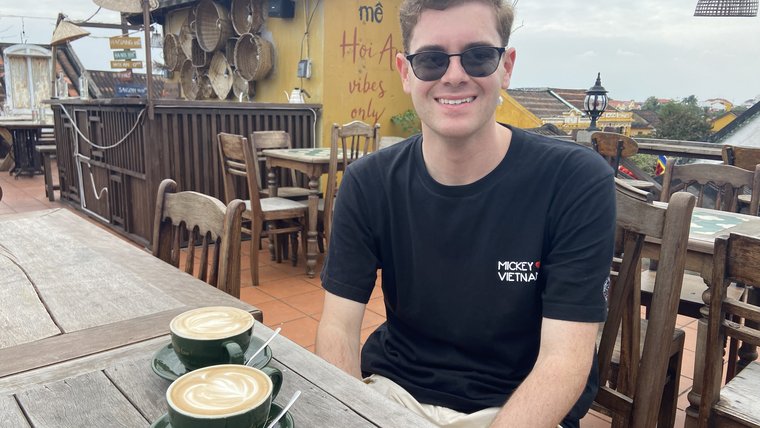
Drinking coffee. The storied history of my coffee addiction comes full circle in Việt Nam, as Vietnamese coffee was what kickstarted my addiction back in high school. As one of the world’s premier coffee producing regions, Việt Nam offers a seemingly limitless array of coffee beverage variations, making it virtually impossible to come across a subpar cup of coffee.
Café hopping is one of my favorite activities in Việt Nam and is how I often spend my time when not working on a project. Of course, I absolutely need coffee to be able to function at site. But in my free time, whether I am hanging around my community or hopping over to the city for the day, I always try to do something new, and that typically involves checking out one or two of the 268 Ho Chi Minh City cafés I currently have saved on Google Maps.
Café hopping is also my favorite way to explore Việt Nam. This has especially been the case for Ho Chi Minh City, home to some of the coziest, most charming cafés I have ever been to. I could easily spend a full day sitting in a café and soaking up the vibes. Each new café visit leads me to new corners of the city. En route to a café, I may find myself weaving through alleys so narrow, they feel like hallways to someone’s home. People zip by on motorbikes and a half dozen smiling kids stop along the way to say hello. Occasional street vendors cook up as rolls of steam waft up to draped flags overhead, a sight that is all the more electric in a rainy season downpour.
8. What are you looking forward to in your remaining time as a Volunteer?
In my remaining time as a Volunteer, I will continue approaching service in the same way I always have, and then some. I want to be fully present, committed, and engaged. I hope to finish service strongly, conducting English lessons with high energy and enthusiasm. Students’ motivation and eagerness to learn often reflects the attitude and effort of their teacher, so I want to give these final days everything I have. This is not just about teaching, though — it is equally about sustaining and deepening the relationships I have built with my friends and counterparts here.
Although there is plenty to prepare for my return home, I do not want those tasks to overshadow the moments I still have left. My priority is to stay grounded in the present, to spend time with the people and community that have shaped my experience, and to leave feeling that I have been fully here until the end.
I also recognize the pressure that comes with trying to fit in every unfinished experience before close of service. There are still so many places I have not yet explored and things I have not done in Ho Chi Minh City and across Việt Nam. But I remind myself that the end of service does not have to mean the end of my time here. I believe I will return sooner rather than later to experience those places and moments I may have missed this time around.
9. What will you do differently when you return to the U.S.?
The topic of transitioning from Peace Corps service back home was a key point of consideration during the close of service conference Volunteers in my cohort and I recently attended. I thought a lot about how I have moved on from past experiences in my life, and reflected on how I will navigate moving forward from this one. But this is not an experience I can simply move on from and leave in the past, nor would I want to.
While my service will soon come to an end, the experiences I have had and connections I have made in Việt Nam will continue to shape me for the rest of my life. In that sense, this experience will not truly end. I take deep comfort in that amid all the uncertainties that come with returning to the United States and determining what I will do next. Since being in Việt Nam, I have become more confident in myself and my ability to adapt to unfamiliar and challenging situations. I have had the chance to experience the country in ways I definitely could not have if not for Peace Corps. And I have met some truly remarkable, inspiring people who I am privileged to call friends and who I will continue to stay connected with after I return home.
Learn more about serving as a Peace Corps Volunteer in Viet Nam.



