 An official website of the United States government


Featured Volunteer Profile
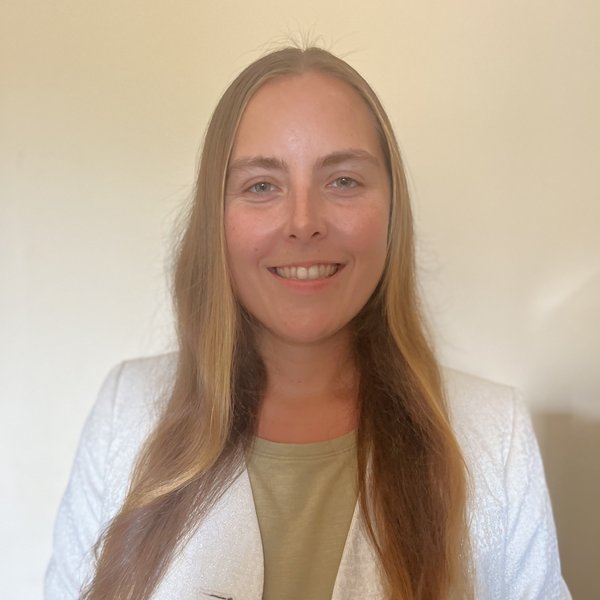
Deirdre O.
“I have developed significant skills in intercultural communication throughout my service, which I hope will be helpful in my future work as a doctor.”
1. What got you interested in the Peace Corps?
Growing up, I was lucky enough to have two aunts who participated in the Peace Corps. One aunt spent two years in Paraguay as an Early Childhood Education Volunteer and became involved in vaccination outreach campaigns. Upon her return, she switched from education to nursing and pursued a bachelor’s degree in nursing funded by a Coverdell scholarship. Another aunt volunteered in special education in Morocco and ended up pursuing the same field as a career.
When I finished my undergraduate degree, I knew I wanted to attend medical school, but I wasn’t ready to continue in my studies. I wanted to do something meaningful, help people, and develop skills such as intercultural communication, resilience, and adaptability that would be crucial to my future success as a doctor. My aunt suggested the Peace Corps, which ended up being the perfect fit for me.
2. What projects are you working on?
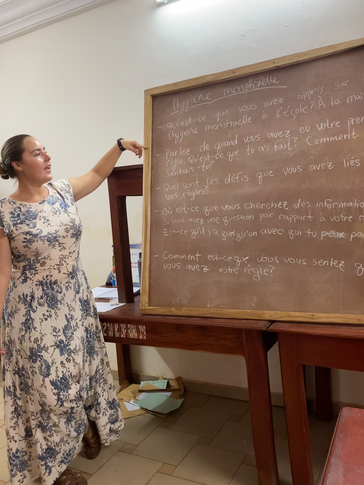
I work alongside the nurse to deliver health talks and conduct individual sessions with pregnant women about staying healthy after giving birth. I also co-facilitate health talks with other health center staff during vaccination days and implement a growth monitoring program in conjunction with our vaccination program. I also co-teach a weekly health class and weekly English sessions at the local middle-high school.
Beyond these activities, I have initiated a care group program in my village with my community health worker counterpart, enabling us to distribute critical health information while empowering mothers to be leaders within their own community. I also mentor an Amour et Vie peer education team consisting primarily of young peer educators delivering critical health information to out-of-school youth. In addition, I work with an NGO to implement a malnutrition prevention program focused on moringa promotion and distribution.
3. What strategies have you used to integrate into your community?
The most helpful strategy has been the acquisition of local language skills. Though I never formally studied French in school, the three months of pre-service training prepared me extremely well with respect to communication in French. However, when I arrived in village, I found that, outside of health center staff and teachers, very few community members spoke French. Therefore, I dedicated a significant portion of my time during my first year in site learning the Fon language through books, tutoring sessions, and playing with local children. People in my village really appreciated my efforts and it is one of my proudest accomplishments in service thus far, as it allows me to communicate with all community members, rather than only those with access to education.
In addition to learning the local language, wearing local clothing has been a good way to integrate. I have had many outfits made by local tailors and seamstresses from local fabrics, which has been a lot of fun.
Though I was skeptical about it at first, “saluer” walks (greeting people on walks around town) have been a wonderful way to get to know community members, familiarize them with my work, and improve my local language skills. Eating local foods (pâte, akassa, rice, etc.) has also helped with integration. Rather than cooking for myself, I often eat at a local food maman (café) near my health center or even with my neighbors/host family. This has helped me to build relationships and to understand Beninese culture more deeply.
4. What is a highlight of your time in service so far?
One of the highlights of my service so far is my village’s first-ever implementation of Camp GLOW (Girls Leading Our World). I worked with local NGO partners to select 25 young girls (high school students and apprentices) to participate in a week of activities relating to sexual and reproductive health, menstrual health, and girls’ empowerment. I co-facilitated the sessions with another Health Volunteer and local community partners. Though many girls were initially hesitant to participate, given the taboo nature of some of the subjects, they underwent so much growth during the camp and flourished by the end. The most impactful aspect of the camp was the invited guest speakers, three successful Beninese women, to share with the girls their personal experiences as women in Benin. They asked the girls to share their hopes and dreams for the future and related to them in a way that would never have been possible for me. I am excited to plan and facilitate the second Camp GLOW this coming summer!
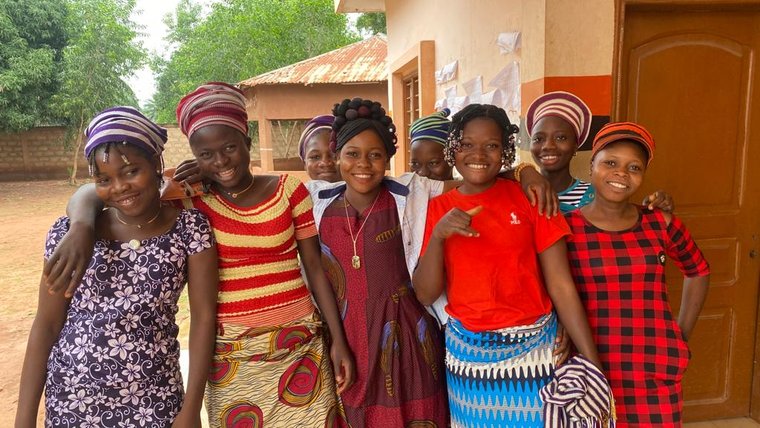
5. What have you enjoyed most about the community where you are serving?
I have enjoyed the warm welcome I’ve received from everyone in Benin. A common greeting to guests or visitors in Benin is “Yi jonɔ mitɔn ganji,” which translates to “Receive well our visitor.” Though community members may not have much, they always share what they have, from their company to water to food. It has been incredible to be a part of a tightly knit community. My village is very small and rural and it seems sometimes as though everybody knows everybody. Though it can at times seem a bit much for someone used to the individualism in America, the compassion they show for me on a daily basis has been one of my favorite things about being here. For example, my neighbors notice if I am not feeling well and inquire (almost insistently) about my health. They’ll also invite me to eat dinner with them if I’ve been outside working or playing with the children and haven’t seen me eat an evening meal.
6. What are some of the most important things you’ve learned from your community?
My community members have probably taught me more than I’ve taught them. I have learned how to successfully work in under-resourced environments as my colleagues and counterparts often find creative solutions to problems. I have also learned a sense of family and community that I never experienced in the U.S.; I know that I can rely on my friends and neighbors to support me (as they are able) and I am happy to help them when I can. I have also learned how to ask for help when I need it. Things that may be easy or straightforward for a Beninese neighbor—such as getting water from the pump—may be difficult for me, but asking for help has always enabled me to do what needs to be done. I have learned about kindness and generosity, as well as how to share when you do not have much yourself.
7. How do you spend time when you are not working on a project?
I’ve used some time to study for the Medical College Admission Test (MCAT), since I am in the process of applying to medical school. Though it has not been easy—the electricity and internet connection are inconsistent, it is often difficult to explain to neighbors that I am working even when I not at school or at the health center, and the children believe the purpose of my laptop is for watching television—it has been another way to build resilience and prepare for my future after Peace Corps service.
I sometimes spend my free time at the maternity and the health clinic to better get to know the staff, better understand medical problems facing the community, and to introduce myself to more community members, ensuring they are familiar with my work in the village. Beyond work and professional development, I love going on walks around town with my dog. I love visiting neighbors and simply sitting and talking with them. I also spend a lot of time with my host family; the neighbor children are always over at my house coloring, writing on the chalkboard, reading picture books, or playing with my dog.
8. What are you looking forward to in your remaining time as a Volunteer?
In my 8 months remaining, I am looking forward to co-coordinating the Young Professionals in Training program, wherein Volunteers bring young students from their villages to the capital to shadow professionals, learn about career opportunities outside of the village, and encourage them to continue in their studies. I am also excited to co-facilitate the second Camp GLOW in my village, which will include previous participants to reinforce their project design, public speaking, and leadership skills. I also hope to work with my programming team and co-facilitate trainings as a Resource Volunteer and Benin Against Malaria co-coordinator. Personally, I am looking forward to time with my friends in village in the last few months I have left and potentially take a few short trips to visit other Volunteers’ sites.
9. Once you finish your service, what will you do differently when you return to the U.S.?
I plan to matriculate into medical school. I have developed significant skills in intercultural communication throughout my service, which I hope will be helpful in my future work as a doctor. In addition, I have experienced a very different work-life balance here in Benin compared to the U.S. that I hope to carry over to my future career. I also would love to maintain my French language skills. In addition, service and volunteerism will always be a part of my future life, thanks to the Peace Corps.
Want to learn more about serving as a Volunteer in Benin? Connect with a recruiter today.



