 An official website of the United States government


Featured Volunteer Profile
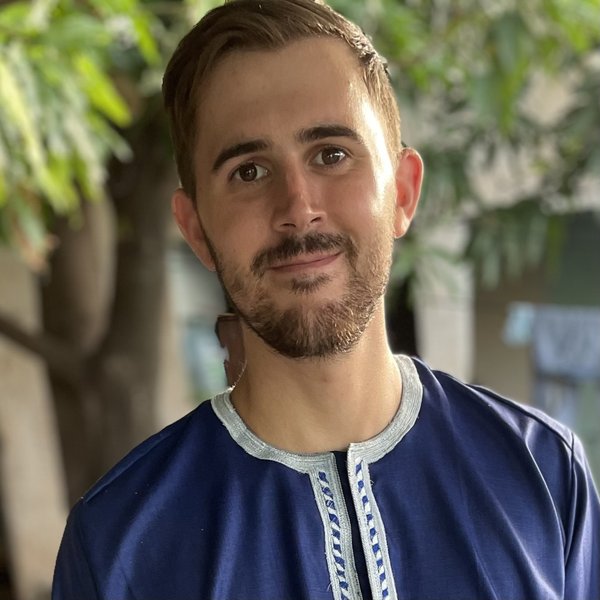
Holden M.
“Community members never forget how you made them feel and the skills you taught. Taking the time to listen, laugh, and learn together has been a deeply meaningful part of my service.”
1. What got you interested in the Peace Corps?
I first got my interest in the Peace Corps after witnessing several friends join this incredible organization. I was inspired by the mission of spreading peace and friendship in the world. I also appreciated the range of sectors Peace Corps Volunteers have been active in globally at a local level—education, the environment, public health, youth development, economic development, and agriculture. Ultimately, I felt a calling for service, applied where needed most, and was fortunate enough to be placed in a part of the world I knew very little about.
2. What projects are you working on?
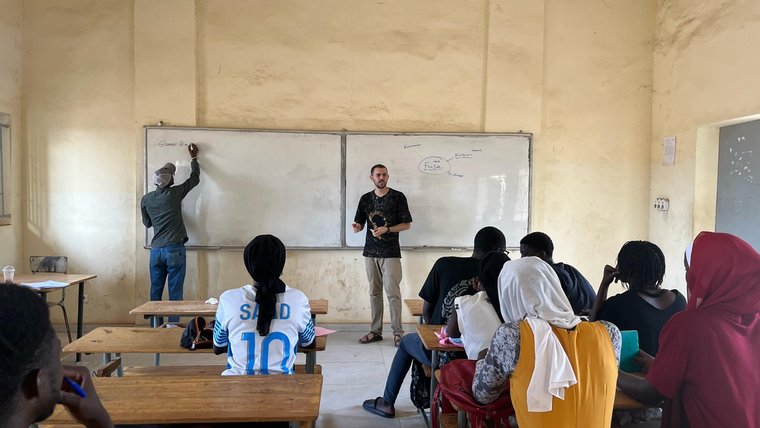
As a Community Economic Development Volunteer, I’ve worked on a number of projects throughout my service. I’ve focused on supporting Senegalese women and youth in economic development and empowerment. I have led an entrepreneurship training program (ETP) at a trade school in my community for two academic school years. I taught waste transformation techniques to local tailors through the fabrication of artisanal tote bags with recycled plastic water sachets. Additionally, I have worked with community members in trainings in other income-generating activities like soap-making and homemade pesticide fabrication. Another highlight of my service has been getting to collaborate with English teachers at the local high school where we get to explore poetry, speeches, songs, and film together.
3. What strategies have you used to integrate into your community?
Religious holidays are very important to Senegalese culture, and my host family has included me in the major Senegalese holidays (Korité, Tabaski, and Tamkharit, to name a few). In addition to the celebrations, I enjoy lunch around the bowl daily with my host family. There are also local ceremonies and celebrations like weddings and baptisms for family and neighborhood members that I have joined. I have also spent time in the local gardens—watering plants, weeding, and making conversation with the local women’s groups.
4. What is a highlight of your time in service so far?
After a 5-year hiatus due to COVID-19, we were able to relaunch a weeklong summer camp called Camp Nio Far in September 2024. The Wolof phrase “nio far” means “we are together.” The camp was a great success—girls and their fathers came together for a week of learning in health, environment, agriculture, and personal finance. Mixed in with the technical themes of the camp, we had a lot of fun with music, games, art, and handicrafts.
5. What have you enjoyed most about the community where you are serving?
After two years immersed in my community and Senegal, I have most enjoyed the teranga (Wolof word for hospitality) and jamm (Wolof word for peace) present everywhere I go. There is a deep sense of commitment to serving others in the community. Whether offering a glass of attaya (hot sweet tea) to a stranger or watering a neighbor’s hibiscus or mint plants in the garden without a second thought, everyone looks out for each other. Going on my typical bike ride commute to work and trainings, I encounter greetings of my Senegalese name from everyone, everywhere I go.
6. What are some of the most important things you’ve learned from your community?
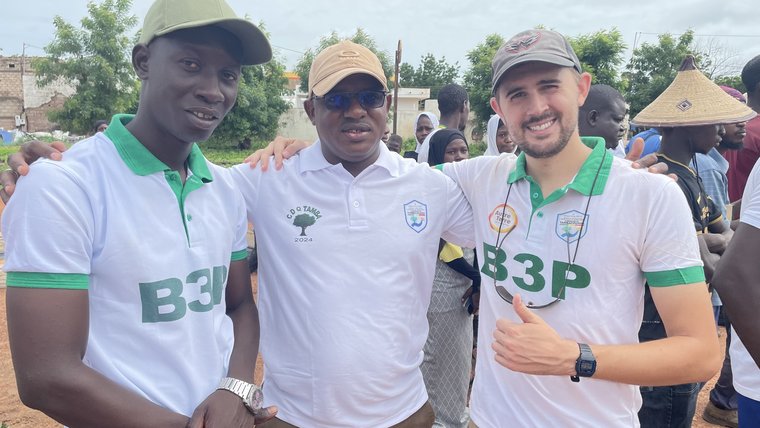
The most important things my community has taught me is that despite an incredibly challenging environment—physically (heat that can top 115 °F) and economically (high youth unemployment rates and low monthly wages)—you have to find the good in everything you do and know that even the smallest efforts can have a large impact. Community members never forget how you made them feel and the skills you taught. Taking the time to listen, laugh, and learn together has been a deeply meaningful part of my service.
7. How do you spend time when you are not working on a project?
When I’m not working on a project, I spend time with my host family, using chalk and a blackboard to work with my younger host siblings on math, English, or African geography topics. In cooler periods, I enjoy going on runs through the neighborhood. I also enjoy reading my Kindle under the shade of our mango and casava trees.
8. What are you looking forward to in your remaining time as a Volunteer?
In my final months in Senegal, I look forward to imparting as much knowledge and encouragement as I can to my counterparts and friends in the community. I hope to leave a legacy of positivity and peace.
9. Once you finish your service, what will you do differently when you return to the U.S.?
When I return to the U.S., I would like to be more aware of my impact that I can make as an individual. I want to keep pushing myself to integrate in new communities and continue on a path of service. And I hope to take the greetings, hospitality, and love shown here back to friends, family, and strangers.
Want to learn more about serving as a Volunteer in Senegal? Connect with a recruiter today.



