 An official website of the United States government


Featured Volunteer Profile
Fran S.
“Even though gender roles here can be more traditional, I have learned so much about womanhood and feminism from my community … women in the community are incredibly tough and resilient, nurturing, and compassionate.”
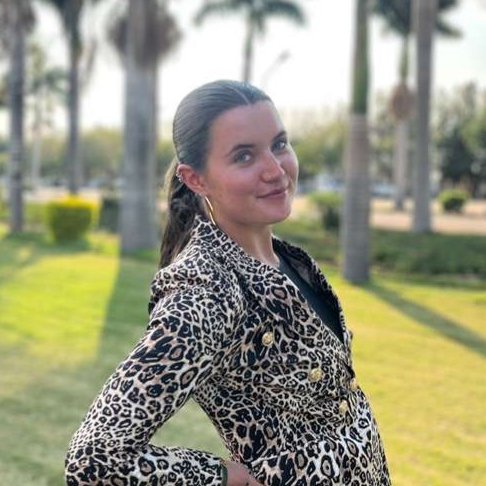
1. What got you interested in the Peace Corps?
In 2018, I had the opportunity to go to a remote area of Ghana to work on a water and sanitation project in collaboration with recently Returned Peace Corps Volunteers (RPCVs). That experience ignited my passion for working in global health—seeing how social, political, and environmental systems impact human health, and how grassroots, community-led initiatives can make a difference. Working alongside RPCVs who embodied grit, perseverance, and a deep understanding of community work was incredibly inspiring. I hoped to grow up to be just like them.
The global health program at University of Washington only further cemented this. I ended up focusing my studies on the HIV/AIDS epidemic in Africa, through anthropological investigation and implementation science. Peace Corps felt like the perfect opportunity to experience global health work at the grassroots level and engage in meaningful collaboration and connection with a community across the world.
2. What projects are you working on?
I mostly work at the village clinic, supporting people living with HIV (PLHIV) and maternal and child healthcare initiatives. My work with PLHIV includes medication adherence counseling, nutrition education, promotion of healthy lifestyle behaviors, and prevention campaigns of opportunistic infections like tuberculosis. I work with a local community health worker (CHW) to conduct all of these activities as well as household visits for PLHIV. We also work with a PLHIV support group in the community and have recently started a vegetable garden and chicken husbandry project to support improved nutrition and income generation. We recently finished a project to renovate two rooms at the local clinic into a laboratory so that patients, particularly PLHIV, no longer have to travel to the nearest town for routine testing.
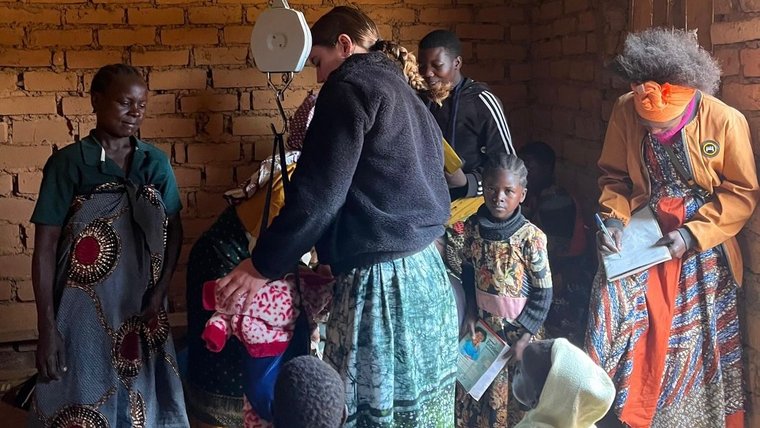
My counterparts and I have also been working to reduce malnutrition among local children under 5 by restructuring the village’s baby weighing/immunization days, providing more individualized and small-group education and counseling, demonstrating how to diversify children’s diets using locally available foods, and conducting outreach campaigns in remote parts of the village. I also support the clinic in implementing a cohort-based tracking system to help prevent mother-to-child transmission of HIV. Finally, I co-teach various health topics at the local secondary school and work with the primary and secondary schools on various initiatives including building of tippy-tap handwashing stations, organizing trash clean-ups around the village, and doing a girls’ empowerment workshop.
3. What strategies have you used to integrate into your community?
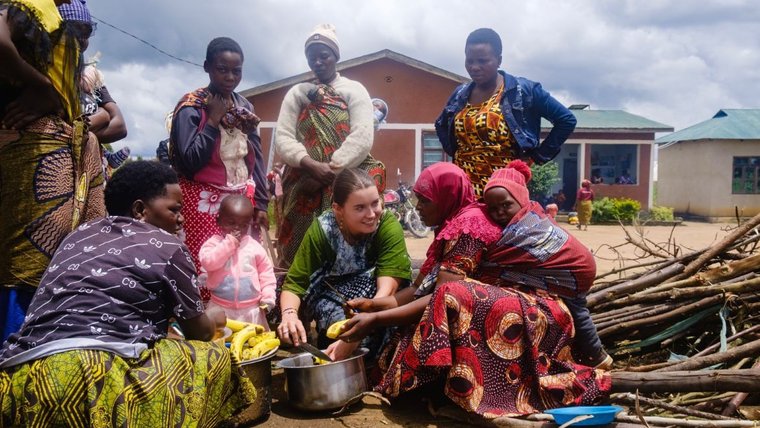
Committing to language learning is crucial. Learning the language and cultural practices is an important way to show respect to your community, and being able to meaningfully connect with people beyond greetings is something I really value. When I first got to my village, I spent a lot of time wandering around, chatting (“kupiga stori” in Swahili), and trying to get to know different people and places.
Initially I also made house visits for PLHIV, pregnant and breastfeeding mothers, and children under 5, which helped me build strong relationships with key populations as well as gain familiarity with neighborhoods in the village.
Overall, I try to participate as much as possible and stay open to learning and experiencing what I can. This has included learning to farm all the local crops, cook local dishes, play in village soccer tournaments (and one track meet), lift at our “gym,” attend every event I can (weddings, funerals, birthdays, and “send-off” parties), and even sing in the church choir. My local village government is super supportive and includes me as much as possible, which helps me connect with community members and see the inner workings of the community.
4. What is a highlight of your time in service so far?
Getting running water at the clinic a few months ago was a long time coming and greatly anticipated project for the village. Hearing the water “singing” through the pipes for the first time and seeing the impact of running water for the health facility has been awesome. The whole project team had a bonfire to celebrate, which will always be a special memory to me.
Seeing the impacts of health education, particularly for mothers and children, over the past year has been so awesome. Being able to provide antenatal counseling to a mother, see the birth of a new baby, follow up on vaccines and early childhood care, and then see that baby begin to eat, talk, and crawl is such a rewarding experience. I’ve witnessed the learning of pregnant women and new mothers from the educational outreach we’ve done, and they have gone on to teach others. Two years of Peace Corps service initially felt intimidating but it is truly so cool to build these relationships over time in one community.
Finally, we had an awesome Volunteer cohort trip to Zanzibar to celebrate three birthdays and our one-year mark in-country. It was so much fun and full of adventure and relaxing time in the ocean.
5. What have you enjoyed most about the community where you are serving?
1000% the people. I feel insanely lucky to live and work alongside some of the most loving and inspiring people I’ve ever met. My village is quite small, around 3,000 people, so it’s very tight knit and has allowed me to develop strong relationships. On my first day at site, I met a girl my age and her adorable 3-year-old-daughter, and they have since become like my second family, which I feel so grateful for. My counterparts are so passionate and so creative about improving the community, which inspires me so much. I also really enjoy the physical environment of my village—Tanzania is a very biodiverse country, so rather than the hot, desert-y Africa you might picture, I live in a chilly, pine tree-forested area at around 7000 feet elevation, which is incredibly beautiful.
6. What are some of the most important things you’ve learned from your community?
One of the most important things I’ve learned is how important community is. The sense of community shapes everyday life—how family extends beyond the household, how neighbors support one another, and how mutual aid is built into the rhythm of living together in a village. For example, each neighborhood has their own mini government and representatives, so everything in the village is coordinated through that, such as a big tree planting day or construction of a new village office. Everyone helps each other out for the overall good of the community.
Even though gender roles here can be more traditional, I have learned so much about womanhood and feminism from my community. Tanzanian culture centers strongly on family, particularly motherhood. Here, after you have a child, you are even usually called “Mama [child’s name]” instead of your own name, because identity is so intertwined with family. But all the women in the community are incredibly tough and resilient, nurturing, and compassionate as they guide their families, lead community groups like financial empowerment clubs, and support each other. Being a part of this system, including being welcomed myself as a daughter, granddaughter, sister, and even auntie to the children, has taught me so much about my own womanhood. Being able to be a part of such a special community is something I will never forget.
7. How do you spend time when not working on a project?
I’m a big hobby person, so I try to take advantage of living on my own and having free time. A year or so ago I received a chicken as a gift from someone in my village, which has since multiplied into about 10 chickens (and counting—I have another round of eggs about to hatch) in my backyard. I also garden and love cooking, so the combination of farm-fresh eggs plus home-grown vegetables is awesome. During the rainy season my friends in the village and I spend a lot of time hunkering down drinking chai, cooking and “piga-storying” about various happenings in the village. I like staying active too, especially running, yoga, and lifting, which has been a huge way to connect with kids and people my age. Other than that, I read, journal, collage, paint, go on walks, call friends and family back home, etc. Also, all household chores are completely by hand here, like fetching water, doing laundry, washing dishes, bucket baths, etc., so I try to find joy in doing household routines.
8. What are you looking forward to in your remaining time as a Volunteer?
Next month my friends and I plan to summit Mount Kilimanjaro, which has been a major bucket list item of mine. Workwise, I’m excited to start up a girls’ soccer league with my secondary school in order to promote girl’s empowerment and life skills through sports. Other than that, we recently implemented small-group and one-on-one counseling sessions for pregnant mothers and mothers of children under 5, and it’s already been very rewarding to see certain cases improving, so I’m really looking forward to that continuing to unfold.
9. Once you finish service, what will you do differently when you return to the U.S.?
So many things! I will definitely never take running water for granted and will appreciate and consider more the limited resources of planet Earth. I also want to continue gardening and hopefully keeping chickens; I don’t think I can ever go back to just buying packages of stuff at a supermarket without having a sense of where it comes from. Being away from Seattle and my family has also made me realize to never take that for granted—I’ve missed seeing my nephew grow and being able to go climbing with friends. I think I will come back to the U.S. with a newfound appreciation for those things I’m returning to, and the world and its interconnectedness. Tanzania has taught me so much about truly connecting with people and the natural world, and those lessons will stay with me forever.
Learn more about serving as a Peace Corps Volunteer in Tanzania.



