 An official website of the United States government


Featured Volunteer Profile
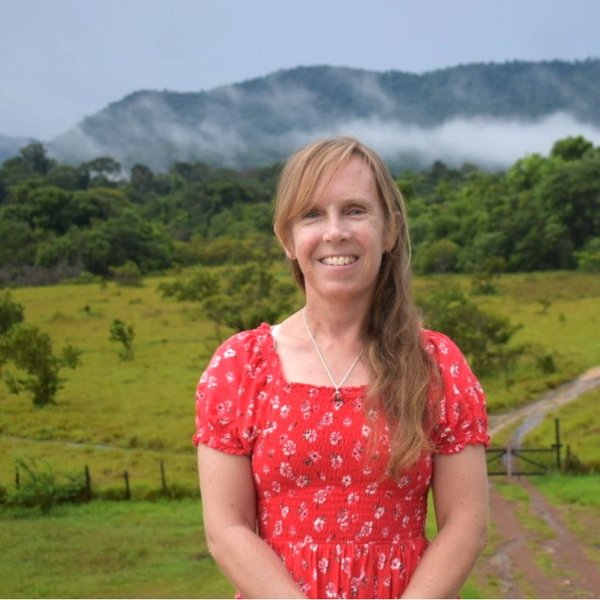
Erika T.
“My service in the communities I serve, predominantly Indigenous Guyanese, has shown and taught me more than I feel I have given, and living in nature has given me a sense of connection that will never go away.”
1. What got you interested in the Peace Corps Response program?
Service has given a focus to my passions and values, particularly in supporting human and environmental health and protections, and sustainable community development.
Before the Peace Corps, I did two years as an AmeriCorps volunteer helping to address community-based environmental issues. I loved seeing the tangible and positive results on communities and realized this is the work I want to do.
After Americorps, I worked in business for ten years. Wanting to return to work that aligned with my values, I became a graduate student in international sustainability and was looking to expand into international service. Peace Corps naturally fit with my values and interests, and instinctively I knew this would open a whole new chapter in my life. I applied to where I was needed most and was selected for Peace Corps/Guyana. I served as an Environment Volunteer non-consecutively for two years, due to the pandemic.
The Response program gave me an opportunity to continue and expand on the work I started as a Volunteer in the North Rupununi Region in southwest Guyana. Peace Corps service in the Environment sector brings great joy to my life and a sense of purpose and belonging. My adventurous and curious spirit thrives here, making my work more impactful and genuine. My service in the communities I serve, predominantly Indigenous Guyanese, has shown and taught me more than I feel I have given, and living in nature has given me a sense of connection that will never go away.
2. What projects are you working on with your community?
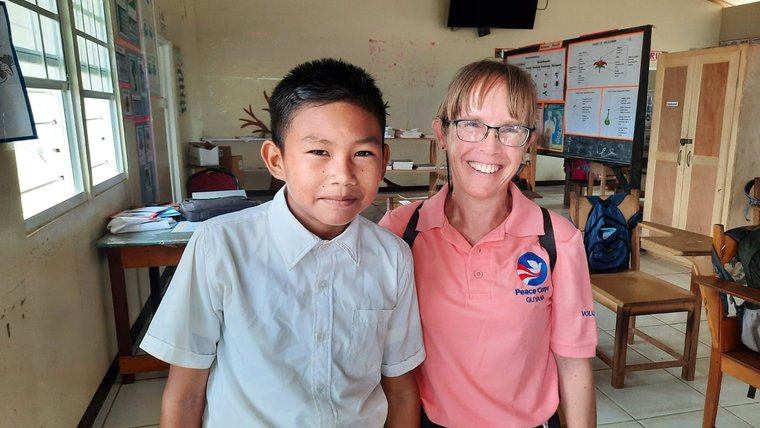
Currently, I am working with grades 3-6 students in science, social studies, and literacy subjects at a local primary school. I co-plan and co-teach environmental-focused pupil-centered activities in order to promote understanding and critical thinking skills.
I also work with the North Rupununi District Development Board (NRDDB) and their wildlife clubs outreach program. I recently supported a STEM competition at a wildlife festival, assisting each of the 7 clubs in the region on their community sustainability projects. They each worked with their individual communities to come up with their own project that could be utilized to address a top environmental issue in that community.
I have also supported wildlife outreach and a program on solid waste management, and we will be doing STEM training in the new school term, to help build students’ knowledge of their natural environment.
Along with NRDDB, I help the local ecolodge with marketing (brochures and website) and environmental reports to help expand tourist activities that benefit the community.
3. How have you leveraged your previous professional experience and skills in your service?
My previous work at a wholesale garden center, which had staff from a variety of countries, gave me exposure to different cultures. AmeriCorps taught me discipline, perseverance, follow-through, and resilience. My open-minded personality made it easy to integrate and build relationships quickly in my communities. I have a wide variety of interests and knowledge in many different subjects, that along with my curiosity, observation and listening skills, allows me to adapt and adjust quickly to various circumstances.
When I arrived to the remote region of Guyana where I’m serving and realized this was my home for two years, I knew I had to get to know community members quickly and find out what skills individuals bring to their community. I attended any event I was invited to, such as learning how to make farine (like grits) from bitter cassava, attending football (soccer games), visiting other communities, and participating in school activities, nature excursions, and religious activities. The community got to know and feel comfortable with me, and I them, enabling me to know who to contact for my various projects.
My original Peace Corps cohort was evacuated in March 2020, and I was the only Volunteer to reinstate in 2022. I was able to complete my service in my original community after eight months serving on the coast. Then an opportunity to build a Response position in North Rupununi came, so I’m currently serving here.
4. What is a highlight of your time in service so far?
Being a part of the wildlife festival and working with the wildlife clubs on STEM projects for the festival has been a highlight of my service so far. The goal was to give members the task of solving an environmental problem in the community by utilizing community resources, cultural knowledge, and leadership councils and technology. The first-place winners presented a solid waste management program for their community, based on data, research and interviews they gathered in their community. Youth are going to be the leaders of these communities in the future, and gathering the knowledge of their environment from their elders and traditional ways of sustainability is important for the strength of the community. This project brought my goals of sustainable community development full circle.
5. What strategies have you used to meet the challenges of a Response Volunteer experience?
To be involved, proactive and flexible. I’ve involved myself in community groups and activities, including the school, mother’s union, sports, the ecolodge, wildlife club, community meetings, and holidays and special events. It is the quickest way to find resources and build connections and relationships in the community. For me, it has been critical to know the right people to contact to get any task or activity done. It has also been important to be flexible and open-minded in planning activities and events. When working with the wildlife clubs, adjusting activities quickly according to weather, transportation, and the ages and motivation of club members ensures success. Nothing is fixed as a Volunteer, and the quicker you learn to adapt, the more likely you will thrive, and new goals and ideas that you never dreamed of can happen.
6. How will the skills you are developing help you in the future?
Resiliency and flexibility have been critical to adapting here in Guyana. It isn’t easy being on my own as an outsider in a community that is also very remote. I’ve learned more about myself and my strengths and weaknesses, and as a result, I know how to respond from a place of knowing, confidence, and creativity.
Community members know their community the best, and I’ve found it extremely important to listen to their guidance in terms of safety, as well as what ideas and projects are going to work or need adjustments. Incorporating information and knowledge from everyone’s input makes a stronger and more sustainable project or activity. Everyone has something valuable to bring to the table, and it is important to recognize the skills of each individual person in order to organize and complete a project successfully. These skills have helped me adapt more quickly and be successful at working on projects with people with diverse ideas and backgrounds.
Learn more about serving as a Peace Corps Volunteer in Guyana.



