 An official website of the United States government




Featured Volunteer Profile
Fiona S.
“Chipa is one of my favorite foods in Paraguay and I really enjoy kneading the dough into fun shapes. It reminds me of making Christmas cookies with my grandma in the United States.”
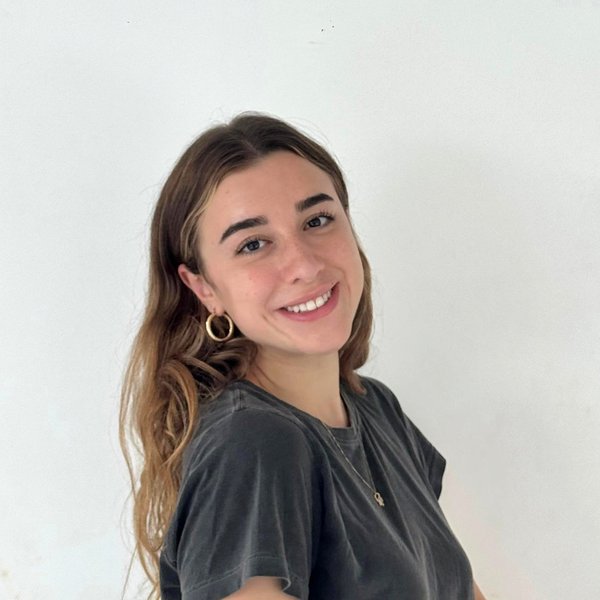
1. What got you interested in the Peace Corps?
My parents were both in the Peace Corps along with several of our family friends. Growing up around people who were so open-minded, international, kindhearted, and adventurous made me interested from a young age. My mother told me stories about traveling to her site in the Central African Republic in a bush taxi, sleeping next to a herd of elephants, and teaching life-changing health practices to women in her community. After college, I was looking for a unique and flexible professional experience that would not only build my resume but allow me to grow as a human being. I thought a lot about what kind of life I wanted to have after graduating, and what kind of person I wanted to be. I decided that Peace Corps would be a great way to get involved in an international network of people who want to change the world, travel, and make lifelong friendships in unexpected places.
2. What projects are you working on?
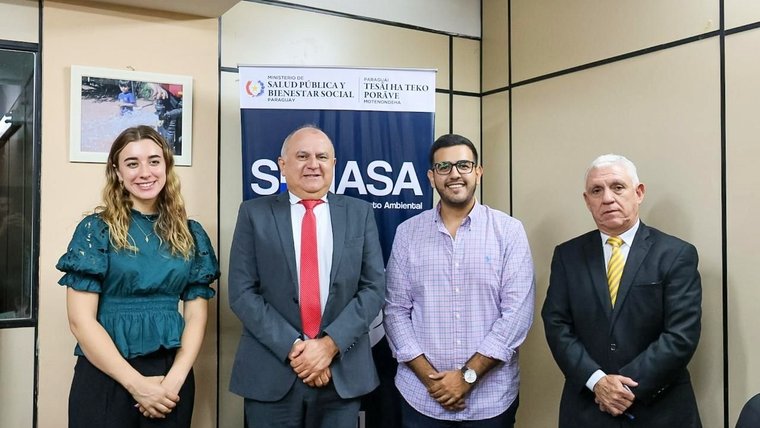
I am currently working on a sustainable rainwater collection system that will be installed in two elementary schools in my town. For over 30 years, my site has not had running water in households and institutions. This is especially problematic during the summer months, when water is unavailable for weeks at a time. I designed this system in collaboration with staff from Peace Corps, local government, and SENASA, the organization responsible for water management in Paraguay. To fund it, my counterparts at the municipality and I have received a donation of about $3,000 from the Paraguayan government. Once installed, the system will consist of two water tanks and water pumps and pipes running along the roofs of the school pavilions. The system will continuously collect rainwater throughout the year, acting as a backup when the local water supply runs out.
2. What strategies have you used to integrate into your community?
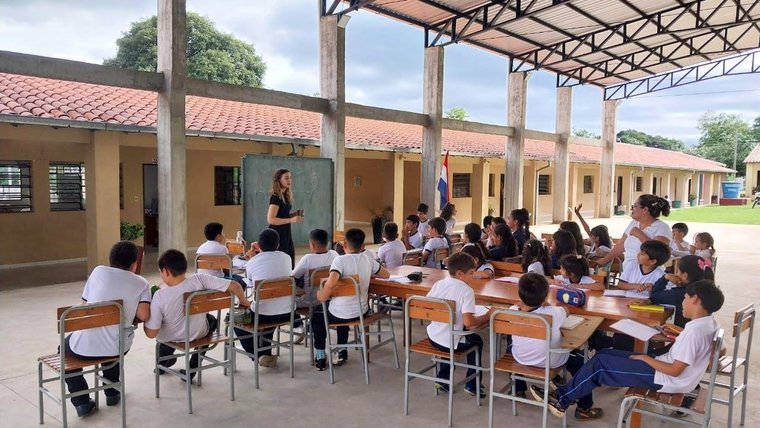
Some strategies I have used to integrate into my community are starting conversations while doing routine activities like waiting in line, buying groceries, and going on walks. I also participate in community events with friends who could introduce me to more people. I also connect with members of my community through sharing my interests in cooking, art, language learning, and physical activity. I meet many people through my English classes. I also love to run and walk, so I meet many people by walking around my neighborhood.
3. What is a highlight of your time in service so far?
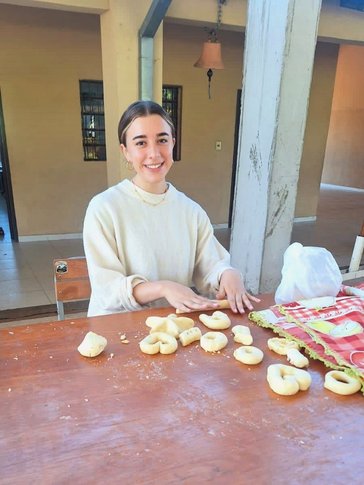
The highlight of my service so far has been Semana Santa, or Holy Week. During this time, extended relatives come back to their hometown to enjoy homecooked meals, religious events, and quality time with friends and family. An essential activity during Semana Santa is making chipa, a donut-shaped bread with an airy, cheesy interior and a crunchy outside. Chipa is one of my favorite foods in Paraguay and I really enjoy kneading the dough into fun shapes. It reminds me of making Christmas cookies with my grandma in the United States. During Semana Santa, my town is full of visitors. It’s a really special time where everyone takes a break from their normal routine to reflect on their life and connect with loved ones.
4. What have you enjoyed most about the community where you are serving?
The most special part of the community is the people that I have met and the friendships I have made during my time here. It is hard to describe the warmth and kindness that emanates from this small town in Paraguay. Something my host mother always says to me is, “The door is always open, there is a bed for you to sleep on, and there is always food on the table.” To say that strangers are welcome in my town would be an understatement in a place where even as a foreigner, you are treated as a long-lost relative who has just come home. Apart from the kindness of the people in my town, I am constantly in awe of the natural beauty of my site, the stretches of wildflowers along the highway, the trail through the mountains to get to the waterfall, and the vibrant sunsets.
5. What are some of the most important things you’ve learned from your community?
One of the most valuable things I have learned from my community is the importance of relying on neighbors and helping each other through difficult times. In my town, neighbors help each other not because they have to, but because it is the right thing to do. I think this is such a huge cultural difference between Paraguay and the United States. At least in urban areas in the United States people are more individualistic and less likely to ask favors from strangers or give away their own resources. In my town, there is such a dependence on shared knowledge, community support, and family connections above all.
6. How do you spend time when you are not working on a project?
If I do not have a specific project that I am working on, my schedule consists of English classes at the elementary schools and private lessons with some of my students who have an advanced language level. Between classes, I drink terere or mate with my friends, go on walks or runs, or play with my Chihuahua, Kiwi. I love hiking as well. I can either hike on a stone-paved road winding up the mountain or a trail through the jungle, which leads to a beautiful waterfall and a view of the entire valley. It is also very important for me to stay in touch with my friends and family back in the States, so I make sure to call them every day or a couple of times a week. In Paraguay, invitations are usually informal, so if I am walking around my town and see a friend sitting outside, I will usually stay and chat with them for a while.
7. What are you looking forward to in your remaining time as a Volunteer?
I am really looking forward to finishing my project and seeing it in action! I have been working on it for so long and it has been such a rewarding experience so far. The thing I am most looking forward to is spending time with my friends. I am sure I will visit them often after my service is over, but I want to make the most of every moment I have living here. I am also very excited to get to know new places in Paraguay—there are many mountains, waterfalls, and rivers to visit. Thanks to my host family and my adventurous friends, I have been lucky to visit many beautiful places in Paraguay, and I cannot wait to see more.
8. Once you finish service, what will you do differently when you return to the U.S.?
Once I finish service, I will prioritize language learning as a significant part of my life. Becoming fluent in Spanish has really opened up a whole new world. I also have realized how much I miss my family, after not being able to see them for months at a time, so I will be spending a lot of time with them after my service is over. The same goes for my friends. It was a bit of a rough transition to go from being surrounded by my best friends in college to moving alone to a foreign country. We call fairly often, but it is not the same as face-to-face conversations. I think I will also take away the importance of social connections in the workplace. In Paraguay I coworkers are often friends as well, and that is something I would love to practice once I return to the U.S.
Want to learn more about serving in Paraguay? Connect with a recruiter today.



