 An official website of the United States government


Featured Volunteer Profile
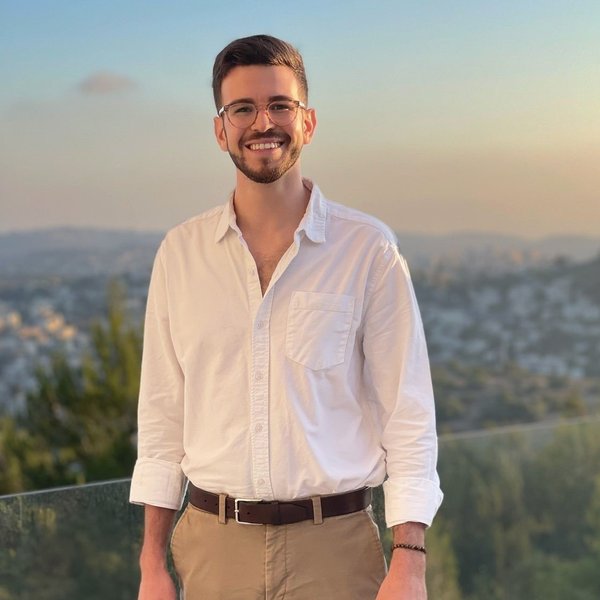
Eytan P.
“I’ve learned to adjust to different professional expectations, communication styles, and unspoken workplace norms, which has been a tremendous asset in building trust with my Moldovan colleagues.”
1. What got you interested in the Peace Corps, specifically the Response program?
After years of teaching and training educators in the U.S., Israel, and Vietnam., I was looking for a way to continue working abroad in a way that made a meaningful impact. Peace Corps Response was the perfect fit—an opportunity to work closely with a local community and apply my experience in education and cultural exchange. I was especially drawn to the Peace Corps’ focus on immersion and language. Learning Russian and Romanian in Moldova has helped me forge professional and personal relationships and enabled me to learn about Moldova on a deeper level.
Serving in Eastern Europe is of personal significance for me, as most of my ancestors came from this region, fleeing as refugees in the early 20th century. Coming here as a Response Volunteer—building relationships, sharing cultures, and working toward common goals—feels like a full-circle moment for my family, a way to transform generational trauma into something positive, engaging, and forward-looking.
2. What projects are you working on with your community?
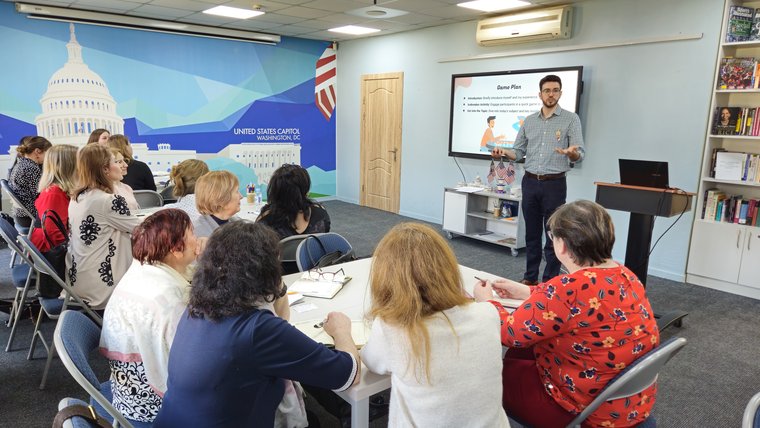
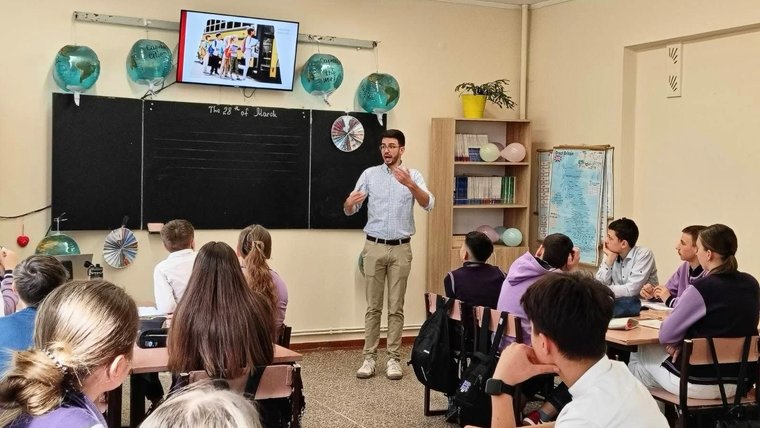
I love teaching, connecting with people, and finding ways to make a lasting contribution. In Moldova, I’ve actively sought out opportunities to work with various local communities. My principal role here is teaching English to university faculty and administrators at the Ministry of Education and Research. As Moldova works toward integration into the European Union, English is becoming essential for international convenings and collaborations, and I see my work as directly contributing to the country’s future.
Outside the classroom, I lead American cultural programs and English conversation clubs for university students, engage middle and high school students in cultural activities, and lead pedagogical workshops for local English teachers. I am currently working with these teachers to coordinate visits to their village schools, where I will provide direct support, share resources, and collaborate with their students and colleagues. Recently, I initiated English conversation groups for Ukrainian refugees and LGB individuals with the United Nations High Commissioner for Refugees. Working with educators, students, or marginalized groups draws upon my skills in language learning, communication, and cultural exchange. That’s what I love most—helping others create new opportunities through English while learning from them in return.
3. How have you leveraged your previous professional experience and skills in your service?
My background in education and cultural exchange has shaped every aspect of my Peace Corps experience. In Israel and Vietnam, I focused on English teaching and curriculum design. This experience has been incredibly valuable in helping me create practical, relevant English courses that align with Moldova’s goals of strengthening ties with the West. During my time as an English language fellow, I led teacher training workshops that emphasized imaginative, interactive lesson plans. In Moldova, I have been adapting those same skills, tailoring them to meet the specific needs of teachers and government officials who require English for international collaboration.
Beyond teaching, my international education experience has made it easier for me to navigate intercultural dynamics. I’ve learned to adjust to different professional expectations, communication styles, and unspoken workplace norms, which has been a tremendous asset in building trust with my Moldovan colleagues. Language has played a key role in my service as well. The experiences I've had learning Arabic, French, Hebrew, Spanish, and Vietnamese have supported my ability to pick up Romanian and Russian fairly quickly. My passion for learning the local languages has opened doors, strengthened relationships, and demonstrated my genuine interest in Moldova.
4. What is a highlight of your time in service so far?
One of the most meaningful aspects of my service has been the opportunity to share dimensions of my personal identity and native culture with the local community. As a Jewish American, I make it a point to talk about Jewish holidays, culture, and history whenever it’s relevant, always finding ways to create moments of cultural exchange.
One memorable experience was leading an English-language event on Holocaust Remembrance Day for teenagers. It was heartening to see so many young Moldovans choose to spend their Friday evening learning about the Holocaust and Judaism. Most of them knew very little about the Holocaust, and very few had ever met a Jewish person. I was honored and moved to share my family’s story—how they fled anti-Semitic violence in Eastern Europe, and how some tragically perished in pogroms and in the Holocaust, not far from where we were in Chisinau. We discussed the importance of Holocaust education for future generations and the critical need to combat hatred in all forms.
The way these students engaged with the topic filled me with hope, and I am grateful for the chance to do this work and help keep these stories alive. At the end of the event, each student wrote a message of remembrance, hope, or reflection on a paper cut-out in the shape of a candle, and it was incredibly inspiring to read their thoughts and reflections. When I think of my great-grandparents, who fled Europe with little more than their lives and no intention of returning, I feel that, in a way, I am joining forces with my Moldovan community to address past injustices and forge a better future.
5. What strategies have you used to meet the challenges of a Response Volunteer experience?
Flexibility and taking the initiative have been crucial in navigating the challenges of my Response Volunteer experience. When I first met my cultural partner in Moldova, it quickly became clear that my role would be different from what I had anticipated. Instead of training high school English language teachers, I was tasked with teaching English to college-level faculty and administrators. I soon realized that this shift in focus for my assignment presented a unique opportunity to make a meaningful impact on high-level decision-makers who play a critical role in shaping the future of education in Moldova. In response to this new student profile, I adapted my work plan by designing English courses that were both practical and directly relevant to my students' high-level professional roles.
My new position does not require my daily presence on the university campus, creating an opportunity for me to support the community’s broader English education needs. I have taken the initiative to reach out to other organizations in Chisinau to expand my impact in the community and teach outside the formal education system. These rewarding experiences have reinforced my commitment to adaptive, proactive cultural exchange. My strategies for engaging communities continue to shape my growth and service.
6. How will the skills you are developing help you in the future?
My goal is to build a rewarding international career in public service, and the skills I am developing in the Peace Corps are essential for my future roles. In Moldova, critical thinking and problem-solving are key, and adapting to this culture is strengthening my ability to work across different cultural settings. Collaborating with government institutions has deepened my understanding of organizational structures and diplomatic processes. Leading intercultural programs is sharpening my communication skills and cultural competency. Managing projects across Moldova has also honed my leadership, time management, and resilience. These experiences are shaping my future in education, diplomacy, or humanitarian work. Ultimately, my Peace Corps Response service is preparing me to be an adaptable, effective leader ready to tackle global challenges.
Want to learn more about serving in Moldova? Connect with a recruiter today.



