 An official website of the United States government


Featured Volunteer Profile
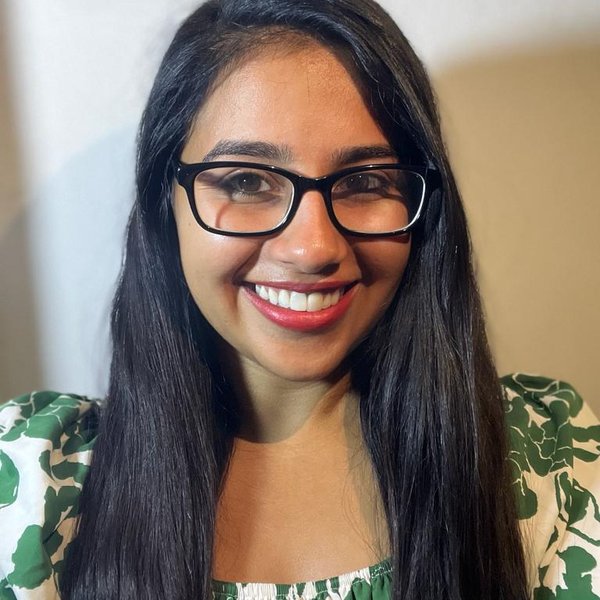
Nada M.
“"... I love to share meals with my friends and host family. I sometimes cook typical American meals while my neighbor will cook Malagasy meals. "”
1. What got you interested in the Peace Corps?
I got interested in volunteering abroad from watching TV commercials when I was in elementary school. I was excited about the chance to help others in unfamiliar places and learn about different ways of life. In college, I met a Returned Peace Corps Volunteer (RPCV), my roommate’s aunt. I talked to a couple of other RPCVs throughout my time in college, which solidified my desire to serve as a Volunteer. There is a sense of community with Peace Corps that is unlike any other; I feel as though my fellow Volunteers and members of my community understand who I am and why I am here doing this work. I feel like I belong.
2. What projects are you working on?
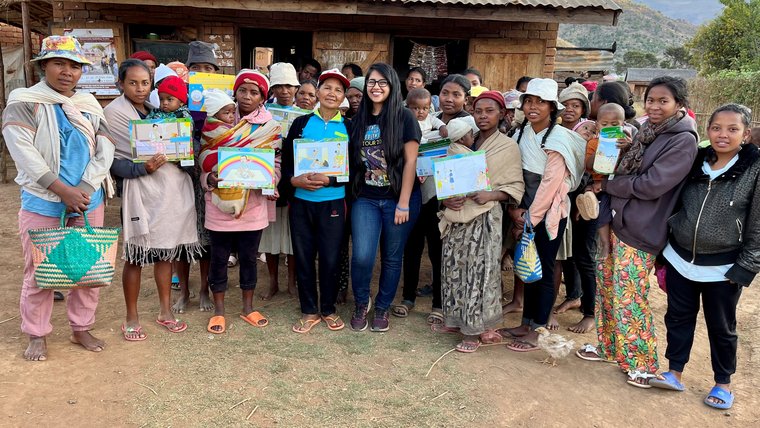
Currently, I work at the local health clinic two days a week, weighing babies and pregnant women, and tracking vaccinations. I also lead healthcare groups in four villages surrounding my town. I meet with groups of leader mothers made up of up to 40 pregnant women and caregivers every month. We discuss a variety of health topics such as wash and sanitation hygiene, nutrition, vaccinations, danger signs during pregnancy, and malaria prevention. We also provide guidance on services provided at the “Toby,” a clinic staffed by community health workers, and the health clinic (where there are midwives, nurses, and a doctor).
I also hold English clubs once or twice a week. I have one class for ages 4-12; I teach the ABCs and basic numbers with a teacher at the local library. A second class at the local high school includes greetings and common phrases. A third class for adults incorporates occupation-related vocabulary and adult dialogue.
Lastly, my counterpart and I hold Grassroot Soccer (GRS) activities, where we teach health lessons while playing soccer with 25 teenagers in town. We meet once a week on the soccer field and discuss life skills such as how to accomplish our goals and set boundaries in our relationships alongside fun soccer activities.
I would like to start a women’s support group to encourage women in my community to come together to discuss sensitive topics such as sexual harassment/assault and domestic violence. I want to create a safe space where women can connect to other women for support.
4. What strategies have you used to integrate into your community?
I stop by the hotely (café/small restaurant) across from my house at least once a day. Going there regularly has allowed me to establish relationships with people I see often, and to meet new people who are passing through town. It also gives me the opportunity to practice my Malagasy.
Another strategy I have used to integrate into my community is attending local events. I have attended multiple weddings, funerals, and family reunion parties in my town, and there is usually a lot of dancing, music, and food. Attending these events has given me a better understanding of Malagasy culture and traditions.
Finally, I love to share meals with my friends and host family. I sometimes cook typical American meals while my neighbor will cook Malagasy meals. For example, I prepared steak, roasted Brussel sprouts, macaroni and cheese, and mashed potatoes for Thanksgiving and explained that the holiday is a chance for friends and family to gather and express their gratitude.
5. What is a highlight of your time in service so far?
A highlight of my time in service so far is celebrating a football championship in my community with my neighbor. We stood by the road banging pots and pans together and cheered for the football players while they drove through my town after the game. We then met up with the individual football players and took pictures with them and their trophies. It was really fun to share the feeling of “winning” as a community.
6. What have you enjoyed most about the community where you are serving?
I enjoy the compassion and friendliness I have experienced in my community. In my first week, I got locked out of my house. My neighbor helped me unlock the door, and my host father fixed the lock for me the same day. I am grateful for the help I have received from my friends, host family, and neighbors throughout my time in Madagascar. If someone is unable to help, they find someone to help resolve the issue as soon as possible. I feel very heard and cared for in my community and am thankful to be here.
7. What are some of the most important things you’ve learned from your community?
Ask for help when I need it, get out of my comfort zone, and keep an open mind when trying new things.
8. How do you spend time when you are not working on a project?
I walk around my community, ride my bike, taking pictures of local wildlife, and spend time with my cat, Mihira. On the weekend, I meet up with friends at a bakery in a nearby town and/or visit fellow Volunteers at their sites.
9. What are you looking forward to in your remaining time as a Volunteer?
I am looking forward to learning more about my community and their needs in my remaining time. I am excited to start new projects, improve my Malagasy skills, and learn more about Malagasy culture. I hope to visit new regions in Madagascar and learn how they differ from my own region.
10. Once you finish your service, what will you do differently when you return to the U.S.?
Before service, I did not have strong relationships with those who lived around me, and avoided starting conversations with people I didn't know. My life here is filled with conversations with people who I do not know well but enjoy connecting with. This is an aspect of life I would like to continue after service. I will be more involved in developing relationships in my community.



