 An official website of the United States government


Featured Volunteer Profile
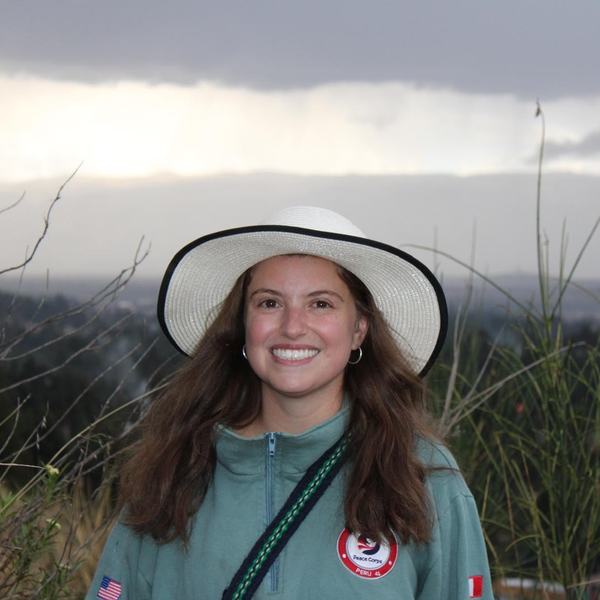
Emily A.
“Coming from New York City, I really enjoy living in a small community where I can run into people who stop to ask how I am doing. It’s heartwarming to be invited into my neighbors’ homes for meaIs or to receive a scarf knitted by a student’s mother.”
1. What got you interested in the Peace Corps?
In high school, I wrote a bucket list of experiences I wanted to have when I was older, and Peace Corps was on that list. I was drawn to the Peace Corps because of an interest in service to others, travel, and the desire to learn from other cultures. I worked in finance in New York City after college, but after five years I felt that I was ready for a personal and career change. The opportunity to apply my professional expertise to support a community, while learning another language and participating in a new culture through the Peace Corps has been everything I was looking for and more.
2. What projects are you working on?
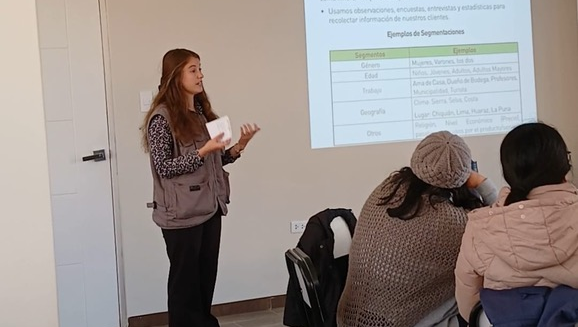
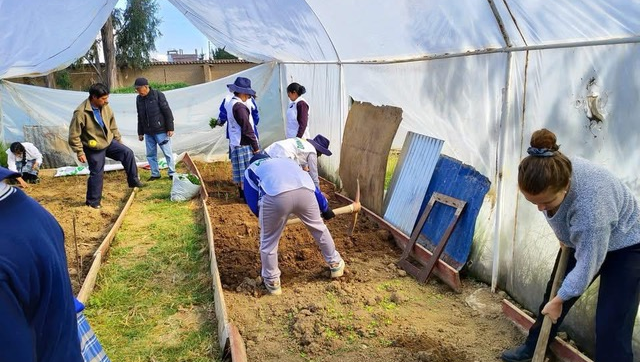
The bulk of my time is spent co-facilitating entrepreneurship and financial education workshops with high school students and women. In the entrepreneurship classes we learn about everything from setting goals to marketing and basic accounting. In the financial education class, we discuss personal and family budgets, savings goals, and investments. Women in Peru experience challenges related to "machismo" (bias against women), and the workshops help empower the women to gain confidence, independence, and improve their and their families’ economic situation. I also teach English to elementary and high school students twice a week after school.
3. What strategies have you used to integrate into your community?
Saying “yes” to every invitation has been the best way to integrate in my community. I have been invited to quinceñeras, to dance in the town parade, and to help my host family plant corn in their field. Every invitation is an opportunity to understand more about my community members’ lives and connect with them.
My municipality and the local high schools where I work have aided in my integration by inviting me to competitions and events, and sometimes they ask me to be a judge or a sponsor. However, most invitations do not come by text or phone call, so it is important to spend time with my counterparts so they keep me informed.
4. What is a highlight of your time in service so far?
One of the highlights of my service was working with my site mate Natalie to start a club for girls ages 11 to 15 in my town. In the weekly club we talked about careers goals, made art out of recycled materials, did yoga and Zumba, and discussed how girls can be leaders in their community, country, and world by helping others. We celebrated the end of the year by watching Hidden Figures and sharing hot chocolate and panettone, a Peruvian Christmas favorite. It was a pleasure to get to know the girls, and they are an inspiration to me.
5. What have you enjoyed most about the community where you are serving?
Coming from New York City, I really enjoy living in a small community where I can run into people who stop to ask how I am doing. It’s heartwarming to be invited into my neighbors’ homes for meaIs or to receive a scarf knitted by a student’s mother. I appreciate that children can play outside freely and are less connected to smart phones and social media than in the United States. My community has a rich culture that involves traditional dances, festivals, clothing and food unique to this town. It has been a special experience to be invited into this culture for two years.
6. What are some of the most important things you’ve learned from your community?
My neighbors and students have taught me that everyone can play a role in contributing to a better community and society. You don’t need to be mayor or president to give back and help others. I have been touched by the level of care and assistance that neighbors show each other. My community has also shown me the essential role that quality education and a supportive family environment play in helping people escape the cycle of poverty. I have learned during my time in Peace Corps that what most people in Peru want is the same as what people in the U.S. want, which is for their families to live safe and healthy lives, and for their children to have better opportunities.
7. How do you spend time when not working on a project?
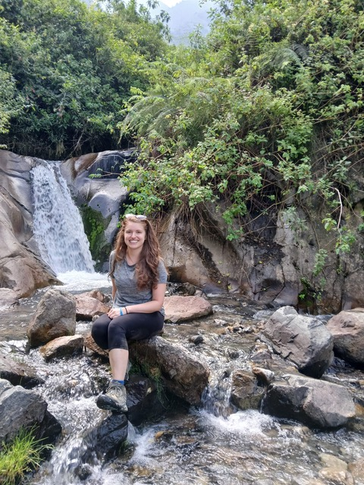
In my free time I like to visit other Volunteers’ sites nearby, hike, and explore pre-Incan ruins. I enjoy introducing my host family to American foods, from chili to baked ziti to brownies. I also love playing with and taking care of my two cats, who will be moving back to the States with me, Galleta and Oreo. In the evenings I like to crochet, watch Netflix, and talk to friends and family back home.
8. What are you looking forward to in your remaining time as a Volunteer?
In my remaining months, I am focused on implementing my Peace Corps small grant. Alongside a group of community partners, we are starting a small women’s cooperative to raise guinea pigs, or "cuyes." We are facilitating technical training with a veterinarian on best practices related to nutrition and preventing disease. We will also buy supplies such as cages, reproductive guinea pigs, medicine, and food for training attendees. The grant has been a lot work and required a lot of planning, but it has been very rewarding to be able to address a need identified by community partners.
9. What will you do differently when you return to the U.S.?
Peace Corps has allowed me time to reflect on my values. I am inspired to continue service in the U.S. through volunteer work and graduate study in public policy. I am interested in pursuing a policy or non-profit career focused on promoting upward economic mobility for low-income children and families.
After getting used to a daily market and bountiful fresh fruits and vegetables, I plan to think more consciously about where my food comes from and try to seek out locally grown produce and maybe even start a garden.
Learn more about serving as a Peace Corps Volunteer in Peru.



