 An official website of the United States government




Featured Volunteer Profile
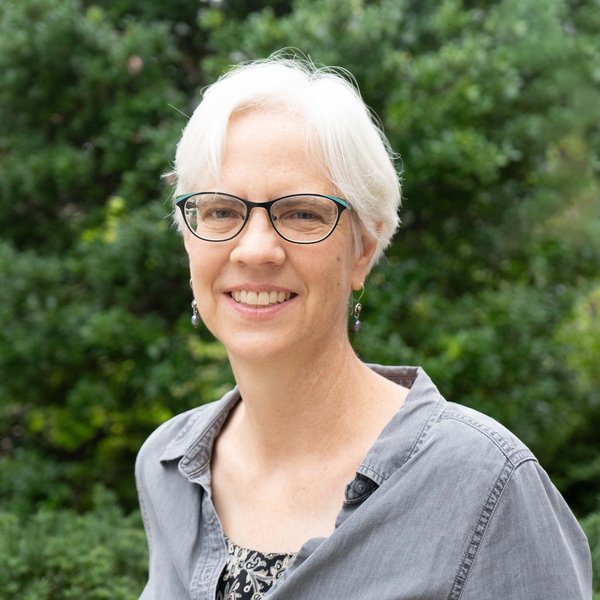
Laurel H.
“People see me getting food from their market, washing clothes by hand like they do, carrying my water for my house, and working to learn their language—all of which helps with my community integration.”
1. What got you interested in the Peace Corps?
I have always loved traveling and learning about other cultures. After graduating college, I spent a year in Senegal on a Fulbright fellowship. While there, I met some Peace Corps Volunteers at the language center, where I also learned some Wolof. After returning to the U.S., I was busy living life: getting my Ph.D. and realizing I loved teaching, raising two wonderful children, and following my dream of becoming a professor at a small college. However, the idea of Peace Corps service lingered, and I was pleased to learn that Peace Corps accepted older Volunteers. I initially considered Peace Corps Response, but after both kids graduated college I decided to apply for traditional Peace Corps service in order to more fully integrate in my new community.
2. What projects are you working on?
In addition to teaching biology and chemistry, I help run our school’s science club and contribute to guidance/life skills activities. I also recently assisted another Peace Corps Volunteer with a term break academic camp. I hope to support additional projects during my time in Kenya.
3. What strategies have you used to integrate into your community?
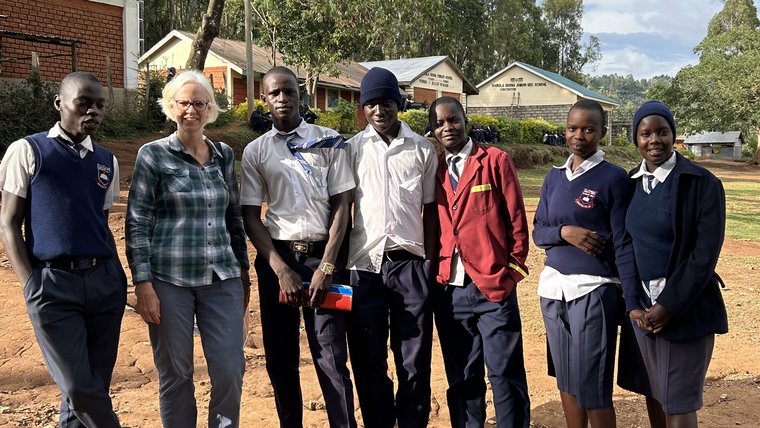
I continue to study Swahili with my tutor and am also learning some Dholuo—the local language at my site. Greeting people in Dholuo is a great way to meet people. I have attended many different churches with community members which gives me an opportunity to introduce myself to the congregation. Other local community events I have attended include: funerals, weddings, engagements, and “harambee” (fundraisers). The community has been very welcoming. People see me getting food from their market, washing clothes by hand like they do, carrying my water for my house, and working to learn their language—all of which helps with my community integration.
4. What is a highlight of your time in service so far?
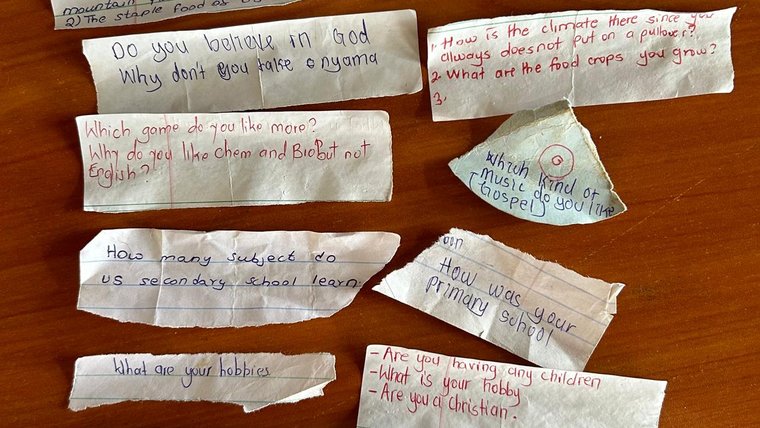
The main highlight is my interactions with students and fellow teachers. My students are very curious about the United States but shy about asking questions, so they write me little notes. It has been fun sharing my culture (e.g., singing “America the Beautiful,” showing pictures of my family, bringing in pasta) and equally fun learning about their culture (joining the dance club’s practice of a local dance, trying unique local foods, listening to staff room debates about religion or politics). My husband recently visited and it was wonderful to introduce him to my community. Everyone wanted to meet him and persuade him to come retire in Kenya!
5. What have you enjoyed most about the community where you are serving?
People have been incredibly welcoming and accepting. Several teachers and school staff have introduced me to their families. In addition to individual interactions, there are lots of children here, and they are often very excited to meet or greet the “mzungu” (foreigner).
Other times it is the little daily adventures that bring me joy. For example, one day a student leapt up in the middle of my class to snatch something in the corner of the room. When she returned to her seat, I could see she was ripping wings off some large insect. As I looked at her in surprise and confusion, she emphatically stated, “This is good food!” I asked with curiosity if she would eat it alive. At that point she threw it across the aisle to a boy who popped the onyoso ant in his mouth. Later, a teacher searched some out and the cook fried them up to pass around the staff room. I tried one and it was delicious! Evidently this ant species only emerges once a year at the start of the long rainy season and can indicate when it is safe to start planting.
6. What are some of the most important things you’ve learned from your community?
Kenyan communities are very strong, with people supporting each other in hard times. In this context, there is acceptance of different religions, politics, and interests. I had become concerned with how recent political polarization in the United States sometimes stifles discussion—and had volunteered with an organization to facilitate better conversations across political lines. My experiences here in Kenya reaffirm my faith that people can disagree constructively about important topics while maintaining a strong community. Living in such a different culture has also been a time of useful self-reflection. I think I’ve become a better listener and also better at setting boundaries. I’m a friendly and outgoing person, but I also need time to myself, so it has been important to preserve my ability to set aside alone reflection time despite local expectations for constant interaction.
7. How do you spend time when you are not working on a project?
During school terms, work hours are long (7 a.m. to 5:30 p.m. weekdays and 7 a.m. to 1 p.m. some Saturdays)—leaving little time for other hobbies. Additionally, household chores (getting water, washing clothes by hand) take longer than in the US. When I do have free time, I enjoy listening to podcasts, reading a book, walking or biking around the area, visiting friends, and talking or writing to U.S. friends and family. I have also been able to visit some of Kenya’s beautiful parks during a vacation. Visiting other Peace Corps Volunteers is another great way to see and learn more about Kenya.
8. What are you looking forward to in your remaining time as a Volunteer?
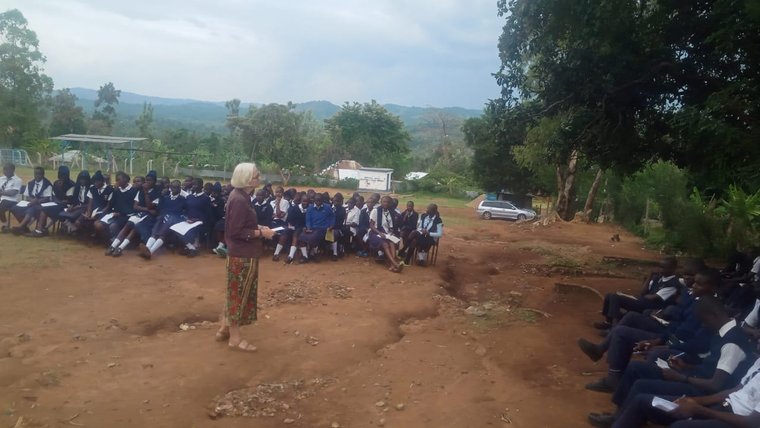
I still have a year and a half, so I hope to be able to support a local project to improve my school, which lacks many resources we consider essential in the U.S., such as a library or a computer center. Students are fascinated every time I bring my laptop to class and want to learn everything about it (how much memory does it have, how does the touch screen work, can they look up information on a family member’s disease, what is GPS and how does it work, etc.). Even if I am unable to provide any monetary support from U.S. friends and family, I hope to improve my teaching strategies for large classes in a low resource setting. I also look forward to having more substantive conversations with students and community members who are not fluent in English as my Swahili and DhoLuo continue to improve.
9. Once you finish service, what will you do differently when you return to the U.S.?
I’m not sure what my next path will be. I hope to find a job doing something I love as much as I love my teaching here in Kenya. During one professional development opportunity from my time working at the National Science Foundation Office of Inspector General, I developed the following guiding mission: act with integrity, promote understanding, collaborate, and support choices that make a difference. This mission has not significantly changed, but I believe my experience in Kenya has already improved my ability to successfully implement it in my professional and personal life. Upon my return to the U.S., I am most likely to look for jobs related to training, assessment, or education and hope to use my science-related skills of critical thinking, data analysis, and collaboration. It was a difficult decision to leave a secure job in my 50s to become a Peace Corps Volunteer, but it can be dangerous to indefinitely put off an experience you’ve been thinking about for years. Already my time in Kenya has sparked personal growth and improved my communication and people skills. Insights I’ve gained about myself and the world will hopefully help me be a better colleague, friend, family member, and teacher, trainer, or leader.



