 An official website of the United States government


Featured Volunteer Profile
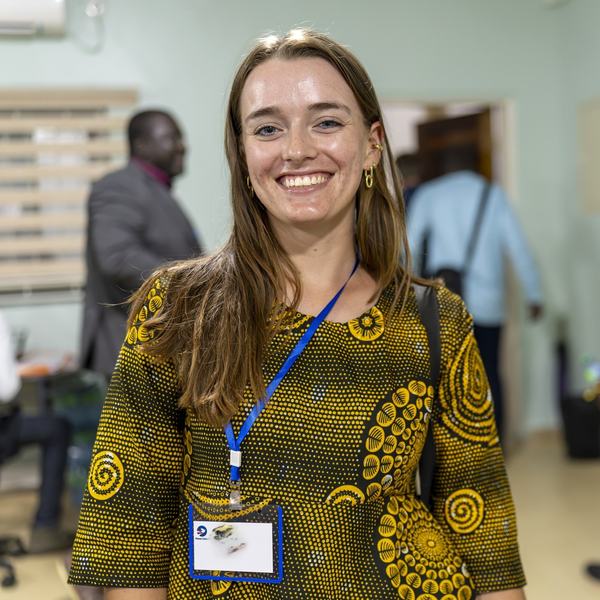
Elizabeth H.
“A favorite Wolof phrase among Volunteers is ‘ndank, ndank mooy jap golo ci ñay (slowly, slowly is how you catch the monkey in the bush)' ... This phrase best encapsulates my language learning process here. Every day is a slow march to proficiency.”
1. What inspired you to apply for this Peace Corps position?
When I was a senior in high school I spent two months in Peru working on UNESCO heritage sites with the Cultural Ministry in the name of conservation and cultural exchange. The work was hard—digging trenches, pulling weeds, and hacking away rocks in order to keep cultural sites running and preserved for future study. When the day was over, all of us workers put down our shovels and pickaxes to shuffle back to the bus, covered in gritty red dirt and sweat but excited to pick up the next day. For us students, this was our first experience in impactful work. The progress we made united both the international students and Peruvian officials. I was motivated by my goal to make an impact on a larger community and learn about the world around me.
I learned about the Peace Corps in an introduction to international relations class as a freshman in college. I carried this idea until graduation.
I knew I was interested in serving in a francophone country in Africa. I studied economic development and French in college, so I was excited to find a place to put my degree to work. I thought the Peace Corps would give me the practical experience to move forward in a career in development. I applied to this position in Senegal because I knew it would be a challenge and an incredible learning opportunity. What truly intrigued me was the opportunity to learn a local language like Wolof and work directly with farmers.
The work here looks a little different from my time in Peru, but the idea and the dust are the same.
2. Tell us about a moment that sticks with you from the first week at your site.
One of the first days I spent at my site, I went with my host siblings to work in the family’s peanut field. It was harvest season, so the whole family pitched in to help. Early one morning, my host mom, my host siblings, and I piled onto the horse cart to travel the bumpy 7 kilometers to the field. When we arrived, I looked around me and saw nothing but peanuts for miles and miles.
My host family taught me how to sort the dried peanuts from the leaves by standing on the horse cart and slowly emptying a basket full of peanuts onto the ground, letting the leaves blow away while the peanuts dropped into a pile. At that moment, I was as far away from home as I had ever been, speaking a language I had only heard for the first time a few months earlier, and with people I had just met. But we worked as a unit, all complaining about the heat, the sun, the dust, and the long hours of work. They taught me new words, asked me questions about home, and explained the history of their family. As baskets of peanuts passed from hand to hand, I felt for the first time some certainty about what the next year of service would look like.
3. What projects are you working on?
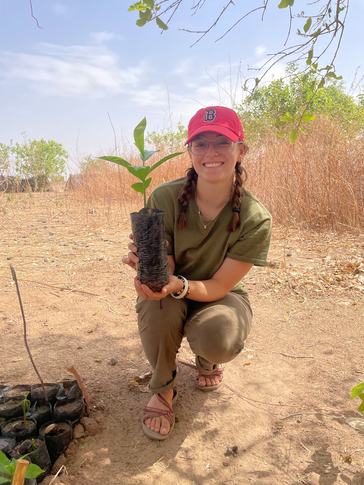
As an Agriculture Volunteer, my main job is to work with members of my community to teach and reinforce sustainable agricultural techniques. This can mean anything from composting to natural pesticides to crop rotation. My current project is with a disability support network that is active in my community. I am in the process of writing a grant that aims to support the creation of a community field for this group. This will allow us to host agricultural trainings and give space for members to cultivate their own crops. Ultimately, the group hopes that a community field will empower people living with disabilities and reduce stigma for its members.
Additionally, I work with different farmers and youth organizations to distribute field crops and tree seeds. In the 2025 growing season, we created 2,000 tree saplings of ten varieties to distribute to members of the community. During the rainy season, I work with farmers to co-facilitate trainings that allow discussion on improved seed varieties, pest prevention methods, intercropping, and other sustainable options for improving yield.
The farmers here are knowledgeable about their crops and production, so the aim is simply to help address challenges they may be facing and introduce new ways of tackling these problems.
4. What strategies have you used to integrate into your community?
Senegalese culture is so welcoming. I often can’t go more than a block without stopping to greet someone. When I first arrived at my site, I followed my host family wherever they went. I joined early morning market runs, trips to neighbors’ homes to drink tea, women’s group meetings, and walks around the block. Everyone knows everyone in neighborhoods like these, and I people often greeted me by my Senegalese name, although we had never met before.
As I started my own garden and tree nursery, I handed out saplings and nursery plants to neighbors and local farmers. From then on, I was known as the “tree lady,” often carrying buckets of saplings on my head as I distributed them. I met many new neighbors this way and was frequently invited in to look at gardens and give advice.
Integration is a slow process. It takes time and consistency from both you and your host community. The most important thing is to find joy in all of it. Your day will never go exactly as planned. It is more important to be present as a member of the community than it is to complete your to-do list.
5. What’s a typical day like for you?
My favorite part of the day is sharing coffee with my host brother and mom. They both enjoy the American coffee I make, so every morning I sit in the courtyard with them. I have learned some of my most useful Wolof phrases during these early morning chats.
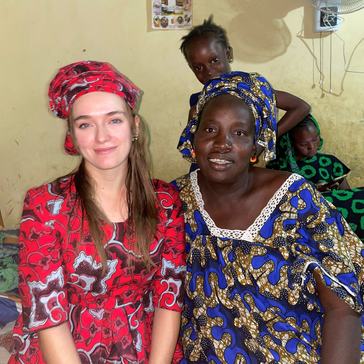
Before it gets too hot, I leave for the field. I do a lot of work in a community field in a nearby neighborhood, so I walk there most mornings to help water and assist with whatever needs to be done that day. We normally break for tea and fruit in the afternoon as it heats up, chatting about family, work, and issues with crops.
Most work in Senegal stops from around 2:30 to 4:00 p.m. because of the heat. This is the time to eat lunch, drink tea, and rest. I return home to eat lunch with my family. It is almost always ceebujen (rice, fish, and vegetables), the national dish of Senegal. We eat from one bowl, with all the women in my family taking turns serving fish and vegetables.
After lunch, I make coffee and read, study or hang out with my host family. Around this time, one of my younger host siblings usually comes to me with English or French questions.
Once it has cooled down, I work in my personal garden or attend language tutoring with my counterpart. I study both French and Wolof twice a week.
Finally, I finish the day with a run or by spending time with the women in my family. We sit in the main bedroom of the compound and trade stories about our days. Recently, my host sister and I have been knitting together in the courtyard.
6. What is a highlight of your time in service so far?
I truly enjoy the month of Ramadan. It is not something I experienced in the United States, but living with a Muslim family here has given me the opportunity to participate in the tradition. I have fasted during both Ramadans I have spent in Senegal. It is one of the few times I see my entire host family together, focused on one thing. Every evening, I help prepare the food for ndogo (the meal that breaks the fast) and sit with my host family. I feel very lucky to participate in a tradition that is so important to my host family and the community as a whole.
7. What have you enjoyed most about the community where you are serving?
My community is one of the larger sites that hosts Volunteers in Senegal. It is also located on the national highway. This means many people in my community come from different regions, ethnic groups, and even countries. I feel very lucky to serve in a community where I can interact with people from all parts of Senegal. It has given me a much richer understanding of the different cultures that make up Senegal. I have even learned some greetings in minority languages such as Pulaar and Mandinka. It is so exciting to see the look on someone’s face when you begin speaking to them in their local language for the first time. It has truly deepened my sense of belonging.
When I first arrived, being in a larger community was intimidating. I was certain I would never be able to integrate into such a large place or understand all the neighborhoods and languages spoken here. In some ways that is still true, but I have grown to love the opportunity to experience the diversity of Senegal.
8. What are some of the most important things you’ve learned from your community?
I have learned to laugh at myself and my mistakes. When I first arrived, my language was clunky and awkward. I lacked the nuance of Senegalese cultural norms that only come from lived experience. It’s like being a baby giraffe trying to stand up for the first time. You're going to fall down, and it’s going to be funny. I learned to laugh at misunderstandings and not take everything so seriously.
This experience has also given me the gift of patience, both for myself and others. As I mentioned, Volunteers make lots of mistakes, and my community has shown me endless grace and patience as I adjust to life here. I hope to carry that same patience forward in my life.
9. How do you spend time when not working on a project?
I try to keep busy outside of project work. Besides spending time with my community and taking care of my garden, much of my time goes toward language learning!
I have studied French and Wolof multiple times a week since arriving in the country. Language is key to integration. With my tutor, I have been able to better prepare for trainings and express my needs effectively in Wolof. It has also provided structure to my service, which can sometimes be difficult for Volunteers.
For fun, I run a few times a week, often with my host brother, who uses it to train for soccer. He is much faster than I am but kindly slows down for me. Every evening after dinner, I sit with my host sisters and mom in the main bedroom. I often read or knit while my sisters talk. This allows me to participate in the nightly routine while practicing my favorite hobbies.
10. Tell us about the strongest relationship you’ve developed while in country.
In December 2025, while I was sick in medical bay in Dakar, I received a call from my friend Adama at my site. He told me that the farmer we work with had just had a baby girl, and she was named after me (my Senegalese name). After confirming it wasn’t a joke, I hung up the phone and cried. In Senegal, you give your child a “torando,” or namesake—someone you hope your child will take after. It is said that a child takes five positive attributes and two negative ones from their torando.
Ibrhima is the father of my torando. He and his family were among the first people I worked with when I arrived at my site. Despite my poor language skills, I was always welcomed and treated as a friend in his field. I have spent many hours sitting with Ibrhima and Adama, drinking tea and chatting under a mango tree. Ibrhima has been my primary work partner since the beginning, allowing me to practice and learn in his field. Together, we created one thousand tree saplings last growing season. He is dedicated to improving his entire community. When we have a project together, the whole neighborhood is invited to observe and participate.
Every day, I am inspired by Ibrhima’s hard work and determination. I try to emulate his kindness and understanding. I am honored to be included in his family.
11. What are you looking forward to in your remaining time as a Volunteer?
I have a little less than a year left in my service, but many of the major Senegalese holidays are still ahead. I am excited to experience them as a stronger Wolof speaker and a more integrated member of my host family. During my first year, I spent most of my time trying to understand everything around me. Now I can relax and enjoy the experience more fully.
I am also looking forward to getting my Peace Corps Partnership Program grant approved and beginning construction on the community garden. This project is so important to my community, and I will be thrilled when we can begin. I hope we will have it ready for trainings during this year’s field crop season.
As a personal project, I’m growing several tomato plants in my garden. They will be ready to harvest in the next few weeks, and I will use them to make spaghetti with red sauce for my host family.
12. Tell us your favorite phrase in the local language.
A favorite Wolof phrase among Volunteers here is “ndank, ndank mooy jap golo ci ñay (slowly, slowly is how you catch the monkey in the bush)." This phrase best encapsulates my language learning process here. Every day is a slow march to proficiency.
As a new Volunteer I struggled to explain something in Wolof to my host family. In the middle of my broken and nearly incomprehensible Wolof, I said that phrase, likely my first fully correct sentence to them, and it clearly caught them off guard. My host mom had me repeat the phrase several times for everyone in my family so they could hear it. Like a baby saying its first words. To this day we say it to each other and laugh.
The phrase not only broke the ice for my family and me but it has been a good reminder for me throughout my Peace Corps journey. One day at a time. Slowly, slowly. It's become a mantra for me here, and something I hope to carry with me even after my time here has come to an end.
13. What will you do differently when you return to the U.S.?
I have benefited greatly from the uncertainty of life here. In the United States, I was very focused on structure and routine. I think I missed out on spontaneity because of that. I hope to bring the adaptability I have learned here back to my daily life at home.
Learn more about serving as a Peace Corps Volunteer in Senegal.



