 An official website of the United States government


Featured Volunteer Profile
Chloe Y.
“The community where I am serving is very peaceful. I love my view in the morning, the many walking trails I have access to, and how relaxed and safe I feel here. I have never felt more at peace with myself and connected to my environment than I do here.”
1. What inspired you to apply for this Peace Corps position?
I wanted to immerse myself completely in a different culture—to learn a new language, try new food, meet new people, and learn as much as possible while trying to make a positive impact in any way that I can. My previous experience working with youth led me to apply for the Youth in Development sector, specifically.
2. Tell us about a moment that sticks with you from the first week at your site.
During the first week at my site, what stuck with me most was how warm and welcoming everyone was. On my first day at the school, the food and nutrition teacher and her students made a cake to welcome me! I was so surprised and touched by the kind gesture.
3. What projects are you working on?
My main job is teaching life skills classes at the high school. I teach lessons on employability, study skills, money management, HIV prevention, and other topics related to living a healthy and successful life. I have also been collaborating with other teachers on a library and safe space project. I received a Peace Corps Partnership grant to refurbish an unused classroom and turn it into a library. We are currently running an English club once a week in the library space. We also have started a drama club and a “wash” club that focuses on keeping the school clean.
4. What strategies have you used to integrate into your community?
My main integration strategy has been to spend as much time at my site as possible. At the beginning, I visited many homesteads in the community with my host mom. I introduced myself and informed the community of what I was doing and got to know as many community members as I could. Using Siswati, the local language, whenever I can has also helped me to integrate and to be accepted as a member of the community rather than just a visitor.
5. What’s a typical day like for you?
On a typical day, I wake up early to get ready to teach. I walk 15 minutes to school and arrive for morning assembly at 7:20 a.m. I teach one to three classes a day, for a total of seven classes a week. When I am not teaching, I am in the library organizing books, lesson planning, or meeting with my students. On Wednesdays and Fridays I help facilitate clubs after school. At the end of the school day, I enjoy a peaceful walk back home. When I arrive home, I typically like to do some yoga, spend time with my host family, cook dinner, and read a book before bed.
6. What is a highlight of your time in service so far?
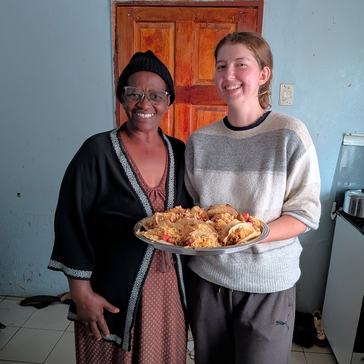
The moments that jump out to me are the moments of integration and cultural exchange. The time I showed my Make (my host mom) how to cook tacos, for example. Or the time she brought me to her parental home and taught me about how Swati marriage engagements work; she took me to the cattle “kraal” (corral) and taught me how the bride must go there to cry for many hours.
Attending weddings, ceremonies, and celebrations have all been very memorable experiences, but, more than anything, the times I visited different homesteads in the community and simply experienced a normal day were the most impactful. During these visits, I learned how different people live, the struggles they face, the changes they want to see in the community, the things that give them hope, and the things they value most. Everyone I visited welcomed me into their home with open arms. I learned so much from listening and observing during these visits, and with each visit, I felt more and more like I was truly a part of the community.
7. What have you enjoyed most about the community where you are serving?
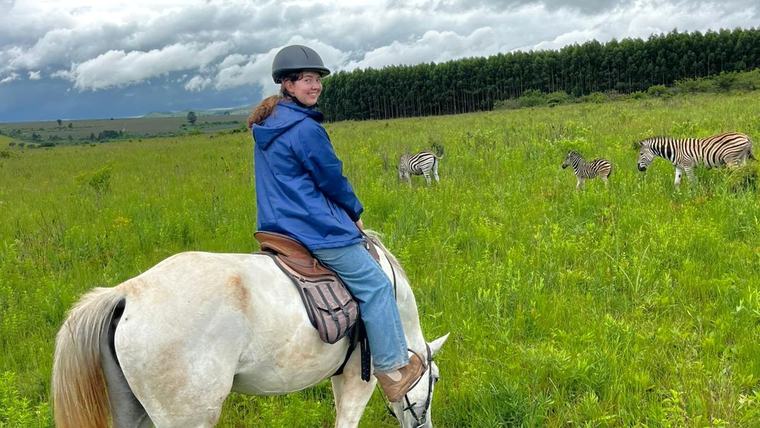
The community where I am serving is very peaceful. I love my view in the morning, the many walking trails I have access to, and how relaxed and safe I feel here. I have never felt more at peace with myself and connected to my environment than I do here.
8. What are some of the most important things you’ve learned from your community?
I’ve learned how to take it slow and how to get value from the little things in life. I've been reminded of the benefits of boredom and how vital it is to creativity. I've spent hours staring at the chickens with my Gogo (my host grandma), I do daily yoga, and I've learned how to cook many new foods. I have derived value from leisure and hobbies, rather than focusing solely on productivity and accomplishments. If it doesn't happen today, it'll happen tomorrow. I've learned to go with the flow. I have also learned to be more welcoming, hospitable, and open. At first, I was put off by people showing up to my house unannounced, but now I am always prepared for an unexpected guest and try to have some food or drink to welcome them with. While I do value my solitude, I want to carry this newly developed hospitality back with me to the U.S.
9. How do you spend time when not working on a project?
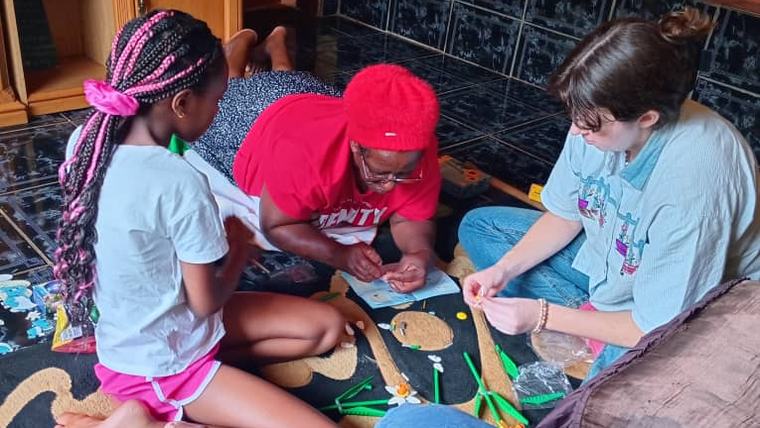
I spend my time playing with my little host sister, who always reminds me of the good in life, even when I'm having a bad day. She reminds me of the importance of play and imagination. I also like to spend my time reading, crocheting, cooking, doing yoga, and going on walks. I focus on things that bring out my creativity and allow me to relax and recharge.
11. Tell us about the strongest relationship you’ve developed while in country.
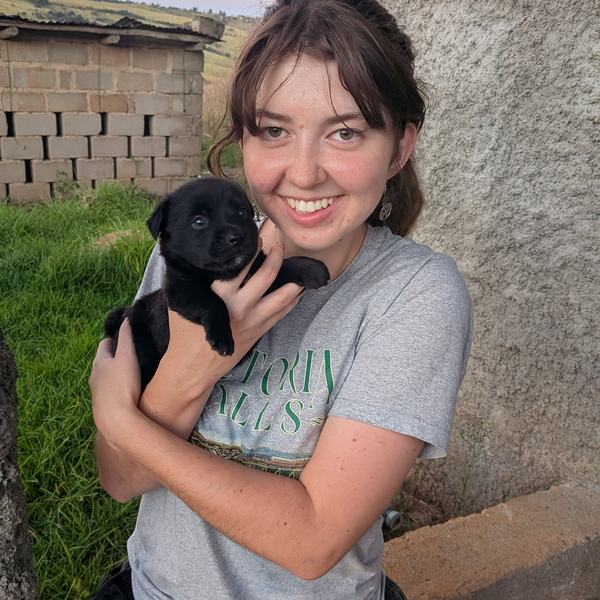
The strongest relationship I've developed is with my little host sister Zimasa. It might sound crazy, but she is my best friend. I would be so lonely without her. When I'm overwhelmed, I tend to want to self-isolate. Zimasa makes that impossible, and I've never been more grateful. She has the most energy of anyone I've ever met, whereas I tend to be very calm and quiet. She brings out my energetic side and I help her chill out. We balance each other well. For fun, we like to play house, color, go on walks, play with the dog, and dance.
12. What are you looking forward to in your remaining time as a Volunteer?
In my remaining time, I am looking forward to seeing the resources in the library used more and more by teachers and students, and getting more students involved with the English club. I am looking forward to having the official opening of the library and celebrating all our hard work. Most of all, I am looking forward to savoring the time I have left with my host family, friends, colleagues, and students.
13. Tell us your favorite phrase in the local language.
My favorite phrase is “kancane kancane,” which means “little by little.” It pretty much sums up the vibe of Eswatini and reminds me to slow down and fully experience the process, rather than focusing on the end result.
14. What will you do differently when you return to the U.S.?
Hopefully, so much. Mainly, I will allow myself to go slow. I don't want to be pulled back into the constant rushing from one thing to the next. I have gained a sense of presence here that I want to hold on to.
15. What would you say to someone thinking about joining the Peace Corps?
If you're thinking about it, do it, and be ready to fully embrace the process. You will learn and grow so much.
Learn more about serving as a Peace Corps Volunteer in Eswatini.



