 An official website of the United States government




Featured Volunteer Profile
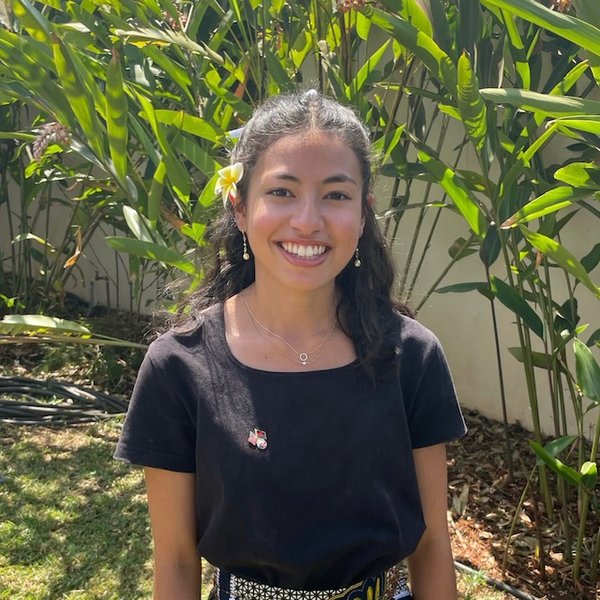
Carly M.
“Malawians have taught me what it means to be kind, what it means to be selfless and welcome others with open arms; they have taught me that even in the toughest of times, they know how to spread happiness and keep a smile on their faces.”
1. What got you interested in the Peace Corps?
In my second year at university, the TAs in one of my classes talked about their experiences in the Peace Corps, and later, I met other students and professors who also shared about their time in the Peace Corps. This, combined with my love of traveling and calling to do something that could make an impact, helped push me to apply. I was attracted to the Malawi post specifically because I enjoyed studying abroad in Kenya when I was in college and was open to going back to Africa.
2. What projects are you working on?
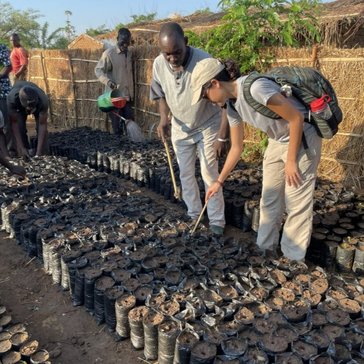
I work with a wildlife club at a secondary school doing a beekeeping project and other environmental activities. I also helped to establish a girls’ soccer club at a local primary school. Finally, I work with farmers alongside my extension officer colleagues to promote sustainable practices, including community gardening, tree nursery establishment and planting, water management, and organic fertilizer making.
3. What strategies have you used to integrate into your community?
I have developed my skills in the local language, Chichewa, to be able to communicate with community members. I speak in Chichewa as often as I can with as many people as I can and am not afraid to ask questions when they come up. Also, I have gotten to know the people in my village and have become friendly with those around me. I chat with and play games with the local kids. Finally, I participate in local community events as I can, which is another way to get to know the community.
4. What is a highlight of your time in service so far?
A highlight of my service so far has been the people I have met along the way and the lessons I have learned from them. The people of Malawi to me are a defining characteristic of the country; the country is known as “the warm heart of Africa” for a reason. The people I have met while here have really made this experience worthwhile for me. Malawians have taught me what it means to be kind, what it means to be selfless and welcome others with open arms; they have taught me that even in the toughest of times, they know how to spread happiness and keep a smile on their faces. What I can say for sure is that the people of Malawi have touched my heart in more ways than one.
5. What have you enjoyed most about the community where you are serving?
What I have enjoyed most about the community I’m serving in is the friendly faces I see every day and the openness of the community to my presence here. It is the work I have been able to do with the community, including the wildlife club. It is hanging out, dancing, and chatting with the neighborhood kids. It is starting up conversations with familiar faces I pass by at my local market. I enjoy how welcome and safe I feel here. It is the small moments like these that have made my time here most memorable.
6. What are some of the most important things you’ve learned from your community?
Some of the most important things I have learned is how to let go of what I think I know and listen and trust in what others say is their experience. I may think I know how things should be but that is not always what works. I’ve also learned the importance of spreading kindness to others because you never know what they may be going through. I’ve learned what strength looks like in both the emotional and physical sense, and how to persevere in hard times.
7. How do you spend time when you are not working on a project?
When I’m not working on a project, I like to spend my time outdoors reading, listening to music, or just relaxing. I have also been enjoying working in my own home garden. When I get the opportunity to travel during my free time, I like to hike and explore different places in the country. I also enjoy just hanging out and chatting with my neighbors.
8. What are you looking forward to in your remaining time as a Volunteer?
I’m looking forward to upcoming projects and to continuing to work with and get to know my community. I also want to continue to improve my language skills so I can better communicate. I’m hoping to form stronger relationships and connections with the people in my community. I’m looking forward to taking it all in because I see the year I have remaining going by quickly. Before long I will be closing my service!
9. Once you finish service, what will you do differently when you return to the U.S.?
Being in the Peace Corps has humbled me and exposed me to living more simply. When I return to the States, I will better appreciate the life I have and all the small moments that come with it. I will also take each day with a better understanding of the world around me and bring more kindness to my daily interactions, as the people of Malawi do here.
Learn more about serving as a Peace Corps Volunteer in Malawi.



